
As previously announced, SixTONES‘ Juri Tanaka stars in the stage play called “Bokura no nanoka kan Sensou 2025” (Seven Days War), which will be performed from 24 August to 2 September at Tokyo Tatemono Brillia HALL and in five other venues across Japan, including Osaka, Aichi and Kumamoto.
I will write an exclusive review of the stage play for Dumpling Box.
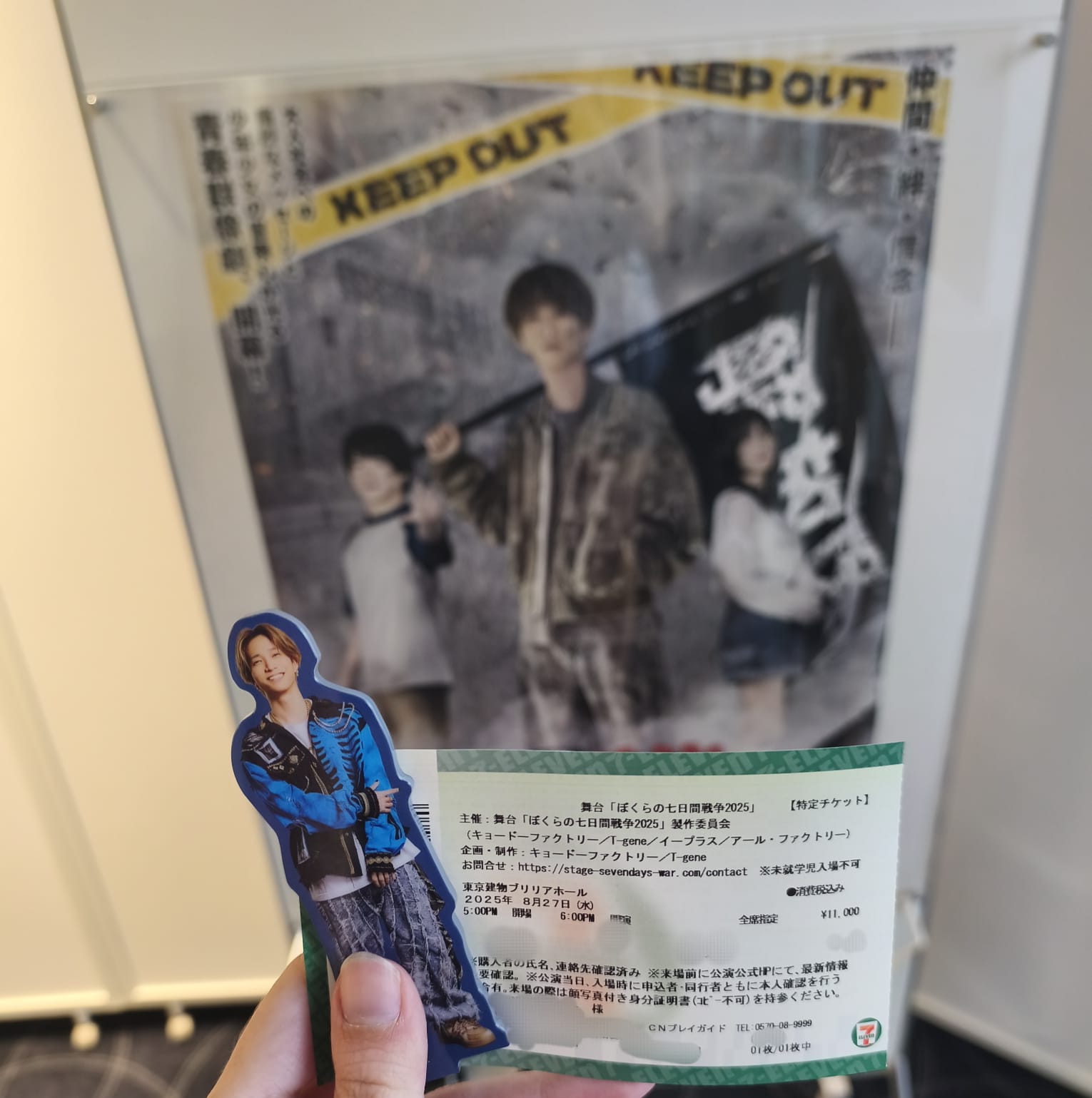
STORY
The story is about first-year junior high school students that rebel against the adults’ unreasonable management and impositions, and suddenly disappear on the first day of summer holiday. What they have holed up in is an abandoned factory. There, they begin a seven-day period of freedom under the banner of “Rebellion Against Adults”. Soon after, the school and their parents start to make a fuss, and the media and police get involved. The children grow through bonds with their friends, their own beliefs and conflicts with adults… A coming-of-age ensemble drama with a poignant message to adult society and the adventurous spirit of boys and girls.
The stage play is written and directed by Naohiro Ise, who has worked on a wide range of stage productions based on manga and anime, including the Blue Lock stage series and the Tokyo Revengers stage series, as well as music theatre.
STage review
Before the performance began, the sound of cicadas filled the theater, creating an almost magical prelude. As the start time approached, the school bell rang with its familiar chime, followed by a cast announcement: “Nurse’s Office Notice.” At the performance I attended, this announcement was voiced by Nao Ota, a former member of AKB48, adding an extra touch of nostalgia.
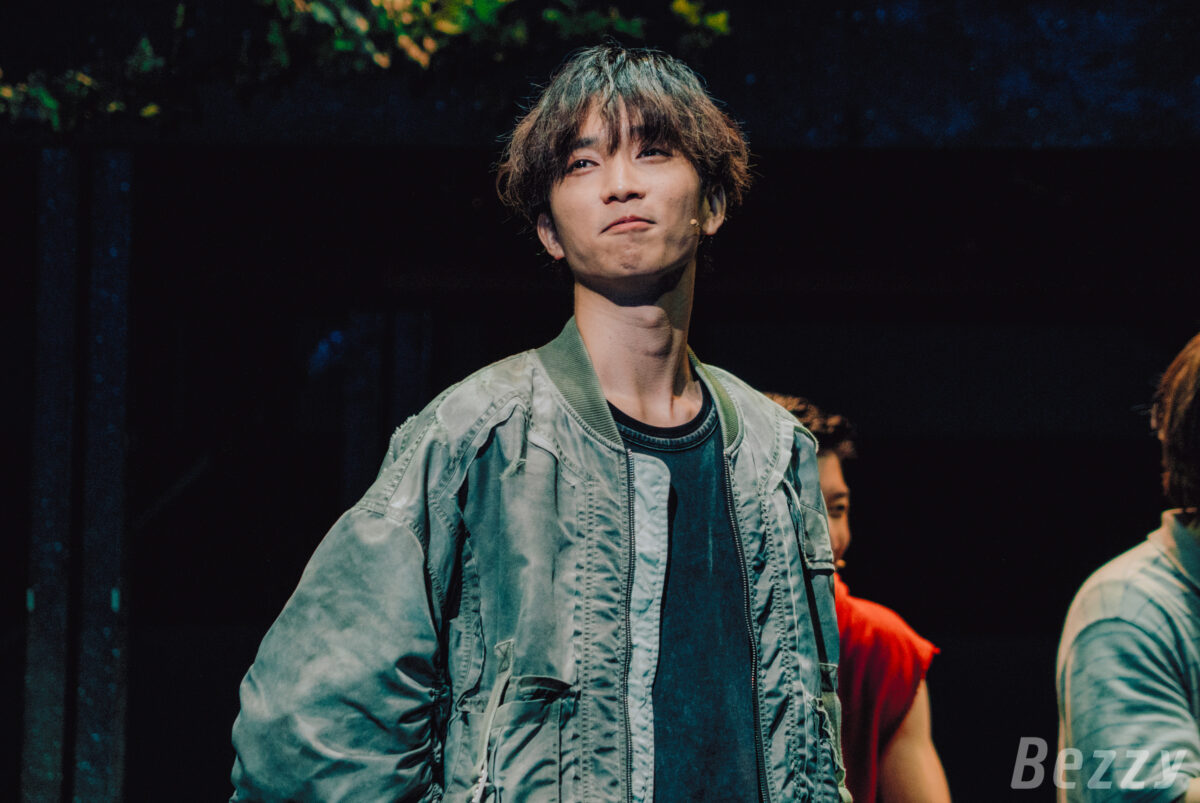
Middle school—a time when horizons expand and independence begins to bloom—is often described as “between childhood and youth.” Eiji Kikuchi, portrayed by Juri Tanaka, carried a rebellious spirit and thought, “I hate adults telling me what to do.” Yet he also felt a profound helplessness: “But more than that, I hate myself for not being able to do anything about it!” When he shared his feelings with classmates, they surprisingly agreed, reflecting a shared frustration that resonates across generations.
At the start of the play, screens introduced the full cast performing that day, displaying each actor’s name and profile photo. This thoughtful introduction, uncommon in musicals, immediately drew me in. Even if you were unfamiliar with the characters, the presentation made it easy to recognize faces and remember names, deepening engagement from the very beginning.
On the first day of summer vacation, the students decided that all the boys in the class would vanish—and they carried out the plan. They barricaded themselves inside an abandoned factory. Proclaiming their “rebellion against adults,” they used community radio waves to declare a “liberated zone” and began confronting the adults, marking the start of their daring adventure.
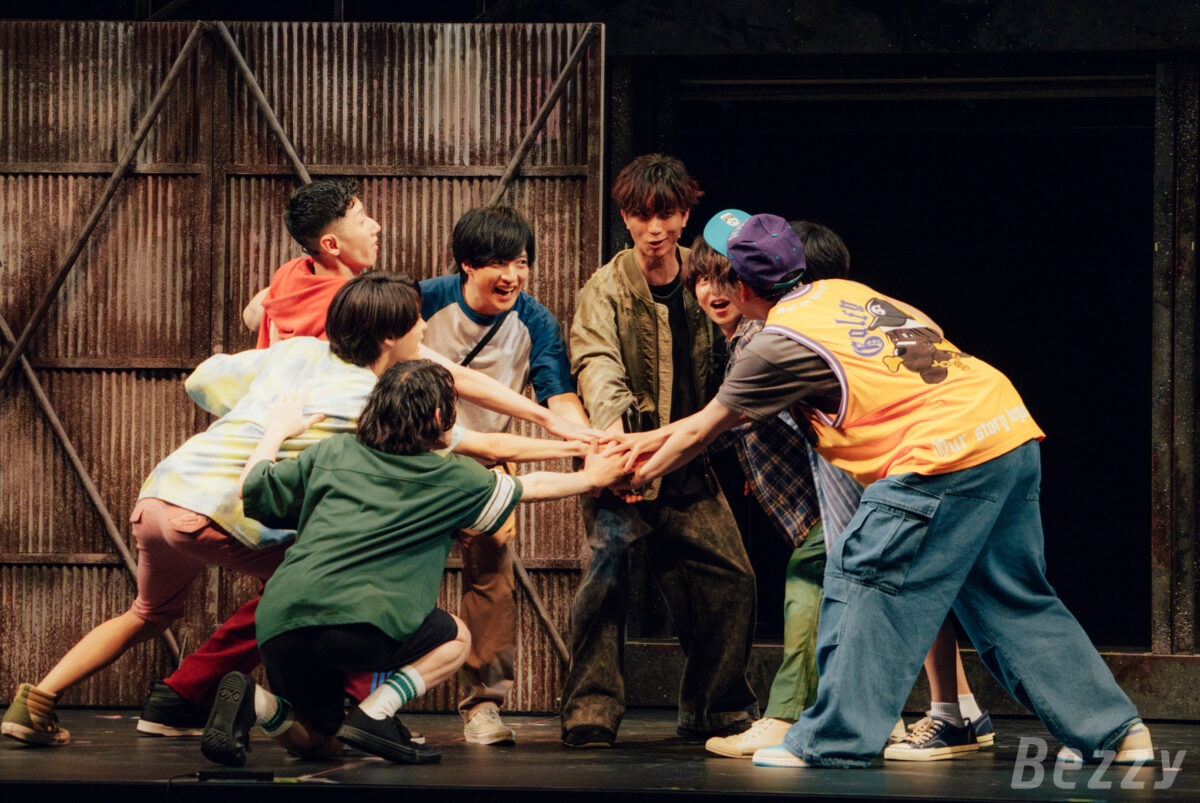
The first day of the siege was labeled “DAY 1” on the stage screen. The students were euphoric, having finally demonstrated their resolve to the adults. Yet, one classmate who was supposed to join them remained absent. Eiji and the others, who had asked Hitomi Nakayama (played by Hinako Sano) to relay news from the outside, were stunned to discover that one of the male students had been kidnapped, instantly raising the stakes.
On “DAY 2,” while exploring the abandoned factory, Eiji and his classmates encountered a mysterious elderly man (portrayed by the double cast Tōru Kazama and Makoto Nonomura). Initially cautious, they gradually warmed to him when he revealed a secret passage connecting the factory to the outside world. Some students reacted with suspicion at first, but the elder reassured them: “I myself am a failed adult, so I completely understand how you feel.” This confession transformed him from a potential threat into a mentor figure, deepening the narrative’s emotional layers.
Parents grew increasingly anxious, fearing a mass kidnapping. At school, the students were labeled dangerous, and the situation drew comparisons to student protests of decades past. When the media reported on the events, the incident escalated into a nationwide scandal involving police intervention, heightening tension and drama.
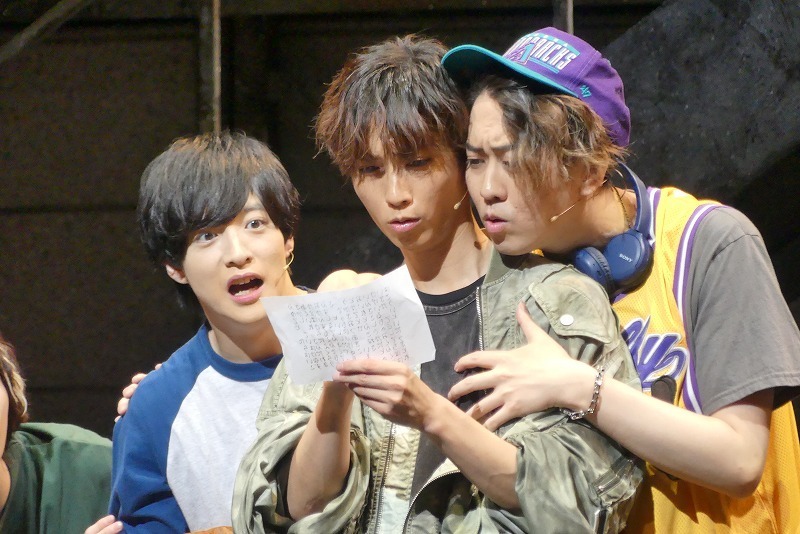
Watching the students tackle challenge after challenge is deeply moving. In one memorable scene, a coded message reveals the location of their kidnapped classmate. Juri Tanaka (Eiji) and his older brother, Hyōga Tanaka (playing Hiroshi Yasunaga), read the letter cheek to cheek, a tender moment that beautifully conveyed trust and emotional connection.
In the story’s final chapter, “DAY 7,” Eiji exclaims with satisfaction, “I will never forget this in my entire life!” The audience witnesses not just a thrilling adventure, but profound growth. A transformation made possible because the students trusted one another completely.
One of the most iconic aspects of Bokura no Nanoka-kan Sensō since the original 1985 novel is the use of radio as a form of resistance. In the 2025 stage adaptation, this element remains central while also being reinterpreted for the digital age. Inside the abandoned factory, the students discover transmission equipment and turn it into their own communication channel. Through radio waves, they broadcast messages, proclaim their youth manifesto, and coordinate strategies against the adults. The radio becomes more than a tool: it is a symbol of autonomy and a refuge from media manipulation.

This analog medium is no accident. While adults and mass media outside narrate the story from their perspective—portraying the youth as irresponsible or immature—the radio gives the students a voice. The contrast between televised news projected on stage and the students’ direct broadcast underscores a central theme: young people must be heard without filters.
The adaptation also adds a modern tension. While the radio represents freedom, today’s world is dominated by social media and smartphones. These tools allow messages to spread rapidly, but they also expose students to constant surveillance. This juxtaposition highlights a contemporary truth: even in a world of digital oversight, simple tools like radio can become acts of rebellion, spaces where young voices can speak freely.
Ultimately, the radio functions as a bridge between generations. For audiences familiar with the original work, it is a nostalgic nod; for younger viewers, it serves as a reminder that freedom of expression can exist in even the simplest mediums.

Another remarkable feature is the age of the lead actors. Several, including Juri Tanaka, are over thirty, which could pose a challenge in portraying high school students. Yet on stage, this difference vanishes. The actors’ performances, combined with careful staging and direction, make the characters feel authentic, lively, and truly adolescent.
The portrayal is not a caricature of youth, but a convincing embodiment of its spirit: unrestrained energy, irreverence toward authority, and the vulnerability of adolescence emerge with clarity. Their experience adds nuance, enabling them to convey teenage innocence with the skill and depth of seasoned professionals.
Rather than being a limitation, the age difference becomes a strength. The actors’ expertise brings naturalness and emotional resonance to scenes that might otherwise tip into exaggeration. Audiences can focus on the heart of the story—the clash between generations and the pursuit of freedom—without distraction from the actors’ real ages.
▼Follow “Bokura no nanoka kan Sensou 2025” Official Website! ▼
https://stage-sevendays-war.com