
In the vibrant world of stage performance, actors Baba Ryoma and Sugeta Rinne (7 MEN Samurai) took on the thrilling challenge of dual lead roles in the exhilarating stage play “Manzai Gang – Reloaded –.”
Premiering on May 4th, 2023, at the esteemed Hakuhinkan Theater in Tokyo, the production promised a fresh perspective on the timeless narrative.

Adapted from Shinagawa Hiroshi’s celebrated novel of the same name, this Reloaded theatrical rendition marked a significant milestone. With a captivating script penned by Iwasaki Udai of Kamomental and visionary direction by Maggie of Jovi Jova, the stage was set for an unforgettable experience. Baba embodied the tormented manzai comedian Kurosawa Tobio, while Sugeta brought to life the enigmatic Onizuka Ryuhei, a Yankee with an unexpected flair for retorts.
Their electrifying performances were complemented by a stellar ensemble cast, including Natsume Aimi, Tomita Maho, Kimura Masataka, Saki Masato, Osaki Natsuki, Morimomoko, Kodama Tomohiro (Sarugorira), Miyashita Yuya, and Sakata Tadashi.
"The troubled manzai comedian Tobio and the Yankee Ryuhei, who is without any particular worries, meet. The gears of fate begin to move at breakneck speed, unstoppable in this Reloaded version of the original story. A fervent manzai story is reborn in a whirlwind of passion!"
During the press conference, Maggie, Baba, and Sugeta exuded infectious enthusiasm. Baba reflected, “I believed the essence of this work lay in the laughter of our audience. I eagerly anticipate witnessing how the responses and laughter from the audience converge to shape the final production.“
Sugeta echoed his sentiment, emphasizing the profound connection between performers and audience members, declaring, “For me, the laughter of our audience is a form of dialogue. I’m eager to immerse myself in the shared joy.”
While staying true to the essence of the original narrative, the stage adaptation introduced a fresh and invigorating storyline. Maggie elucidated, “We seamlessly wove new interpretations and elements into the fabric of the production while preserving the raw intensity and fervor inherent to live theater. I envisioned this work as a universal love story, resonating with audiences on a deeply emotional level.”
The palpable emotionality of the young cast and the evocative musical score selected by Maggie promised a truly immersive theatrical experience.
Sugeta also expressed, “I’d be happy if you could enjoy watching the process of Ryuhei, who initially portrays the tsukkomi role, gradually growing as a manzai performer.”
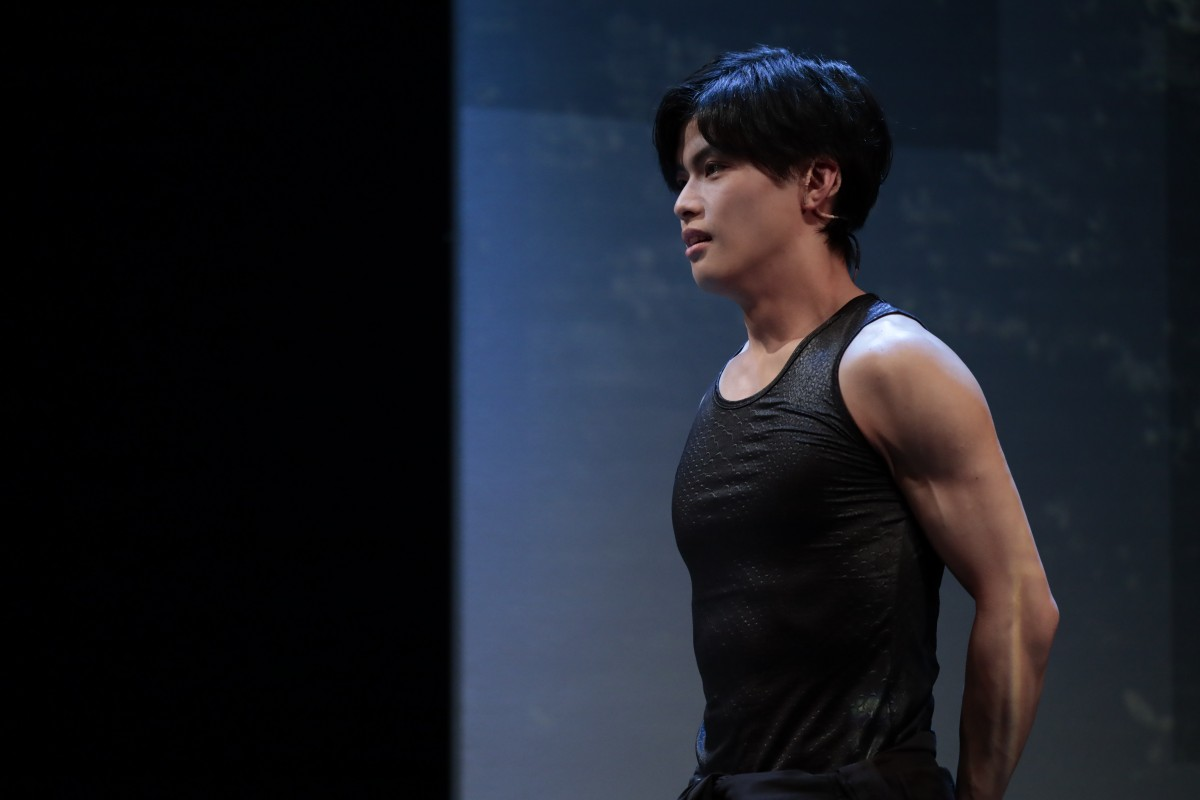
When Maggie asked, “Isn’t the highlight the muscles?“ Sugeta replied, “I did a lot of shoulder training to become Ryuhei.” When Baba revealed that Sugeta had been hanging off different places for training purposes, Sugeta proceeded to sum it up with a laugh: “The highlight is indeed the muscles!”
Lastly, addressing the audience, Sugeta commented, “As it’s a dual lead, there are two ways to enjoy it. Since I’m playing Ryuhei, I find myself deeply moved watching Tobio. But if you focus on Ryuhei, you can enjoy it in a different way, so I’d be happy if you could watch it once from Tobio’s perspective and then from Ryuhei’s perspective.“
Baba concluded, “We depict characters with unique personalities striving their hardest to live. I hope their earnest efforts resonate with you. If someone watching this play who’s going through tough times or worries can find them silly and laugh at them, that would be great. I’d be delighted if you could laugh a lot.“
As the curtain rose on “Manzai Gang – Reloaded –,” audiences were invited to embark on a thrilling journey of laughter, emotion, and uncanny relationships. With Baba and Sugeta at the helm, the stage was set for an unforgettable theatrical spectacle that promised to captivate hearts and minds alike.
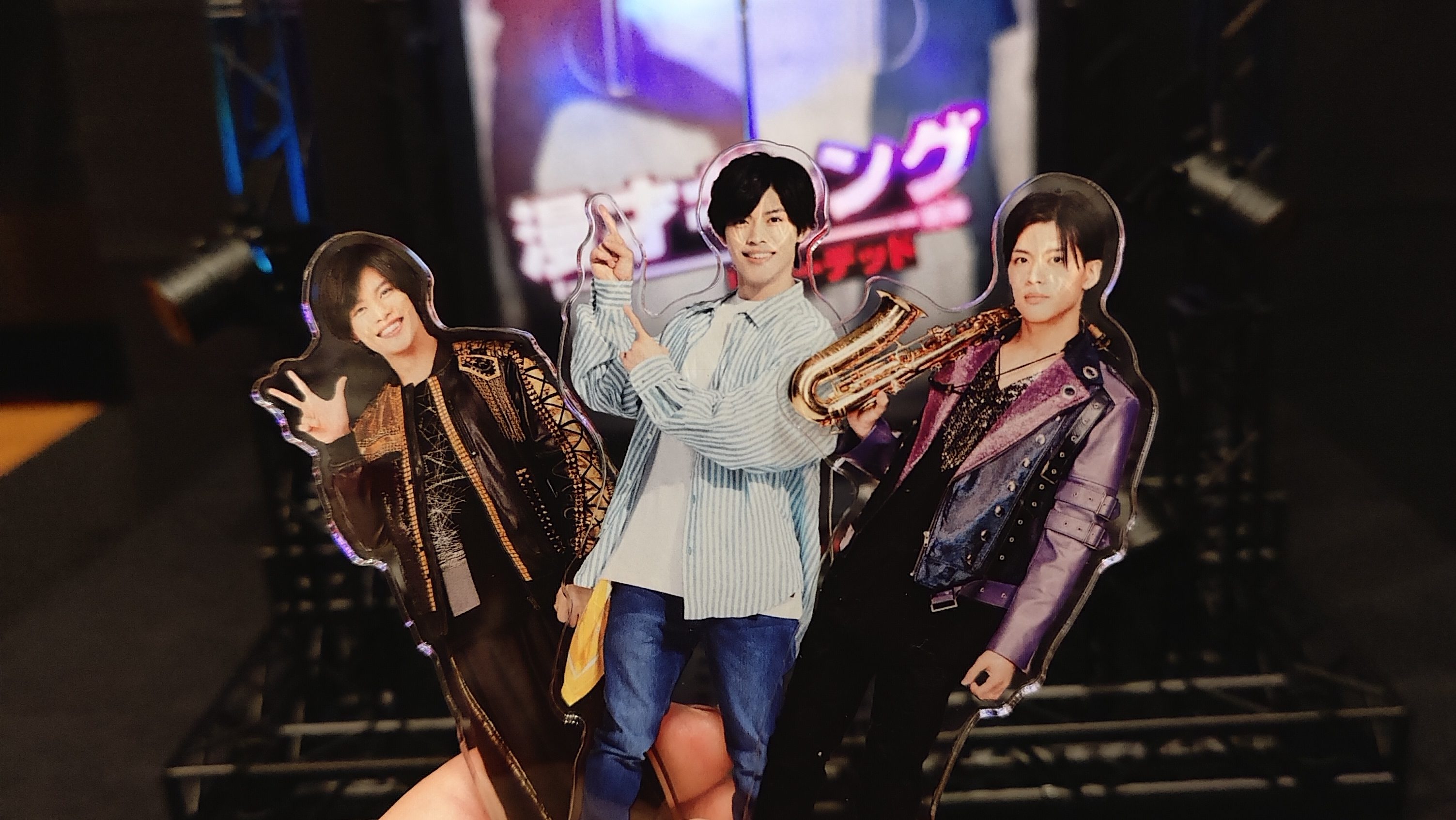
It’s been about a year since the play was showing in Tokyo, and although the main excitement about the play and Rinne, in general, has been covered in the storytime about how “I traveled 8335 km to see Manzai Gang in Tokyo,” let’s dive into the play again.
As mentioned earlier, Manzai Gang centers around the unlikely friendship between Tobio, a struggling comedian, and Ryuhei, a former gang member. Despite their vastly different backgrounds, they bond over comedy and form a dynamic duo on stage.
As they navigate the world of comedy and face challenges together, Ryuhei is introduced to a whole new side of himself thanks to Tobio’s infectious passion for the craft. Since childhood, Tobio has been drawn to the art of making people laugh, and through his friendship with Ryuhei, he begins to see its true power in bringing people together. Their friendship grows stronger with each performance, ultimately proving that laughter knows no boundaries or barriers.
The way Rinne projected his voice on stage was absolutely captivating. His character, Ryuhei, in all the best ways, exuded loudness not only in his voice but also in his mannerisms. Being used to hearing Rinne’s typically polite and soft-spoken tone, seeing him as Ryuhei was a refreshing experience that highlighted many of Rinne’s traits, such as his laugh and smile.
Even with knowing how occasionally loud and chaotic Rinne can be (in the best ways possible), the way he portrayed Ryuhei was completely different. His laughter echoed through the theater like music, filling the audience with happiness and making all worries vanish with a single smile.
The differences between him and Ryuhei were noticeable to any fan of Rinne. Ryuhei came alive so convincingly with Rinne’s performance that it was easy to forget he was just a character.
There were moments during the show when Rinne would break character and laugh, needing to turn away. Far from being a distraction, these instances were endearing, providing a glimpse of the Rinne familiar from YouTube, and each time it happened, it elicited fluttering hearts each time it happened.
Sitting in the audience, the realization of being there, sharing the same space and air, felt incredibly special. Rinne’s physical presence, beyond the screen, was overwhelming. Beyond feelings of love, adoration, and respect for an idol, this realization was profoundly moving. It left one speechless, as words could scarcely capture the impact of such an experience.
Watching Manzai Gang as a play was an absolute delight, even after multiple viewings. Although the storyline remained constant, the adlibs and improvisation of each performance gave it a unique twist each time. These little additions truly made the show a worthwhile experience, highlighting the hard work and skill of each actor. It was evident that everyone on stage was fully invested in their roles, each one playing a crucial role in the overall story.

One aspect worth noting about the show is that it deviates from the traditional manzai1 theme. Although it is initially introduced as a plot point, it is truly more of a romantic story in the sense that you fall in love with the way the characters develop. Of course, this does not take away from the fact that Manzai Gang is filled with hilarious moments and jokes that never miss their mark. The manzai element serves as a connecting thread between Ryuhei and Tobio, driving the plot forward, but the heart of the story lies in watching how their relationship evolves. As mentioned before, there are different ways to appreciate the show – through Tobio’s perspective or Ryuhei’s perspective.
Going multiple times definitely helps you being able to do such and if you look at it from Tobio’s perspective, Manzai Gang is a desperate last attempt to rekindle the determination and passion for the craft you’ve dedicated yourself to.
After losing his manzai partner, Tobio is at loss what to do because no matter how much he loves manzai, he can’t do it alone. Like losing a lover after a bad breakup, Tobio is lost and crushed. That’s until he meets Ryuhei unexpectedly. With Ryuhei by his side, he sees the love and passion in his craft again, blindly trusting Ryuhei on this attempt to make it in the industry again.
From Ryuhei’s perspective, Manzai Gang is a story about finding purpose in your mundane life that seems to have defined who you are. As a former gang member, Ryuhei has a tendency to act rashly without much thought. It truly highlights the immediate “no brain, only muscles” image you get of Ryuhei with muscles very prominent in his tanktop.
Even with the image of a former gang member, Ryuhei cares deeply about his sister and friends, even Tobio, whom he recently met and bonded with. Something that Ryuhei struggles with is that it’s not that easy to just change your image because once you’re known for something, that image is stuck to you. It seems that Ryuhei is also known for taking on various things/starting things and never seeing them to the end, further adding to the image that he’s not someone to take seriously. But this time, it seems different. By teaming up with Tobio, Ryuhei starts to see what it means to be passionate about something and chase that single passion and that your past doesn’t have to define you.
Another highlight is the subtle way Ryuhei changes clothes throughout the play. He wears an assortment of tanktops or a T-shirt with rolled-up sleeves that fall down, but he always wears a leather jacket, strengthening his gang member image. At the end of the play, he is seen wearing a simple shirt over his tanktop, symbolizing the change he’s managed to make. He’s no longer just “a former gang member” but someone who genuinely wants to pursue the art of manzai on his own, thanks to Tobio.
The tunes that filled the air during Manzai Gang’s performance consisted mostly of English melodies, culminating in Gloria Gaynor’s rendition of “Can’t Take My Eyes Off You” for their final bow. As the song resonated through the room, accompanied by Rinne’s captivating dance and radiant smile under the spotlight, no eyes were dry as tears welled up.
“Pardon the way that I stare
Lyrics excerpt from Can’t Take My Eyes Off You
There’s nothin’ else to compare
The sight of you leaves me weak
There are no words left to speak
But if you feel like I feel
Please let me know that it’s real
You’re just too good to be true
Can’t take my eyes off of you
I love you, baby”
At that moment, when the song was playing, and the actors did their greetings during the curtain call, nothing else but Rinne seemed to exist, as if the theater held only Rinne for a moment. It was as if time froze and the spotlight was on Rinne only, with the lyrics reverberating. The words struck a chord, prompting a heartfelt whisper of “I love you so much.”
Usually, oceans apart, observing Rinne through screens, videos, or photographs, the sudden realization of being physically present with him was overwhelming. This sensation lingered persistently through all the shows attended. It became something akin to an addiction, driving you to want to attend more shows in a quest to reaffirm this newfound reality.
The director Maggie posted a picture of the whole cast (except Rinne due to regulations) on X on May 4th, saying, “Rinne Sugeta sent me a cryptic message saying: “Today was the opening day last year.” Oh, I see, on this day last year was the first day of the Manzai Gang. They were all such sparkling young people. Even Sakata had moments of that sparkle. I, directing from the seats, was also shone a bit. I wonder if we can work together again somewhere while the young ones are still young.”
It’s truly heartwarming to see that the play and cast are loved a year later.
Manzai Gang truly is a show worth every penny, and it brings a smile to your face even today. It highlights the importance of having people around you who support you for who you are and through thick and thin. It doesn’t matter how long you’ve known someone or what your backgrounds are. It’s truly a love story reflecting the modern-day struggles of finding yourself when you’re lost.
“The highlight is indeed the muscles!” couldn’t be more true, but in the end, Manzai Gang was truly an unforgettable theatrical spectacle that captivated hearts and minds alike.
- Manzai (漫才) is a traditional style of comedy in Japanese culture comparable to double act comedy.
Manzai usually involves two performers (manzaishi)—a straight man (tsukkomi) and a funny man (boke)—trading jokes at great speed. Most of the jokes revolve around mutual misunderstandings, double-talk, puns and other verbal gags. ↩︎