

The Toronto Japanese Film Festival is officially over, and your writer had a great time! I was excited to watch three out of the four films featuring STARTO actors that were screened at the festival. While sad that I missed Shigeoka Daiki in The 35-Year Promise, I was excited to watch Nintama Rantaro: Invincible Master of Dokutake Ninja; Grand Maison Paris; and Muromachi Outsiders (Samurai Fury).
The movie Nintama Rantaro: Invincible Master of Dokutake Ninja is an anime movie based off the Rakudai Ninja Rantaro manga by Soubee Amako. Geared towards children, the story was very heartwarming and ends as good triumphs over evil. As the school hunts for their beloved teacher, their enemy suddenly gained a talented general. The storyline tells a tale of courage and family, both real and found.
Maybe it’s because I’ve never seen an episode of the anime, but I felt like I needed more context to understand the story. The storyline was cute and, of course, good triumphs over evil, but it was probably too simple for older audiences.
I recently learned that “Yuuki 100%” has always been associated with Nintama Rantaro, from the original by Hikaru GENJI and the more recent version by Hey! Say! JUMP. This comes as no surprise then when Naniwa Danshi recorded a new version of the song. This version, a little fresher, is coupled with “Arigato Kokorokara” as another theme for the movie.
Naniwa Danshi’s involvement doesn’t end there, as members Fujiwara Joichiro and Onishi Ryusei had the chance to voice characters in the movie. Fujiwara voiced Nakoji Kanbei, and Onishi voiced Sakuragi Seiemon. The two characters, while not central to the storyline, were a good addition to the story. As colleagues of a secondary character, Fujiwara and Ryusei managed to convey emotions and the difficulty of fighting to the audience through just their voices. It was fun picking out their voices in the midst of the movie, kind of like something familiar in a new experience. I’m not sure if they want to pursue the route of voice acting, but I’d look forward to their growth in this area. I
As much as I found the storyline too simple for adults, it was a nice time, and I may have leaked a few tears at the heartwarming parts.
Next up is Grand Maison Paris. I admit I was most excited for this movie. Grand Maison Paris picks up with Obana (Kimura Takuya) and his new restaurant in Paris, chasing his elusive third Michelin star. But he finds being an outsider in the Paris food scene very difficult. His pride and ambition causes tension in his team.
First of all, this has to be said, Kimura Takuya never misses. I haven’t watched a lot of his dramas or films, but what I have seen, I can understand his allure. Despite not having seen the original drama, there was no reference that I couldn’t understand without previous knowledge. The pacing of the story was fantastic, intriguing without feeling rushed. The secondary storyline, while might not be completely necessary, didn’t feel superfluous or forced like some secondary storylines can feel. The cast was not only brilliant, but surprisingly international, and the way they handled any language barrier issues on screen was done so naturally that I didn’t question how they understood each other. Don’t even get me started on the beautiful food shots and the divine ASMR, please. I wished we could at least smell what was on screen.
I have to applaud this movie, even without being a STARTO fan. I walked in expecting most of the film to be in Japanese, which is to be expected. But I would say the film was half Japanese and half French, with some English and Korean thrown in to round out the many nationalities that were featured in the story.
Not only is Kimura an amazing actor, but this movie really shows his dedication to the craft. I think it’s brave that they premiered a movie with this much French in a country that has French as one of their national languages. Yes, Parisian French is different from Canadian French, but from what I can understand, the French Kimura spoke was very understandable. Not only did he handle French with ease, but his English was also quite good, and I’m sure the little Korean he needed was probably pretty spot on. I can only imagine the amount of time and effort he put on for this role.
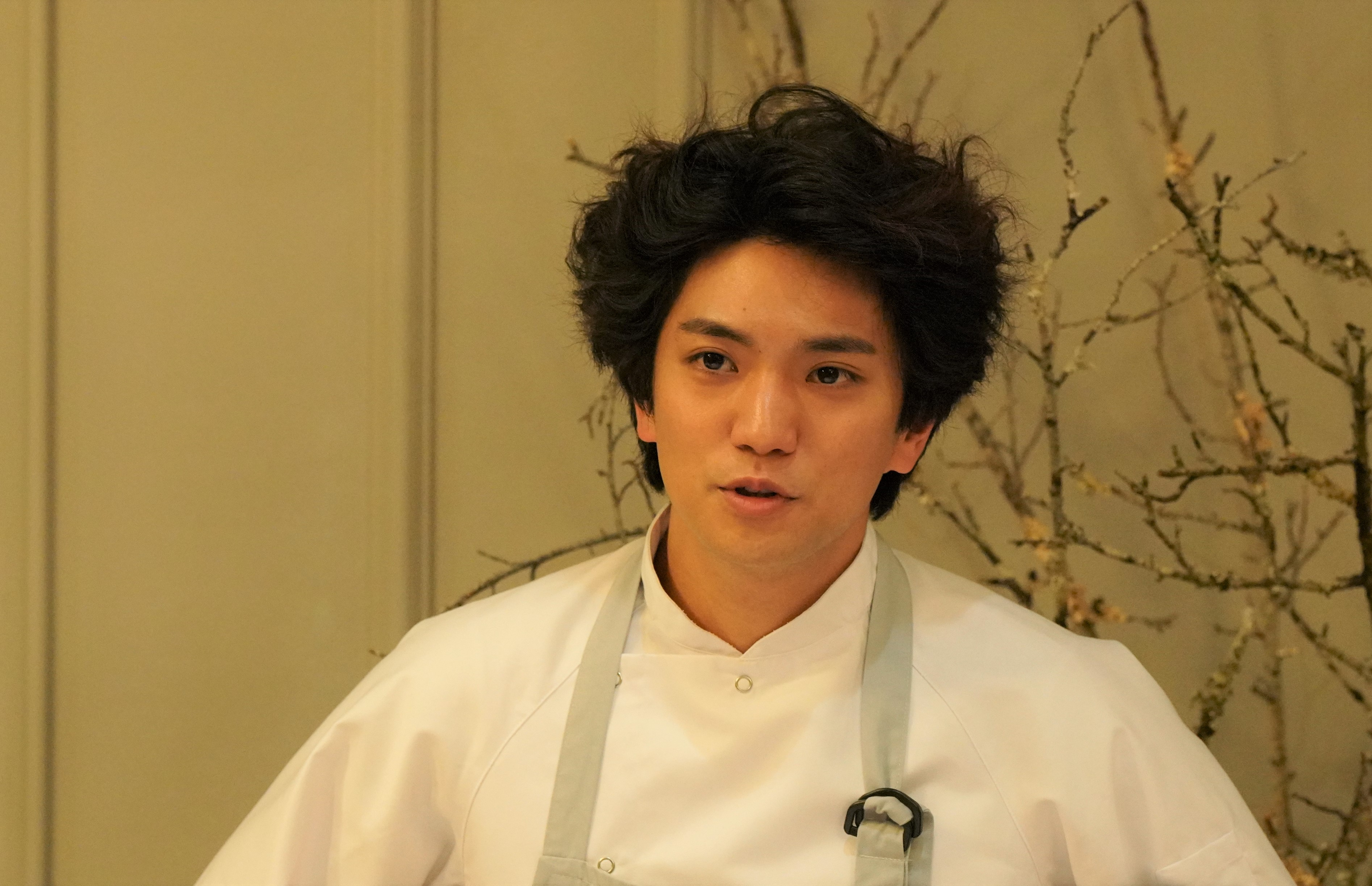
Ae! group’s Masakado Yoshinori’s role, while small, was no less intriguing. Faced with such a prolific cast, you’d think that his role would be lost. But no, I have to say that I found his role refreshing. With him being a younger chef, I really enjoyed his random interjections, breaking tension. He portrayed what I would describe as the brashness of youth, which is a fun juxtaposition to all the experienced chefs in the kitchen, and his absolute fear and respect for his chef made me laugh. His French pronunciation was also fairly understandable, and didn’t feel forced, which shows he spent a lot of time practicing.
The one and only thing that disappointed me, was that I was expecting a cameo from Kis-My-Ft2’s Tamamori Yuta (because my friend had said he was in the film). Perhaps it was cut for the Canadian Premiere, but I can understand the editing choice if it didn’t add to the storyline.
There are often movies that you rewatch for the comfort and enjoyment of the movie, but I don’t know if Grand Maison Paris is one of those movies. I fear the magic will escape if I watch it again, no matter how tempted I am.
The third movie of the day was Muromachi Outsiders (Samurai Fury). A historical movie set in 1461 in Kyoto, a devastating famine and plague simultaneously strike, leaving the Kamo Riverbanks strewn with 80,000 dead. The ruling powers remain inept and uncaring, enjoying their wealth. Seeing the hellish landscape of Kyoto, Hasuda Hyoe (Oizumi Yo) rallies a motley crew of outlaws to rise up, spark riots, and launch an unprecedented attack against the Shogun’s colossal authority.
I’m not usually a huge fan of historical war movies, but Muromachi was more interesting than I thought. Filmed a lot like a Western, the movie had moments of humour set against a disturbing backdrop of death and ignorance. Hasuda is a wandering ronin that is nominally working with the so-called security of Kyoto. His character seems lighthearted and dismissive, until he picks up Saizo (Naniwa Danshi’s Nagao Kento), and his flippancy is shown as a front rather than his actual character. Throughout the movie, the seriousness of the situation is highlighted through desperate moments that Hasuda placates or diffuses. Every comment he makes about the dire situations feels like he’s speaking for the sake of calming down the person he’s speaking to, until the audience realizes that he’s been planning the rebellion all along.
Saizo, technically Hasuda’s slave turned follower, is a feral child, pushed to his very limit. Through this character, Nagao’s idol image is completely erased and was virtually unrecognizable. Watching Saizo go from a lost and difficult boy to maturing into a capable warrior, under Hasuda’s interesting guidance, showed the breadth of Nagao’s skill in acting. I didn’t realize he was billed as the second male lead until the end of the film, and I would say he absolutely deserved to be in that role. Despite not being particularly fond of this genre, I’m glad that I watched it, if only to watch Nagao grow as an actor.
With the 14th annual Toronto Japanese Film Festival over, I can’t help but be sad that another year has passed, yet excited for what might be coming to Toronto next year.
Written by Maiko from Penlight Chronicles ♥