
“Gokudou Joushi ni Aisaretara” (“If I were Loved by my Yakuza Boss”), also known as “The Yakuza Boss’s Beloved,” is an eight-episode romance drama starring A.B.C-Z member Shota Totsuka and actress Ayaka Konno. Adapted from Nao Mashimo‘s manga, the series was penned by screenwriter Saaya Matsushita and directed by Keisuke Shibata. Rakuten Viki currently offers it with English subtitles (and more) for international streaming.
The drama originally aired from July to September on the MBS “Dramaism” slot in 2025.

Story & Characters
The story follows Makoto Sugawara, a 29-year-old office worker whose life suddenly collapses when she discovers that her long-term boyfriend has been cheating on her with a mutual coworker. Due to the breakup, she also loses her place to live, becoming emotionally and literally stranded. At this vulnerable moment, her strict and distant boss Ren Odagiri unexpectedly offers to let her stay at his home. What initially appears to be an awkward arrangement between subordinate and division head gradually becomes something more intimate, especially once Makoto begins to see a softer side of Ren that contrasts with his cold workplace persona. However, there is a major secret behind his demeanor: he is actually the wakagashira (young boss) of a yakuza gang, a twist that adds tension and danger to what might otherwise be a simple cohabitation romance.

The drama is structured like a live-action adaptation of a romance manga, prioritizing emotional beats over realism or slow burns. Makoto is portrayed as a kind and hardworking woman who has spent much of her life accommodating others, particularly in her previous relationship. In the beginning, she can seem overly passive and trusting, which may frustrate some viewers, but this characterization serves as the emotional starting point for her growth. Her journey is less about external conflict and more about recovering her self-confidence after a betrayal and learning that she deserves care and respect. Living with Ren gradually exposes her to a different kind of relationship dynamic, one in which she is protected and valued rather than taken for granted.
Ren Odagiri, played by Shota Totsuka, is the central figure of the drama. He embodies the classic “dangerous yet gentle” romantic archetype often seen in Japanese and Korean romance stories. In the office, he appears stern, disciplined, and intimidating, but in private moments, he reveals an unexpectedly considerate and protective personality. The contrast between his public persona and his secret life as a yakuza creates the series’ main romantic fantasy: the idea that a powerful and dangerous man chooses to show his vulnerability only to the woman he loves. This dual identity gives the character an aura of mystery even if the story itself remains relatively light and focused on the couple’s developing relationship rather than criminal intrigue.

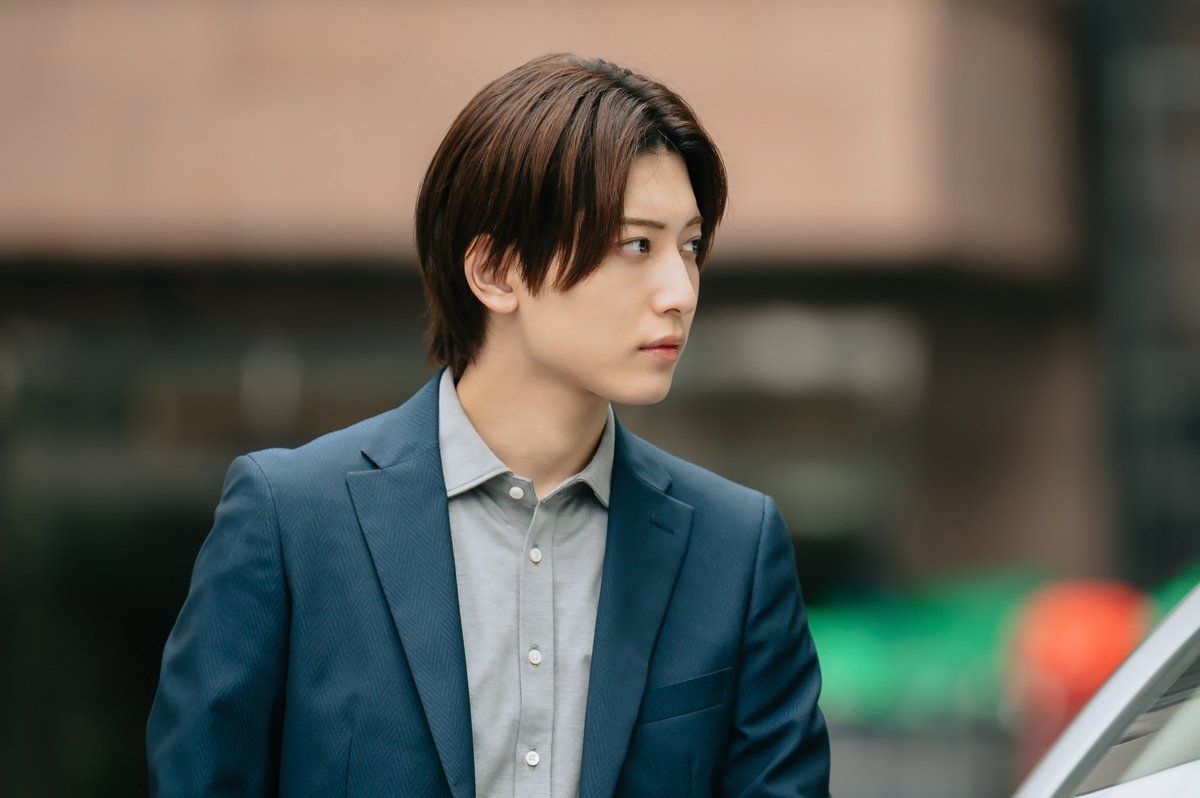
Police officer Tora Senzaki, played by KEY TO LIT member Reia Nakamura, is the main supporting character and becomes the unofficial third lead in the second half of the series. After a chance encounter amid an investigation into a notorious yakuza boss and his unidentified successor, he supports Makoto emotionally —most notably when her mentally unstable mother reappears right as she starts going on dates with Ren. As a childhood friend who harbors secret feelings for her, he actively chooses Makoto‘s happiness over his own, even if it means ignoring the right side of the law.
The rest of the supporting cast members play an important but limited role in reinforcing the central relationship. Workplace colleagues serve primarily as observers and commentators, highlighting Ren‘s fearsome reputation and contrasting it with Makoto‘s more intimate and initially skeptical perspective. They help establish the social environment and add light comedic or dramatic beats, but they are not deeply developed. Similarly, figures connected to Ren‘s yakuza background appear intermittently, functioning as reminders of his “other side,” though only his right-hand man Haruka Kiba (played by Reiya Masaki) and father figure et significant attention.
Because the series only consists of eight 24-minute episodes, the pacing moves quickly. The relationship of the central couple mostly develops through small domestic interactions —sharing meals, quiet conversations, and small gestures of care — rather than large and dramatic events. These scenes create a sense of intimacy that builds the romance well despite the somewhat limited runtime. At the same time, the format means that many aspects of the story are underdeveloped compared to the source material. The yakuza element, which initially sounds like it might introduce a more present or complex storyline, is mostly used as a backdrop rather than a fully explored world. Therefore, viewers expecting intense crime drama may feel a little disappointed, as the show rarely delves deeply into the realities of Ren‘s secret life.
Overall, the performances are solid for the tone the series aims to achieve. Ayaka Konno gives Makoto a believable emotional softness that makes her vulnerability feel sincere rather than exaggerated. Her acting is particularly effective in scenes where Makoto is quietly processing her heartbreak or slowly realizing that Ren‘s kindness might be genuine. Shota Totsuka brings a calm charisma to the yakuza leader, balancing his character’s intimidating aura with subtle warmth. Much of the drama’s appeal comes from the chemistry between these leads, whose interactions feel natural and genuine rather than staged or melodramatic. Their dynamic —her hesitant sincerity and his restrained protectiveness— make the story work and feel sincere even if it leans heavily into fantasy sometimes.
Music & Presentation
The music and sound design do a great job in enhancing the atmosphere. While the drama does not rely heavily on a standout, widely recognized track, its opening and ending sequences follow the standard J-drama approach: understated visuals paired with contemporary pop ballads that emphasize emotional longing and romantic anticipation. The original soundtrack is similarly restrained, often fading into the background to let dialogue and performance carry the scenes. This subtle approach aligns with the show’s overall identity as a character-driven romance rather than a plot-driven drama.
The opening theme, “Jibun Katte” (“Selfish”) by “gal” singer Soala, establishes the emotional lens through which the story begins. Its tone leans soft and slightly melancholic, emphasizing vulnerability, uncertainty, and the feeling of being drawn into something unfamiliar. This aligns closely with Makoto‘s initial situation —she has just experienced betrayal and instability, and her sense of control over her life is fragile. The music reinforces this by creating an atmosphere of quiet longing, suggesting not just sadness, but a kind of emotional pull toward something inevitable. Ren, in this framing, is not presented as an immediate source of danger, but rather as a mysterious force —someone who disrupts Makoto‘s world in ways she cannot yet understand. The opening, therefore, subtly tells the viewer that this is a story about falling into love before feeling ready, where uncertainty is part of the emotional appeal rather than something to resist.
By contrast, the ending theme, “Just Romantic!” from A.B.C-Z‘s 2025 album “ROMANTIC!,” shifts the tone toward emotional resolution and safety. Where the opening invites tension, the ending provides release. The song carries a warmer, more grounded feeling, emphasizing closeness, protection, and quiet reassurance. This reflects how most episodes conclude: regardless of the conflict or unease introduced earlier, the narrative tends to settle into moments of intimacy between Makoto and Ren. These scenes highlight the latter’s softer side, reinforcing his role not as a threatening figure, but as a dependable emotional anchor. The ending theme underscores this by creating a sense of calm, suggesting that whatever uncertainty exists, Makoto has found a place where she is cared for. In this way, the song reframes the “dangerous man” trope into something comforting, even nurturing.
What makes these songs particularly effective is how they work together to create a “push-pull” dynamic. The opening represents emotional risk —the uncertainty of entering a relationship with someone who exists partly outside the normal world— while the ending represents emotional safety, where that same relationship becomes a source of stability. This duality mirrors the central appeal of Ren Odagiri as a character: he embodies both danger and protection, but the drama prioritizes the latter. The music reinforces this imbalance in a way that feels intentional. Rather than asking whether the relationship is perilous, they shift the focus to the experience of being loved by someone who appears dangerous but behaves gently. The opening invites the question, “Is this safe?” while the ending quietly answers it by emphasizing emotional security over realism.
Taken together, the themes reshape how the story is perceived. They frame it not as a crime-adjacent drama, but as a romantic fantasy about vulnerability, dependence, and the comfort of being protected. The contrast between uncertainty and reassurance becomes the defining rhythm of the series, and the music plays a key role in maintaining that balance. In summary, the opening draws the viewer into the emotional risk of the relationship, while the ending ensures that, no matter what happens, it always feels like a safe place to remain.
Visually, the series adopts the clean, minimalistic style typical of its genre and time slot. Most scenes take place either in the office or Ren‘s home, emphasizing the closeness between the characters rather than large-scale storytelling. While this limited setting may occasionally make the show feel small in scope, it also reinforces the intimate tone of the narrative. The direction focuses on facial expressions, pauses in conversation, and quiet moments of emotional connection, allowing the romance to unfold in a gentle and sometimes surprisingly sweet way.
Final Thoughts
At its core, “Gokudou Joushi ni Aisaretara” is a compact, trope-driven love story that prioritizes emotional comfort, chemistry, and familiar dynamics over innovation or realism. Its strengths lie in its accessibility, its central relationship, and its ability to deliver a consistent mood. What distinguishes it, at least initially, is its use of cohabitation as a narrative accelerator. Rather than slowly building proximity, the story forces intimacy from the start. This allows the romance to unfold quickly, but it also creates a steady rhythm of domestic scenes.
In the end, the series works best when approached as a soft, fantasy-leaning love story rather than a serious drama about crime or power. It relies heavily on familiar tropes —cohabitation, the protective male lead, the secret identity, and the healing romance after a heartbreak— but it executes them with enough charm to remain engaging. The story can be predictable at times, but it succeeds in delivering the comforting experience that many people look for in romance dramas. For fans of manga-style love stories and characters like the mysterious but caring boss, the drama offers an enjoyable and easy experience, even if it never fully explores the darker potential of its premise.
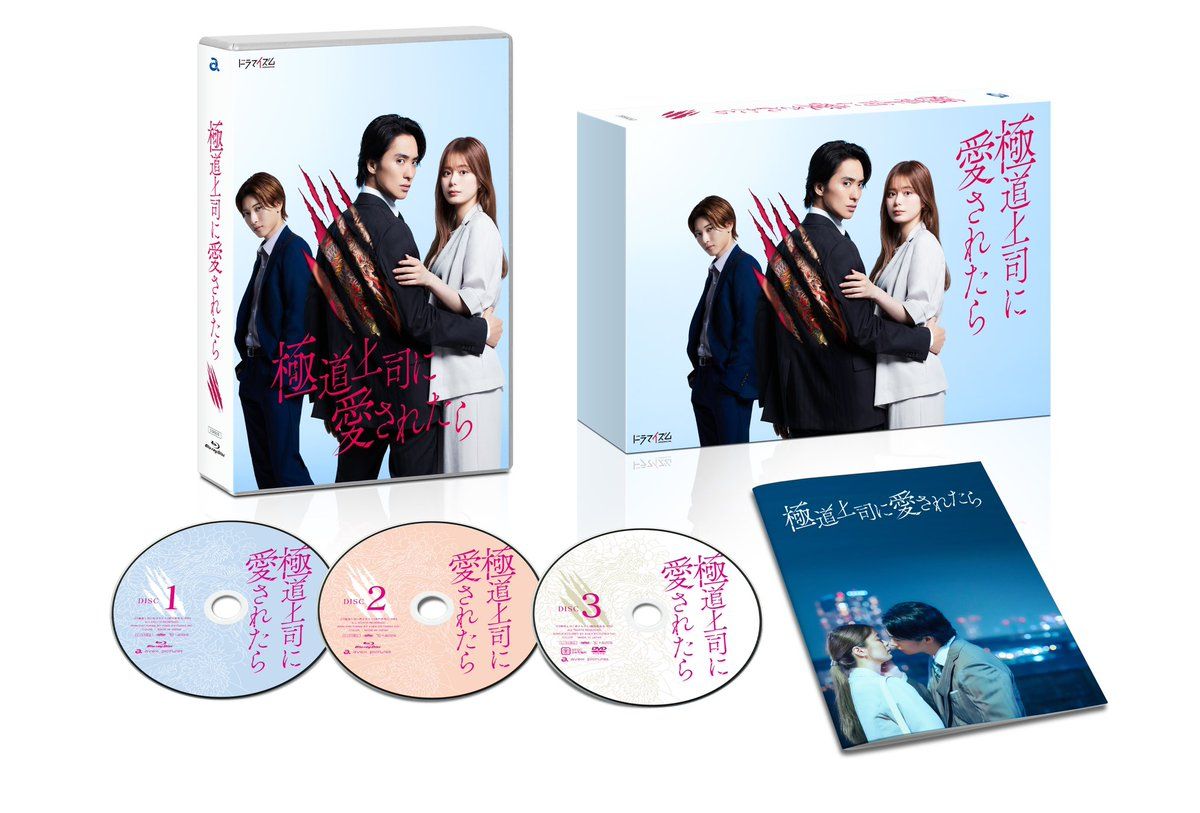
For fans of physical media, the Blu-ray & DVD box set is now available. Featuring the main story and bonus footage, such as the “making of” documentary, across three disks, the set also includes a booklet with luxurious photos. A release commemoration exhibition is currently being held at the Tower Records Shibuya Store, where costumes worn in the show and panels are on display until March 23.
For international viewers, the drama is also available on Rakuten Viki with subtitles in English and other languages, making it easier than ever to experience Shota Totsuka‘s latest leading role. Whether you’re watching it for the first time or reliving the cohabitation between a vulnerable woman and her severe but deeply affectionate superior, the emotional comfort, or the satisfying romantic payoffs, the yakuza boss’ work is now available for the world to see.