
WEST.’s Tomohiro Kamiyama has been cast in his first solo lead role in a drama series, starring in Midnight Yatai La Bonno, a new late-night drama airing on Tokai TV and Fuji TV starting April 12. He will be joined by Kaito Nakamura of Travis Japan as his buddy in this unique pairing.
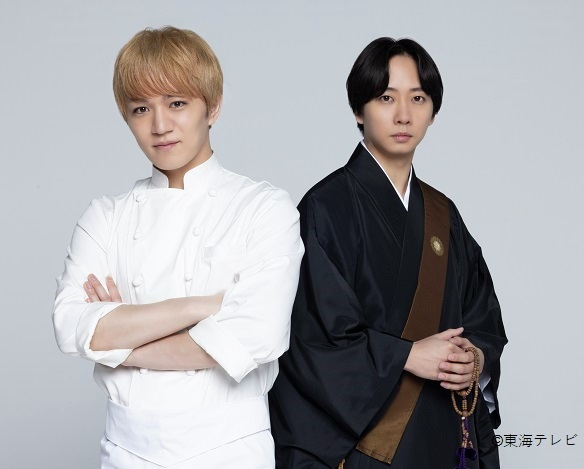
Kamiyama plays Shota Toomi, a highly skilled French chef who has lost his sense of taste, while Nakamura portrays Terumoto Hojo, a dropout monk with an exceptionally sharp palate. The two form an unusual duo in this fresh take on the culinary drama genre.
Nestled in the outskirts of Tokyo stands Senrakuji, an ancient temple. One day, the temple’s vice-abbot, Terumoto Hojo, presents a forgotten handcart-style food stall to Shota Toomi, a skilled French chef.
“French cuisine under a red lantern… It just might work.”
And so, their culinary challenge begins.
Their fateful encounter happens when Shota, working as a delivery driver, crosses paths with Terumoto, who is struggling to prepare return gifts for a wake. Wanting to send off the deceased with their favorite egg dish, Terumoto orders castella, only for a mix-up to leave him empty-handed. Stepping in, Shota whips up a tamagoyaki that closely resembles castella, saving the day.
Once a promising chef who trained at a Michelin one-star restaurant in France, Shota had planned to open his own restaurant upon returning to Japan. However, severe stress led to the loss of his sense of taste and smell, forcing him to abandon his dream and take up work as a delivery driver.
Meanwhile, Terumoto, though walking the path of a monk, has never been able to let go of his love for food. “I want to run a food stall on the side.” With this idea in mind, he doesn’t hesitate to invite Shota as the chef.
Together, they open Midnight Yatai, operating only on weeknights within the grounds of Senrakuji. The menu features dishes like onion soup, pan-seared white fish, and vegetable-packed pot-au-feu—simple yet elegant home-cooked meals. Word of Shota’s cooking spreads quickly, but it’s not just the food that draws people in.
At the bottom of the menu, Terumoto secretly adds a special note:
“We’ll make anything.”
Though irritated at first, Shota finds himself carefully fulfilling each heartfelt request—dishes that carry deep personal meaning for the customers.
A husband’s beloved fried rice.
Miso ramen shared after club practice.
Curry that kept someone going in a foreign land.
As the simple flavors bring back forgotten memories, each customer finds solace in the warm, nostalgic dishes. The food stall slowly becomes a place of comfort for all, helping them take steps forward in life.
Shota and Terumoto, both searching for purpose and a place to belong, also begin to change through their journey.
What new stories will unfold tonight at Midnight Yatai?
Kamiyama, a self-proclaimed food enthusiast who loves both cooking and eating, takes on the role of Shota, while Nakamura, who impressively embodies the appearance of a monk in robes and with his hands pressed together in prayer, surprises even Kamiyama with his dedication. This marks the first time the two actors have shared the screen, making their chemistry as a “buddy” duo a key highlight of the series.
“If I cook, any place can become a top-class restaurant.”
“Even if you can’t taste, don’t worry. I’ll be your ‘tongue.’”
What may be impossible alone can be achieved together. With their completely different personalities and abilities, this mismatched yet complementary duo serves up exquisite dishes while delivering heartfelt episodes that will satisfy both the stomach and soul.
Shota Toomi (Kamiyama Tomohiro) – The Chef
The chef in charge of the food stall’s kitchen. He comes from a family that runs a long-established sushi restaurant and trained under his father to inherit the business.
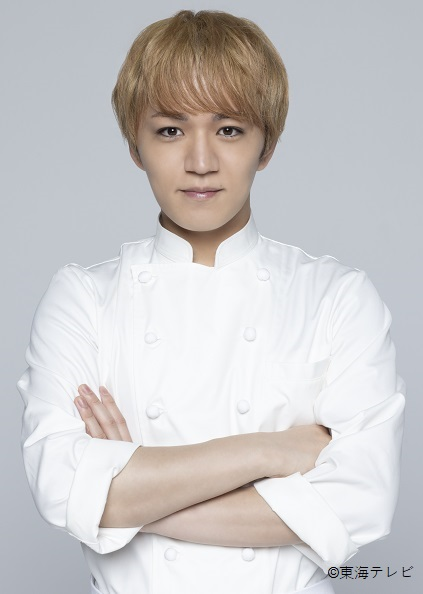
However, he was captivated by the aroma of a nearby French restaurant and left home to pursue French cuisine. He honed his skills at a Michelin one-star restaurant in Paris and quickly rose in prominence. However, due to strained relationships, he returned to Japan three years ago.
After deciding to open his own French restaurant, he succumbed to extreme stress just before the grand opening, resulting in the loss of his sense of taste and smell. Unable to continue, he abandoned the restaurant and took on a job as a delivery driver to pay off his debts. Despite his exceptional culinary skills, he struggles with communication, making him somewhat of a loner.
— How did you feel when you received the offer?
Since this is my first time starring solo in a terrestrial TV drama series, I was honestly really happy. However, when I heard that I would be playing a chef who trained at a Michelin one-star restaurant in Paris, I felt a bit nervous, wondering if I’d be expected to showcase some impressive knife skills. But the director reassured me, saying, “We’ll take our time and go through each step carefully,” which put me at ease.
— You’re playing the role of a chef, but do you cook yourself? If so, do you have a specialty dish?
I absolutely love eating. Since my mother worked, I started cooking for my younger sister when I was in middle school. It was really just classic homemade meals. One dish I often make is omurice. I like to keep the eggs as soft as possible and make the kind that’s properly wrapped around the rice. I wanted to create an omurice that looks like something you’d get at a Western-style restaurant, so after beating the eggs, I strain them through a sieve. That way, the final dish turns out beautifully smooth and bright yellow—it’s so satisfying to see the result!
— Do you have any memorable experiences related to food?
I clearly remember the bento my mom made for me on sports days and school trips. I especially loved her sweet tamagoyaki. Eating it brings back all the sights and feelings of my childhood in an instant. When I think of yatai (food stalls), I picture rows of them lined up, like in Hakata. And ramen from a yatai—now that’s delicious!
— A message to the viewers?
Since the drama airs on Saturday nights, I hope people can relax and enjoy it as a way to unwind before bed. Through food, the yatai revives cherished memories for its customers and helps them open up their hearts. I hope this series also sparks memories for viewers, making them think, “That meal back then was amazing,” or “That time I ate that dish was so much fun.” And if it inspires someone to say, “Maybe I’ll try making that dish tomorrow,” then I’d be thrilled!
Also, since I’m starring alongside Kaito Nakamura from Travis Japan, I hope everyone enjoys our mismatched buddy dynamic while immersing themselves in the warm atmosphere of the story.
Terumoto Hojo (Nakamura Kaito) – The Monk
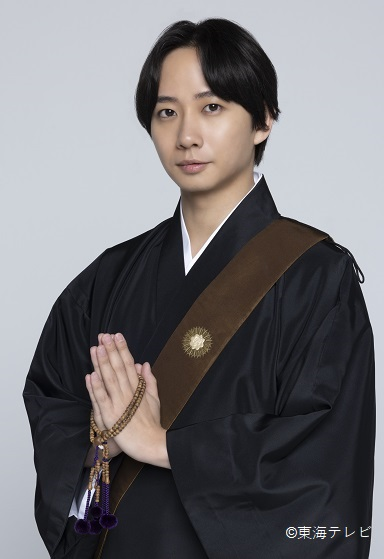
The second son of Senrakuji, an ancient temple in the suburbs of Tokyo, and its vice-abbot. He is in charge of customer service and taste-testing at the food stall. Naturally sociable, he has a knack for connecting with people. Growing up, he was often treated to high-end restaurants by wealthy temple patrons, which refined his sense of taste and sparked his interest in food.
After his older brother passed away three years ago, his father asked him to take over the temple. Although he stepped into the role of a monk, he doesn’t truly want to follow this path. Unable to give up the joy of critiquing food, he continues to post numerous gourmet reviews under a pseudonym on various food websites. While he has no cooking skills, his sharp palate and talent for food curation set him apart.
— How did you feel when you received the offer?
This is my first time playing a monk, and I was excited about the opportunity to transform into a completely new version of myself. I also felt that it would be a valuable experience for my acting career. At first, I was actually hoping I’d have to shave my head for the role, but then I learned that it depends on the sect, which was a little disappointing. Memorizing the sutras seems like it will be a challenge, but since I’ve heard that they are chanted with deep gratitude and meaning, I want to make sure I recite them with sincerity.
— Your character, Terumoto, starts a yatai (food stall). Do you cook in real life?
I recently decided to start dieting, and after some recommendations from my group members, I tried making miso soup for the first time the other day. I went out and bought a pot, bowls, and even a tool to dissolve the miso, but I completely forgot to buy a ladle… So when I tried pouring the soup from the pot into my bowl, it ended up splashing everywhere! But—the miso soup was so delicious that I couldn’t resist eating it with a bowl of white rice. That experience made me realize how amazing it feels to cook something yourself.
— Do you have any memories related to food stalls?
I remember the yatai at my local festival when I was a kid. There was a stall selling something similar to pan-fried dumplings, where a meat-filled dough was wrapped in flour-based skin and grilled—it was called Shaobing. The chewy texture was really delicious, and to this day, that’s what comes to mind when I think of yatai food.
— A message to the viewers?
I think this drama is perfect for a Saturday night after a long week of hard work. The interactions between Shota and Terumoto have this “Ah, these two are so naïve” kind of charm that will make you laugh, while the stories of the customers who visit the yatai bring a lot of warmth. Watching this drama will make you want to connect with people, and it offers a sense of comfort and reassurance. I’d be so happy if you look forward to it!
Together, this unlikely duo embarks on a journey of self-discovery through their late-night food stall, bringing comfort to their customers and, perhaps, finding a sense of belonging for themselves.