
When Sekai de Ichiban Utsukushii, or “Sekautsu” as called by the fans, was announced in September, I knew it was something that I needed to watch. As a fan of both Yokohara Yuki and IMPACTors as a whole, I immediately knew I would fall in love with this musical from just the description on the musical’s homepage. Little did I know how much I would love this two hour and ten minute show.
A spoiler warning is in effect because I will be discussing elements throughout the musical. I definitely recommend checking out my synopsis here for further details of the plot.
Based on the Japanese novel of the same name, Sekautsu tells the story of Setta Fumihiko (Yokohara Yuki) and Shimazaki Toru (Tsubaki Taiga) from the age of eight years until adulthood. The main plot of the story conveys their friendship at various points throughout their life while also capturing their love for music along the way, though both found their passion in different ways. Shimazaki had received a special education in music from a young age and had to work hard to maintain his skills. On the other hand, Setta falls in love with the piano because of Shimazaki’s playing and has a special gift: if he hears something three times, he’s able to replicate it. Various people come in and out of their lives, but at the heart of the story are these two characters and their friendship.
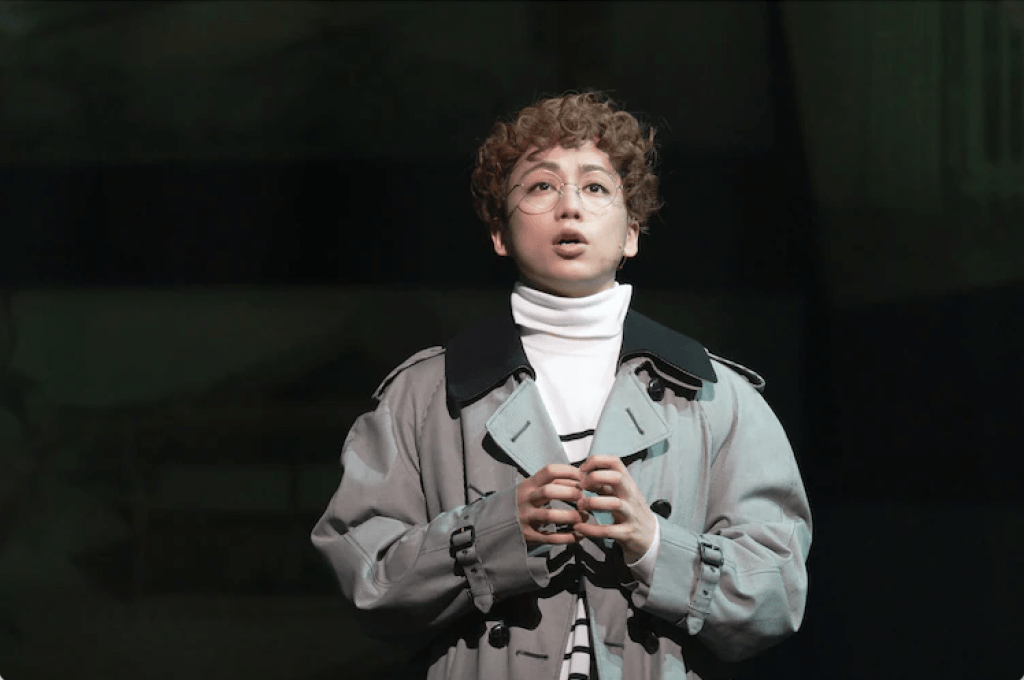
I was absolutely charmed by how Yokohara and Tsubaki portrayed their roles. In the instance of Yokohara, the small changes he makes to Setta’s character give a believable shift throughout the years while maintaining the small mannerisms that make Setta “Setta-kun.” From the tone of his speaking voice to the facial expressions he makes while eliciting his lines to other characters and the audience, his acting has a gentleness and a purity that is simply heartwarming. He especially pulls at the heartstrings when he’s singing, letting the listener into the sad backstory of Setta’s life. It’s near impossible to not feel empathy for Setta when he tells the audience how he’s been told by his family his entire life that he isn’t smart, and all I want to do is give him a hug. Yokohara’s vocal performance is also Broadway worthy, and I spent a lot of time wondering what it would be like if he was in different shows such as How To Succeed in Business Without Even Trying or Wicked.
Tsubaki on the other hand has a bit more depth in terms of emotional range he has to portray. While the changes Yokohara must make are a bit more subtle, Tsubaki had the extra layer of difficulty in order to make his outbursts of emotions believable to the audience. From his initial jealousy over Yokohara’s character’s gift to the anger and finality of his decision to quit music to even his lament over how Yokohara’s character is more talented musically than his, Tsubaki takes us on an emotional journey through Shimazaki’s eyes. Shockingly, the stand out moment I have for Tsubaki is when Shimazaki is talking to his classmate, Sawaguchi Mari (played by Yanagi Miki). The conversation between the pair is eerily similar in cadence to Japanese elementary school students. I felt as if I was watching two children talk and not two adults. I think Tsubaki showed his skills as an actor extremely well in his role.
Not to say that the other four members of the cast aren’t talented. Yanagi has a sweetness in her minor role of Sawaguchi and main role of Nagasawa Koumi. Aono Yuki as Kitajima Reiko doesn’t spend much time in front of the audience, but she not only commands the audience’s attention but also has a vocal range many people dream about. Brother Tom is a very grounding presence as Kase Yasushi, and, more often than not, the actor subtly injects ad libbed moments that have the audience giggling in their seats.
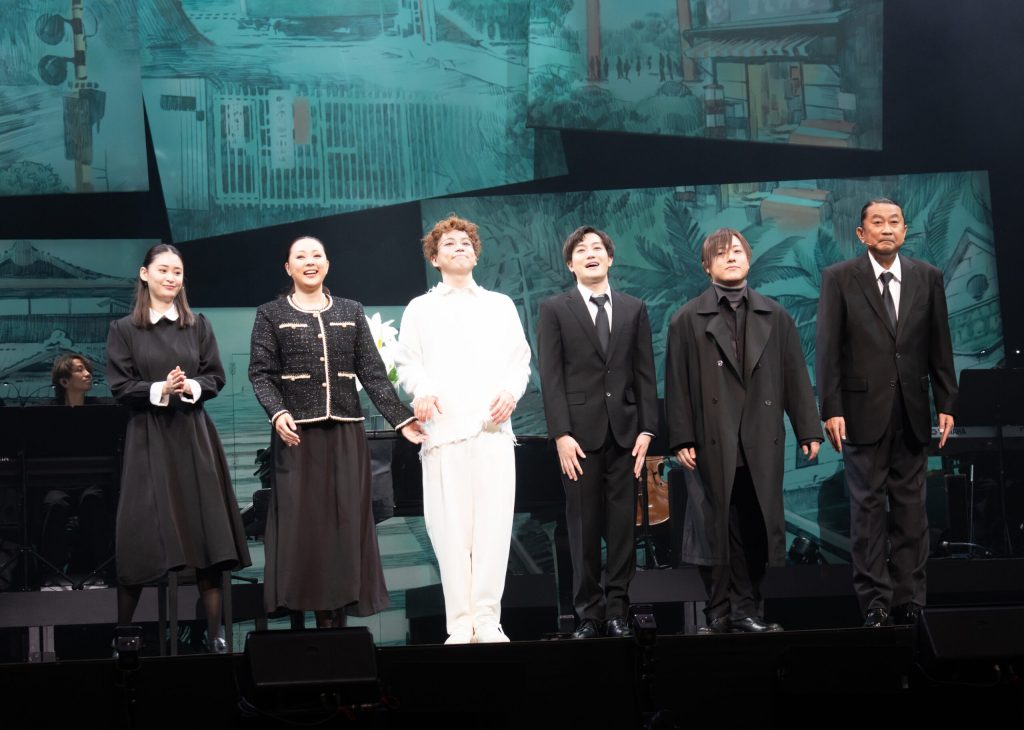
Outside of my very heavy STARTO bias, Harada Yuichi steals the show. Compared to the other actors who have one or two roles, Harada has four characters he slips into throughout the show while also being one of the most, if not THE most, vocally talented members of the cast. Each of his characters, the elderly shopkeeper, Shimazaki’s university professor, the rich business owner in Kamakura, and as well as Nagasawa’s ex-boyfriend, Tsutsumi Kantaro, are all pivotal characters throughout Setta and Shimazaki’s story and influence them in some way or another. In my personal opinion, each of these characters are the highlight of the scenes they are in. Even off stage, Harada is completely charming and has quite a quick wit to back up his acting chops. I didn’t know him before this stage, but I’ve become a fan of his talent.
Although I find the story of this musical to be absolutely beautiful and one that I will think about for years to come, it isn’t without its faults. Conflicts come and go quickly without giving the viewer time to sit and sink into what is happening before it’s quickly resolved. The shift from a junior high school aged Shimazaki hopeful about his and Setta’s future in music to his disillusionment over music as a university music is swift but necessary to press forward into the characters lives. At the same time, his decision to quit music and subsequent one to not give up took place rapidly. We, as the audience, feel his anger over his decision, and yet aren’t given time to feel the gravity. The plot rushes forward at a fast speed, and before long Shimazaki is shouting that he won’t give up. The same happens later in the musical at several pivotal moments such as when Setta wants to write an opera as well as when Setta’s brother comes to listen to him play the piano.
Even with the problem in conflict resolution, the heart and purity of the story are what really draw the viewer in. Written within the lines of dialogue is the story of two friends whose stories always intersect. The live music accompaniment serves its purpose beautifully as it pulls the viewer in during its moments of anguish as well as those tender and loving ones. The music of this musical is why it feels so special because it’s easy to get lost in it as the characters are singing or even acting throughout the scene. We, as the viewer, stop for those small moments and listen to what the characters express through their songs.
One thing I do appreciate is the shift in music tones towards the end of Sekautsu. Throughout much of the musical, the music is very light and beautiful, a drum set occasionally being added for depth, but more often than not the accompaniment is a piano and cello. Towards the end where we are formally introduced to the role of Kantaro, the ex-boyfriend of Nagasawa Koumi, our gentle music shifts to a dark tango. This change hints that our beautiful musical will not be wrapped up in the joyful bow that we wish.

The sound mimics that dark turmoil deep within Kantaro’s heart until that heart wrenching moment he stabs Setta in the stomach. It is a painful moment where the music had been building and building throughout their confrontation that the absence of all sound is felt in that single moment. The small tinkling piano notes slowly fill the air until Setta’s untimely end, and those carefully chosen musical moments only elicit tears from everyone watching.
As much as I adore IMPACTors, and it’s members, I’m still conflicted on whether I would have cast Tsubaki in this musical. Although he is strong vocally, and he conveyed the character of Shimazaki well, the vocal role of Shimazaki is a challenging one with a wide range. Tsubaki can convey the lower notes and the emotion needed for the lines, but he cannot belt out or reach the highest notes with ease. Instead of reaching those notes gracefully, more often than not it sounds as if he is screaming the notes. The sound is quite jarring against the background of the music. Throughout the Tokyo run, he was able to adjust his vocal performance to not sound so jarring by the last show in Tokyo, something I must commend him on because it couldn’t be easy to do that. I still wonder what it could have been with someone else in the role, but even with his vocal limitations, I am proud of the performance Tsubaki gave.
Whether Tsubaki is giving a tearful singing number explaining his character’s feelings over Setta’s talent or Yokohara plays the piano for Setta’s final performance, the lighting of the show is simply spectacular. There were moments where I couldn’t help but look out into the audience as beams of light came into the audience to create the texture of the ocean Shimazaki was walking along or admiring the brilliant rainbow lighting after the opera. One excellent lighting touch I loved was every time Shimazaki confronted the elderly women about his change, a blue light was cast upon the stage and actors to highlight the absurdity of wrong change being given.
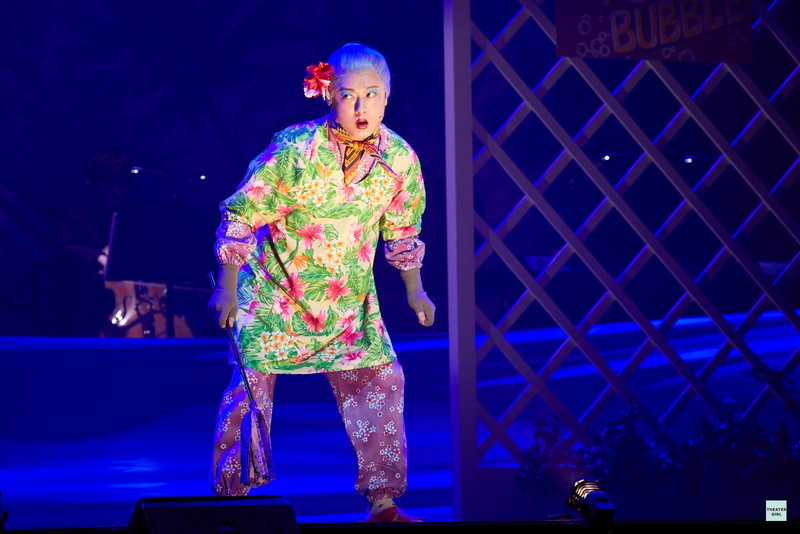
But out of every moment, my favorite use of lighting was the final confrontation between Setta and Kantaro. As Kantaro sings his anger and frustration, the lighting of Eglantina takes on a red and blue hue, twisted patterns being reflected upon the backdrop of the stage play. The change in lighting is swift as Setta takes the focus, becoming pure, white and bright. Though it’s a simple change, it’s an effective one to see how different these two characters are. The darkness and hatred within Kantaro’s heart is on full display to the audience while Setta’s heart is full of goodness and purity. I always looked forward to this moment with every show I attended because of how smooth those switches were between lighting, even if the end of the scene broke my heart.
The last thing I want to discuss is the set of Sekautsu. I would be lying if I said I wasn’t worried upon walking into the theater. The main structure of the set is five pictures depicting areas of Kamakura, a raised platform that houses the instruments used, and a piano that is pushed around the stage depending on where it’s needed. It was far more simplistic than I imagined.
Though the stage is quite bare, there are a few set pieces backstage that help enhance the viewing experience. The biggest is a large rectangular structure that’s pushed around the stage depending on where and when it’s needed. The outside is painted with a winding road with two hidden doors on the front of the box that swing outward to take us into various parts of the world of Sekautsu. The one on the right swings open to reveal a shop Setta and Shimazaki go to at the start of the musical meanwhile the left side depicts the inside of Setta’s childhood home. If the structure is turned around, and the two doors on the side are opened, it becomes the bar of the restaurant Eglantina, where most of the story takes place. Tables and chairs are added to the stage to further immerse the viewer into the setting. There are also wooden fences with palm trees that are brought out for the fantastical opera sequence in the second half of the musical.
Everything used in the setting and background of this musical is very simple, but it’s effective. Though there are long instrumental moments to give the actors and staff time to set up each scene, it doesn’t feel long. Each number is just the right length and the set has just the right amount of decoration without it feeling as if it’s too much. It fits the musical perfectly in my opinion.

Overall, Sekautsu is a beautiful story that I hold dear to my heart. I went to this musical more times than I should have because of my love for Yokohara, and, although it may be embarrassing to admit, this musical has affected me emotionally more than any other. Much like myself, I think everyone can connect with the two leads in one way or another. Whether you are Setta, who has been told from a young age that he isn’t smart but has a beautiful talent, or Shimazaki, who has had to work hard for his talent but never feeling as if he’s good enough, there’s something to love about each of their stories. The emotional rollercoaster the viewer is pulled upon is one full of love, and it is one that I wish I never had to get off of. Sekautsu is a wonderful little show that I wish everyone could experience at least once.