
There are songs that become milestones in a group’s career—markers of growth, change, and resilience. But “RUN” is different. It isn’t just a turning point; it’s a song that has carried multiple beginnings and multiple goodbyes. It has lived more than one life, and each time, it has meant something different—to the artists who performed it, and to the fans who held onto it.
When timelesz, formerly Sexy Zone—Shori Sato, Kento Nakajima, Fuma Kikuchi, Marius Yo, and So Matsushima—(and will be referenced as such for the moments they did under that name), announced their new label Top J Records, co‑established by the agency and Universal, the message was clear: a new era was beginning. And the very first flag planted on that new ground was “RUN.”
On August 5, 2020, the single was released as the label’s inaugural work — accompanied by a promise: to not only define Sexy Zone’s identity, but to carry them into the world.
The group, approaching their 10th anniversary, spoke openly about confronting the walls they had hit since debut—with an average age of 14.4, the youngest group in history—about discovering what “Sexy Zone‑ness” truly meant, and about using their experiences to move forward with pride. They framed “RUN” not just as a song, but as a declaration of resilience—they will keep running.
Musically, it was sharp. Fast. Urgent. Emotionally charged—a fitting reflection of the drama Detective Novice (2020), starring member Kento Nakajima. But even without the drama tie‑in, it resonated for a different reason: it arrived during a period when listeners everywhere were struggling. The chorus didn’t ask us to be strong—it reminded us that we already were.
Members described it perfectly:
“A song that cheers for you when you listen, and cheers from within when you sing it.”
In September 2020, on THE MUSIC DAY, Sexy Zone performed “RUN” together as five for the first time in 1 year and 9 months. So Matsushima, who had taken time away to focus on treatment for panic disorder, stood on the stage again—not as a statement of recovery, but as a person who was welcomed home.
Fans watching didn’t just see a performance — they saw a missing piece click back into place.
In that moment, “RUN” became a song of healing—a reminder that people can come back, that broken things can become whole again, and that being together means more because of the fragility of it.
For many, that memory is irreplaceable.
But that performance wasn’t the only one that set hearts ablaze and eyes wet. In the whirlwind of 2020—a year that tested the bonds of countless artists and fans alike—their POP×STEP!? TOUR 2020 emerged as a beacon of resilience. Originally slated for a spring kickoff, the tour was derailed by the global pandemic, postponed, then canceled. But the group refused to let it fade into obscurity. Transformed into a series of intimate online streaming performances from October 29 to 31, they ensured that their hard work did not go to waste and that Sexy Lovers from all around the world could participate in the tour.
And the stage lit up with all five members united on the big stage again for one song during the fan choices roulette, and, of course, for “RUN.” For the physical release of the tour, the recording date was October 31, the last day, and the songs on that day were “Gyutto” and “RUN.”

The way the runway lit up in all five members’ colors as they ran down it to the main stage during “RUN” left an everlasting view. I think I am not alone in remembering this moment as something particularly emotional and moving. It wasn’t just about seeing them reunited again. It was coming home.
Maybe this is why the re‑recorded versions for timelesz strike so deeply. The song that once told us ‘we’re finally together again’ now whispers, ‘we’re stepping into the future’—and holding both truths at once can be a hard transition to experience as a fan.
Crucially, fans honestly noted that watching the 8-member—adding Takuto Teranishi, Yoshitaka Hara, Masaki Hashimoto, Shuto Inomata, and Taiki Shinozuka—performance felt like seeing a completely different, new group, and that the shadow of Sexy Zone was nowhere to be found. This highlights the magnitude of the evolution. The song has moved past its origins, transforming into a sound unique to the current iteration of timelesz.
The question for every article on this subject must be: Is the timelesz version a replacement for the original? In my view, the answer is a resounding no; it is a fulfillment. The timelesz version of “RUN” should not be viewed as an attempt to supersede the original, but rather as a necessary narrative continuation.
The hurt of losing something I treasured still lingers, though, and that’s something I will forever carry with me. But, I do so with pride. Pride, knowing that I fell in love with five members who showed me how to run. Who showed me to never give up, no matter how dark the road ahead might be. Pride, because I love what they have worked hard for to achieve, and for staying.
I know that this hurt, this anger, this disappointment, and betrayal feel different for everyone. And, it’s okay. I believe that it’s okay to still hurt, and perhaps, never stop hurting. Because for many, “RUN” belongs to a chapter that had already been closed.
Both truths can exist at the same time.
The original song was about starting the run, fueled by the sheer desperation and ambition of four young artists. The 8-member version is about re-committing to the race with a new, stronger, and more resilient team. It is a song of perseverance that finally achieved its ultimate meaning by being the final act that defined the group’s future.
It is not an erasure of the past, but the ultimate realization of its own promise.
The original “RUN” was a plea to keep going. The new “RUN” is the sound of them having successfully done just that, welcoming five new members to run alongside them on the path ahead. It solidifies that the journey continues, and the best way to honor a powerful legacy is not to replicate it, but to confidently carry it forward into a new era.
The timelesz version didn’t erase the Sexy Zone version — but it did change its meaning. The original held tension and urgency; the new one carries heat and unity. Instead of clinging to survival, it leans into expansion. Instead of running to stay together, it runs toward a wider future.
What was once a song about beginning together has now become a song that moves forward without the same five who once carried it. The message has not changed—but the perspective has.
Maybe the most generous way to understand “RUN” today is this:
- It was a symbol of rebirth for Sexy Zone.
- It was a symbol of recovery when five stood together again.
- And now, it is a bridge that allows timelesz to run further than before.
A song can hold different meanings for different eras, without erasing any of the memories that came before.
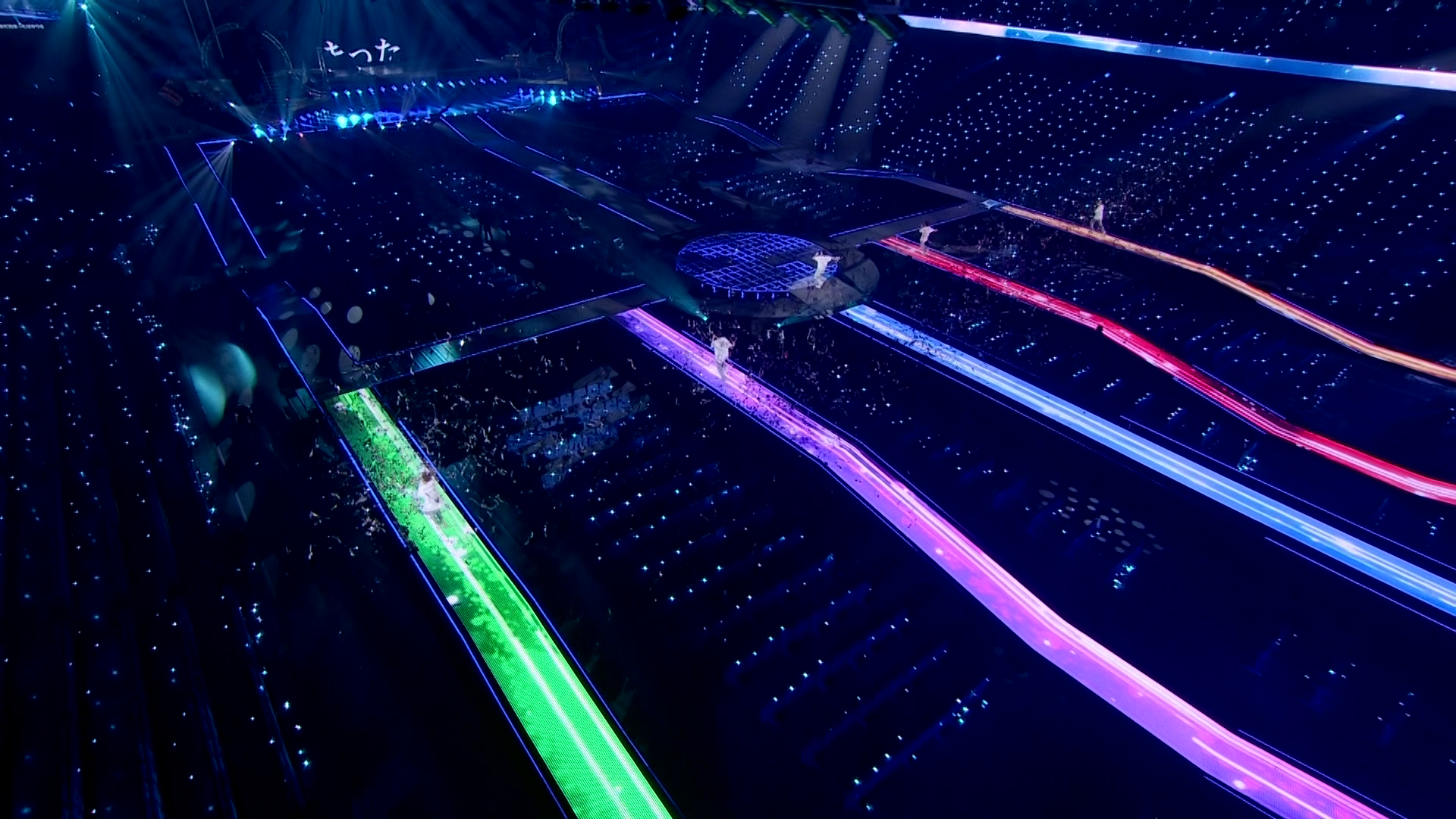
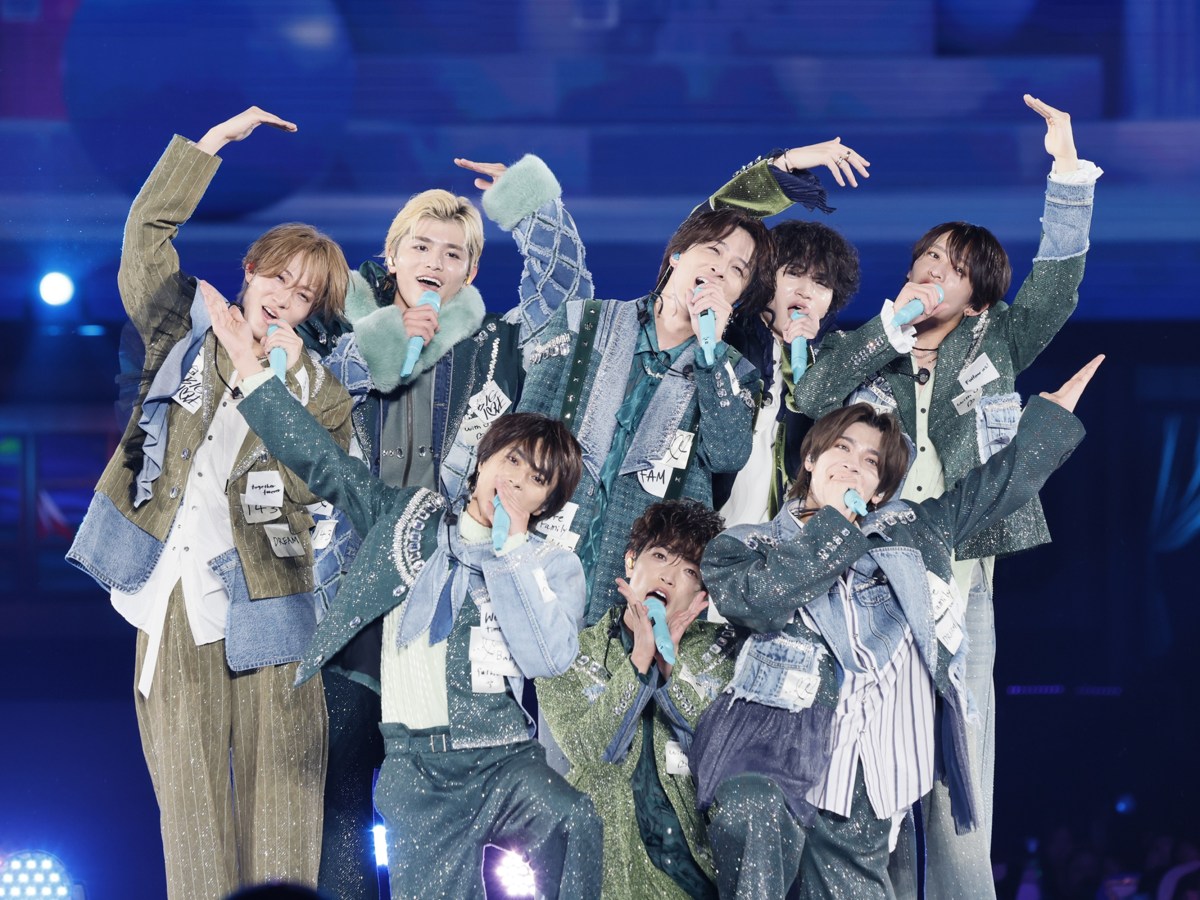
I wrote it before in the timelesz LIVE TOUR 2025 episode 1 ~FAM~ livestream report, but to hear “RUN” now — sung not only by So‑chan, Shori, and Fuma, but by all eight members of timelesz—was to witness something profound. A transformation. A redefinition of purpose. From the very first chorus, it felt like the group was running with us—carrying us forward into this new episode.
The choreography was as intense as ever, the vocals emotionally charged, and So‑chan’s delivery in the bridge—“Even without understanding, we still chose to believe in something”—hit with a force that knocked the breath out of me. Knowing his journey, knowing the weight of that line, it landed like a promise.
I remember back in 2021, when I had the honor of speaking about this very song on SONGS OF TOKYO, I said:
“They are not running away from things but running toward the things they want to do, accomplish, and face head‑on. It’s a strong statement—they are not backing down, they are moving forward, taking the past with them, and that’s what gives them strength.”
And today, in 2025, I feel exactly the same.
Yes, it felt different hearing the new members join in. A part of me hesitated—because the song was once a message from four people during a very specific time. But seeing it reshaped by eight voices, I realized, for me, it wasn’t about erasure—it was about evolution. A moment of carrying legacy, not replacing it.
I truly believe this is the kind of moment the original members were searching for when they opened their group to new voices. It’s not just passing the torch—it’s running forward together.
“RUN” isn’t a goodbye to what was. It’s a declaration that this—this unity, this shared sprint toward the unknown—is what makes timelesz stronger, no matter the shape of the group.
I don’t think the question is whether “RUN” belongs to Sexy Zone or to timelesz.
I think the real question is: What do we do with a song that refuses to stay in one place?

For some, the most beautiful version of “RUN” will always be the five‑member reunion—the moment the stage finally felt complete again. And that’s not wrong.
For others, the most meaningful version is the one that lets the music continue—the version that proves legacy can survive evolution. And that’s not wrong either.
What makes “RUN” special is not that it stayed the same.
It’s that it has continued to carry people forward, no matter the year, the lineup, or the name printed on the CD jacket.
And now—in a way no one could have predicted in 2020—it still is.
Different starting line.
Different chapter.
Same song—still pushing someone somewhere to keep moving forward.
And maybe that’s the most fitting legacy of all.
This is the story of a song that keeps running toward something.
re timelesz on Social Media
Watch “timelesz project -AUDITION-“
More timelesz on Dumpling Box






Something went wrong. Please refresh the page and/or try again.