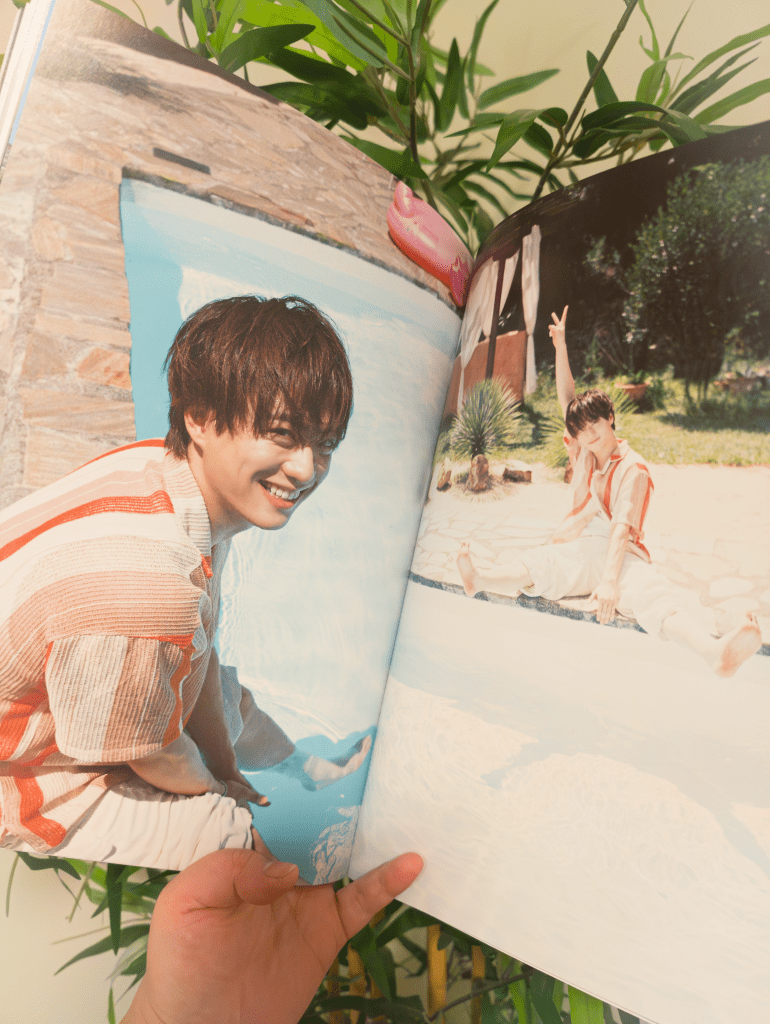
Receiving Fukumoto Taisei 1st Photobook — 雲間 (Kumoma) feels less like opening a book and more like being invited away for a quiet, one‑on‑one weekend. Ninety‑six pages of warmth, gentle smiles, fleeting maturity, and the kind of closeness that makes time slow down.
Released on December 12, Kumoma arrives like an early Christmas gift — one chosen carefully, and offered with sincerity.
The theme of Kumoma is simple, yet deeply intimate: a weekend getaway with Taisei.
Across its pages, we follow him through relaxed, cinematic moments — playful laughter in soft light, thoughtful gazes caught between movements, and expressions that feel unguarded. It captures both the familiar brightness fans know so well, and a quieter, more reflective side that lingers just beneath the surface.
The title Kumoma, chosen by Taisei himself, means “between the clouds.” Like sunlight breaking through an overcast sky, it reflects the idea that even when we are apart, our hearts remain connected. It is a fitting name for a book that feels like reassurance — gentle, constant, and warm. And for someone who lives oceans apart, that resonates even louder.
Taisei shared:
“I’m so happy to finally announce the release of my first photobook ‘Kumoma’! Unlike my usual artist activities, this shoot explored many different situations and expressions, and I can’t wait to see how everyone reacts once it reaches your hands. Just like catching glimpses between the clouds, I hope you’ll enjoy discovering new sides of me throughout the pages.”
One of the most charming sections of Kumoma is the “50 Questions, 50 Answers” feature, which paints an endearingly honest portrait of Taisei as a person.
He describes himself in one word as an angel(very fitting for his angel wing), lists his best trait as his smile, and admits his biggest flaw is being too particular. Taken together, the answers feel disarmingly sincere, revealing a self-awareness that’s both earnest and quietly charming. He laughs at himself for being both thrifty and a little stingy, calls himself a rabbit if he had to be an animal, and shyly names his sanpaku eyes1 as a charm point (among many others).
There’s an unpolished sincerity in his answers: he’s happiest when eating with someone, relaxes with massages, fears bees, loves white‑based interiors, and still uses a Boston bag bought with New Year’s money. He can climb mountains alone, sleeps on his back, and is currently obsessed with all‑you‑can‑eat buffets.
When it comes to love, his honesty is quietly disarming. He wants to be sweet, but doubts he can pull it off. He has no experience with love consultations, wants to be called “Taisei‑kun,” and prefers simple café dates. Asked if he’d date himself, he answers, “Probably not.”
Yet again and again, his thoughts return to fans. To Taisei, fans are “people I should make happy.” His dreams—from standing on the Budokan stage to traveling together to Hawaii—are always framed with them in mind.
The final message is gentle and unmistakably Taisei:
“Thank you for looking at my photobook. Let’s go on another one‑night, two‑day date again.”
The long interview deepens what the photos begin to show.
Taisei speaks openly about his childhood—a boy who was lively and mischievous, but also deeply considerate. He recalls standing up fiercely when something precious was damaged, yet protecting friends even when he suspected they had wronged him. He remembers moments of loneliness he hid from his parents, and small acts of pretending—like forcing himself to like food he hated—simply to make others happy.
Even his earliest memories carry this theme: waving eagerly at garbage truck drivers, delighted not only by their smiles, but by how happy it made his grandmother to see him happy.
Looking back, Taisei realizes he was the kind of child who instinctively understood that his happiness was tied to the happiness of those around him—and that making others smile never felt like a burden.
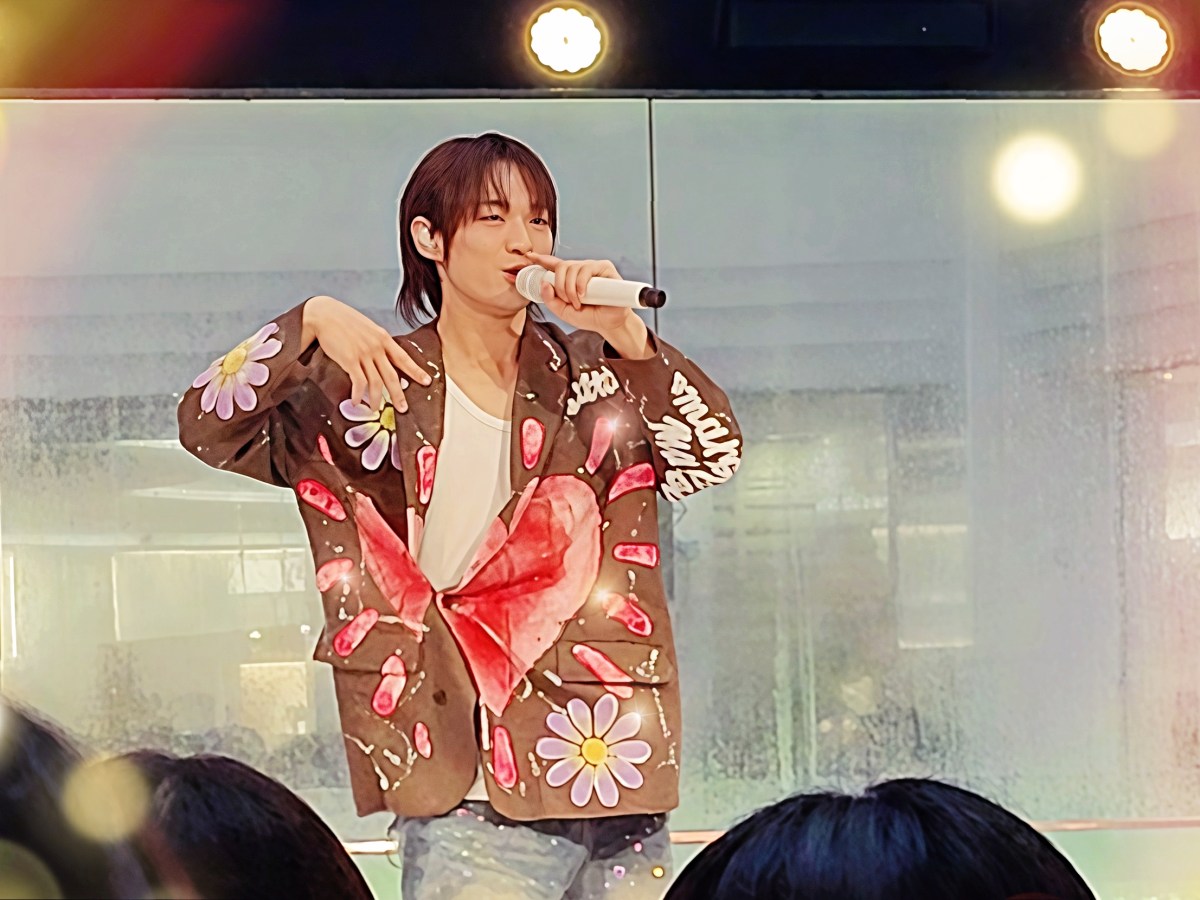
As a solo idol, Taisei reflects honestly on his past year and a half. He admits he pushed himself too hard, moved too fast—but also that the journey felt incredibly long and heavy because every decision was his own.
Live performances, especially his fan‑club‑only tour, were physically and emotionally exhausting. There were moments of doubt so deep he wondered if he could step on stage at all. And yet—the moment he stood in front of a microphone, everything changed.
The stage, he says, is magic.
No matter how heavy his emotions before, the instant the performance begins, joy takes over. Creating something meaningful and feeling the response return to him is what makes live performance irreplaceable.
Taisei believes the most important thing as a performer is to truly enjoy himself. Joy, he says, is contagious — and people naturally gather around light and warmth.
At the same time, he admits he cares deeply about fan opinions. Not because he lacks confidence, but because his image of an idol is someone who carries their fans’ expectations while dreaming forward. He may not show every thought, but he is always thinking — carefully, earnestly, sometimes too much.
His words still echo: “I want them to remember the space… a happy place shared only between me and my fans.”
It’s clear how every step he takes is proof of his promise to never betray the trust of his fans and to make every day a little more colorful.
At 25, he describes himself as being in an ambiguous, in‑between place. No longer youthful innocence, not yet mature composure. A slightly mysterious, undefined version of himself — one he hopes fans will continue to watch as he grows toward greater ease and gentleness.
Kumoma is not a summary of who Taisei Fukumoto is.
It is a glimpse — between clouds — of who he is right now.
Warm, thoughtful, sometimes uncertain, always sincere. A photobook that doesn’t demand attention, but quietly invites you to stay a little longer.
And once you do, it feels exactly like he promised:
A one‑night, two‑day date you’ll want to return to again.
AFFILIATE DISCLOSURE Dumpling Box may include affiliate links. If you purchase through them, we may earn a small commission that helps us continue sharing Japanese entertainment with fans worldwide.
Translate »
<
<
Discover more from Dumpling Box
Subscribe now to keep reading and get access to the full archive.