
At first glance, “Kimi ga Sabi” (君がサビ) sounds like a simple pop phrase. But the more you sit with it, the more the title reveals its quiet brilliance. Literally translating to “You Are the Chorus,” the phrase reframes the entire structure of a song.
In pop music, the chorus is the emotional peak — the line everyone remembers, the moment that returns again and again. To call someone the chorus is to say they are not just part of the story, but the moment the song exists for.
That idea sits at the center of Taisei Fukumoto’s new digital single “Kimi ga Sabi,” released ahead of his upcoming first album angel wing. The track officially arrived at midnight on February 21, followed later that day by the premiere of its music video at 21:00 JST, giving listeners their first visual glimpse into the world surrounding the release. Rather than presenting himself as the focal point, the title subtly shifts attention outward. The listener — you — becomes the emotional anchor. The person being sung to — anyone listening — becomes the reason the song keeps repeating.
During the livestream announcing the album and tour, Taisei shared that the track was not originally intended to be positioned so prominently. Early in the production process, “Kimi ga Sabi” had been considered as a coupling track. But once the song was completed, its potential became impossible to ignore.
“It turned out to be such a good song,” he said with a smile, recalling the moment the team realized the track deserved more than a supporting role. The decision to release it as a pre-release digital single ultimately came from him. If angel wing is meant to introduce the world to the many sides of ‘Taisei Fukumoto,’ then this song felt like the right place to begin.
Part of that confidence lies in its accessibility. Taisei described the track as something listeners can return to again and again — easy to listen to, easy to remember, and easy to sing along to. It is the kind of melody that settles comfortably in the mind after just one play. In his words, it belongs to the category of songs he believes fans will naturally love.
From the listener’s side, that instinct already feels proven true. Musically, the production leans into the kind of polished J‑Pop craftsmanship that makes a song immediately addictive. Sparkling synth textures sit atop a buoyant yet warm rhythm, while Taisei’s bright but slightly husky vocal tone cuts cleanly through the arrangement. The result is a sound that feels both intimate and expansive, the kind of melody that settles comfortably in the mind after just one listen.
The chorus lingers almost immediately, the kind that slips into daily life — hummed on the train, replayed during quiet moments, or sung absentmindedly before realizing it has already looped again in your head. That balance between personal warmth and universal accessibility may be part of the reason the song connects so quickly. Anyone who has ever experienced the feeling that a single person can make life sound brighter will recognize the emotion embedded in its melody.
In that way, “Kimi ga Sabi” becomes the kind of song people instinctively return to — the one that plays on repeat when you need a small reminder that love, in all its forms, has the power to turn ordinary days into something worth singing about.
And in that small, everyday way, the song begins fulfilling its own premise. If the chorus is meant to belong to the listener, then hearing it repeated — in people’s voices, in passing melodies, in the quiet echo of someone humming along — feels like confirmation that the message has already landed where it was meant to.
Even the title itself carries a sense of discovery. When the phrase “Kimi ga Sabi” first appeared during the songwriting process, he described feeling a small moment of realization — the kind that makes you think, how has nobody said this before? It felt obvious and new at the same time, like uncovering a phrase that had always existed somewhere just out of reach.
That balance between familiarity and freshness mirrors the role a chorus plays in music itself. It is the part of the song designed to welcome listeners in — the moment when the music opens outward rather than inward.
But the real anticipation surrounds the music video. Taisei teased that while fans have already seen many sides of him through past releases, this time fans and others may find themselves surprised. He described the video as playful and charming — the kind that might make people pause and think, so this side of Taisei exists too.
Once the song was out, as people began spending time with the song and its visuals, another layer started to emerge. On the surface, “Kimi ga Sabi” reads like a love song, its lyrics filled with musical imagery — keys rising, sadness muted, feelings compared to melodies still being tuned. The language of music becomes the language of emotion. That perspective feels especially intimate knowing that Taisei himself helped shape the song at every level, credited for both lyrics and composition alongside Kan Yamamoto (NEW EVIDENCE). A confession that hasn’t quite been spoken yet is described not in ordinary words, but in chords, rhythm, and composition — not just performed by Taisei, but quite literally built by him.
For many encountering his work for the first time, it comes as a pleasant surprise to realize that he is not only the performer but also directly involved in writing and composing the music he releases. For long-time followers, however, that creative authorship has become part of the emotional appeal. The musical references woven throughout the lyrics — tuning, rhythm, keys rising — feel authentic to someone who genuinely thinks about love and life through the language of music.
Yet the imagery leaves room for interpretation. The lyrics open in the cold breath of a street corner, where a passing love song triggers a feeling that does not yet have a name. That emotional starting point matters. The song does not begin with certainty or confession; it begins with recognition — the moment when someone realizes that what they are feeling might be love.
From there, the imagery slowly warms. Lights soften the cold, time seems to melt, and sound begins to emerge from what was once described as a silent world. The progression mirrors the emotional arc of falling for someone: confusion becomes awareness, awareness becomes rhythm, and rhythm eventually becomes melody.
What makes the writing particularly striking is how consistently it uses musical language to describe those feelings. Rather than saying the emotion directly, the song speaks through the vocabulary of composition — rising keys, muted sadness, a confession still “tuning” itself into place. Even the line about leaping beyond the five-line staff evokes the image of music expanding past the boundaries where it normally lives.
By the final lines, the imaginary scene returns once again to that street corner. But this time, it is no longer someone else’s love song drifting through the air. It has become “our song.” Whether that cold is the same moment revisited or a different season reached after time has passed remains intentionally ambiguous. The lyrics leave that emotional space open, allowing listeners to fill it with their own story.
The music video extends that emotional ambiguity through visual symbolism. Taisei is seen driving forward, releasing balloons into the sky while carrying a weathered suitcase with him. The contrast feels intentional: some things are let go, while others are chosen to move forward. The balloons drift away like unspoken feelings or past burdens, while the suitcase suggests memories, experiences, and the things that shape who someone becomes.
Seen through that lens, the journey in the video feels less like a literal road trip and more like an emotional one. The act of moving forward requires both release and preservation — letting certain feelings rise into the sky while keeping others close enough to carry. It is a quiet visual metaphor for growth.
That openness may be part of the song’s strength. The lyrics themselves hint at something deeper than a straightforward love confession. Lines about “leaping beyond the staff” evoke the language of composition — the blank five lines where music begins before a single note is written. For someone who has spoken openly about writing and building songs from scratch, that image carries weight. Every melody begins with an empty score, every chorus with a space waiting to be filled. Thinking about the song through that lens transforms the phrase “Kimi ga Sabi” into something profoundly generous: the most important moment of the song is being offered to someone else.
It also quietly reflects the unseen process behind the music. Before a performance, before a chorus that thousands of fans will sing together, there are long stretches of solitude — writing, adjusting chords, testing melodies, shaping lyrics line by line. The finished song may sound effortless, but its existence comes from countless hours spent facing a blank page of staff paper and gradually placing sound upon silence. In that sense, the song can be heard not only as romance, but as gratitude toward the people waiting on the other side of that work.
Because ultimately, the music does not end when the song is finished. It continues when it reaches the audience. Fans travel long distances, rearrange schedules, follow announcements, and finally arrive at a concert hall waiting for the lights to dim. And when they lift their penlights together in the darkness, the stage and the crowd complete the same composition from opposite sides.
“Kimi ga Sabi” could be interpreted as a confession directed toward a person, but it can also be understood as a reflection on music itself — the act of chasing a melody, of searching for the moment when a song finally finds its chorus. The two interpretations are not mutually exclusive. Instead, they coexist in the same emotional space, where love, music, and personal aspiration become difficult to separate.
That hint feels deliberate. If angel wing is intended to represent Taisei’s identity and journey, then the single introducing it naturally carries a sense of revelation. Not a dramatic reinvention, but a widening of perspective.
More than anything, “Kimi ga Sabi” captures a philosophy about connection. Pop music often frames the artist as the storyteller and the audience as observers. This title quietly flips that relationship. The singer may deliver the verse, but the chorus — the moment that gives the song its heartbeat — belongs to someone else.
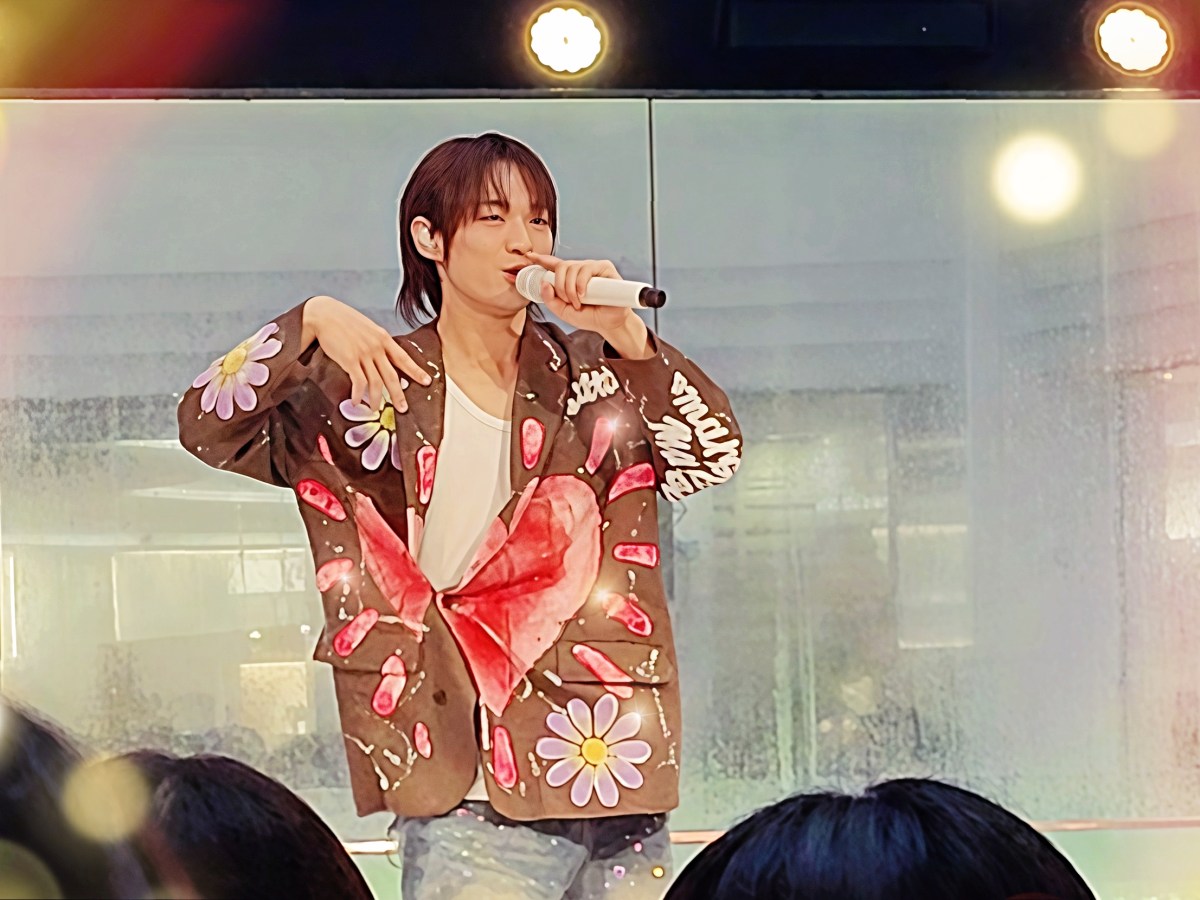
In a live setting, that idea becomes almost literal. When thousands of voices sing the chorus together, the performer steps back for a moment and lets the crowd take over. The audience becomes the song’s center.
Seen in the broader arc of his solo work, the emotional perspective of “Kimi ga Sabi” also echoes the message that first appeared in his debut music video for “I wanna meet U.” That earlier song was built around a simple but powerful idea: the desire to meet the people who waited for him, and the gratitude he felt toward those who continued to support him. It framed the relationship between artist and audience not as something distant, but as something reciprocal — he wants to meet them, and they want to meet him.
“Kimi ga Sabi” feels like a natural evolution of that same narrative. If “I wanna meet U” was about the longing to reunite and stand in the same space again, this new song shifts the language toward something even more intimate. Instead of simply wanting to meet the listener, he places them at the emotional center of the music itself. The chorus — the heart of the song — becomes something shared.
That continuity is part of what makes the new single resonate so strongly. Those who remember the warmth of that first music video recognize the same sincerity here, only expressed through a more mature metaphor. The connection between artist and audience is no longer just the motivation behind the music; it has become the structure of the song itself.
More striking, though, is how personally many people seem to experience the song. It is as if the lyrics mirror your own emotions — as though the words capture the feelings one has toward the artist: Taisei. The line about falling in love at first sight, in particular, resonates strongly with those who remember the moment they first encountered him on stage or screen, and that magical moment is a memory you never want to let go of. It’s something precious and a real treasure that you keep with you forever. What begins as a fictional love confession begins to blur with the real emotional relationship between performer and audience.
That mutual reflection may be why the title resonates so strongly. For some, “Kimi ga Sabi” feels like a message from the artist to his fans. Yet many respond by turning the phrase back toward him, suggesting that he himself is the “chorus” of their own daily lives — the bright refrain that lifts their mood, motivates them through ordinary days, and becomes the song they return to again and again.
In that sense, “Kimi ga Sabi” feels less like a declaration and more like an invitation. It suggests that the story of angel wing — a name inspired by Taisei’s own “angel wing,” the small silver patch of hair at the nape of his neck that fans now recognize as one of his charm points, though he once admitted he felt a little shy about how much it stood out — will not be carried by the artist alone. Instead, it will be shaped by the voices echoing back from the other side of the stage.
If the chorus is where a song truly lives, then Taisei Fukumoto’s message is simple: the music may begin with him — but it only becomes complete with you.
Taisei Fukumoto Official Links
More Taisei on Dumpling Box


Something went wrong. Please refresh the page and/or try again.