
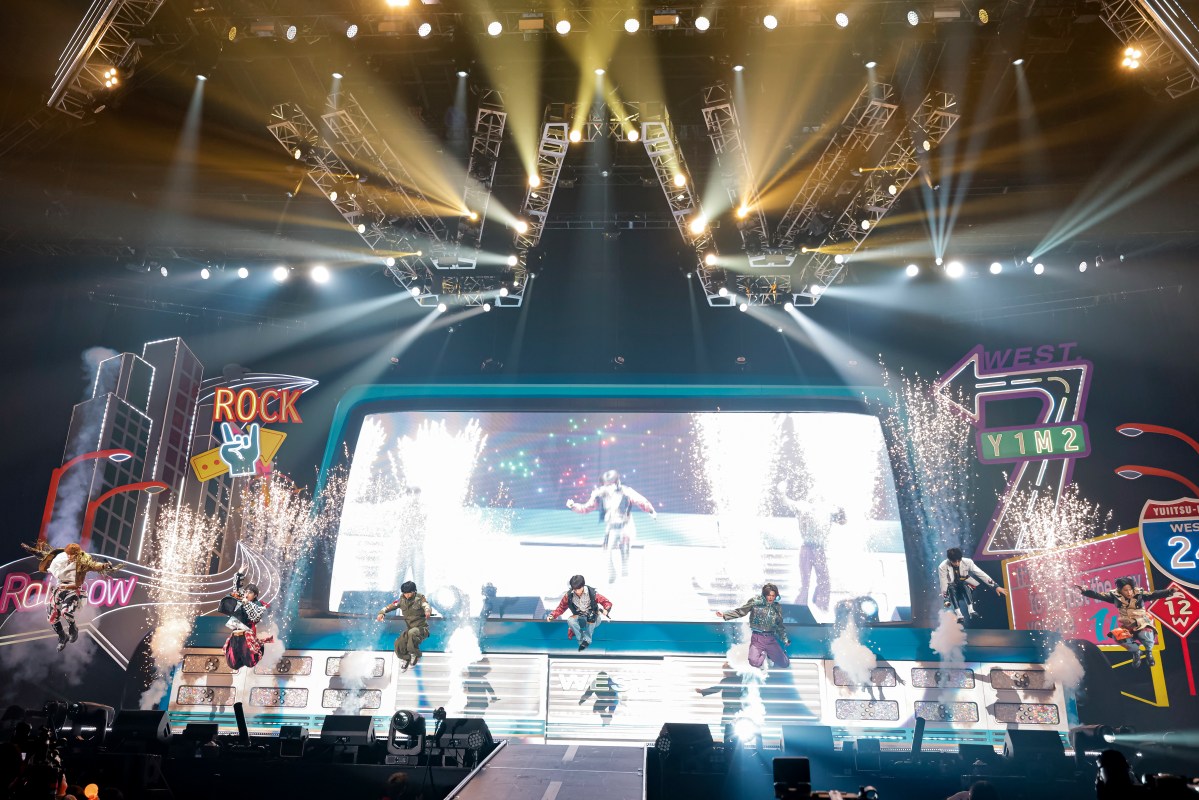
“Kore de Iinoda!” (これでいいのだ!) by WEST. is a playful, chaotic, and surprisingly thoughtful song built around the idea of embracing imperfection and living freely in the moment. Written, composed, and choreographed by member Daiki Shigeoka, the track, which leads the group’s 12th album “唯一無二,” already establishes its main theme on its title: life does not have to be perfectly ordered or logically consistent to be meaningful or enjoyable. Instead, the lyrics celebrate spontaneity, fun, and the willingness to ignore rigid expectations: things may not make sense sometimes, but that is perfectly okay.
WEST. is a seven-member unit under STARTO Entertainment consisting of Junta Nakama, Takahiro Hamada, Akito Kiriyama, Daiki Shigeoka, Tomohiro Kamiyama, Ryusei Fujii, and Nozomu Kotaki.
The song opens with secrecy and anticipation.—”Will they find out? Let’s start this in secret!“— which immediately creates the atmosphere of a hidden adventure. Rather than presenting a straightforward narrative, the lyrics feel like fragments of a night spent breaking routine and escaping ordinary rules. Directions like “East? West? South? North?” suggest searching for something, while Tomohiro‘s “I’ve finally found it!” hints that the real goal is not a physical place but a feeling: the freedom to act without restraint. This mood is reinforced by repeated invitations to “bend the rules” and “turn up the audio,” phrases that give the impression of people deliberately choosing chaos over structure.
Throughout the track, the lyrics balance a playful tone with small hints of inner conflict. The recurring question “ANGEL? DEVIL?” symbolizes the tension between doing what is expected and doing what one truly wants. However, instead of resolving that conflict, the song dismisses it entirely with Takahiro’s “Don’t ever ask me again!” This rejection of moral categorization reinforces the song’s philosophy of instinct and emotion over overthinking. The line “Don’t think, feel. Get down” acts almost like a manifesto for the song’s worldview: joy and authenticity matter more than constant self-judgment.
Another key aspect of the lyrics is their frequent allusion to performance imagery. Mentions of microphones, audio levels, chaotic beats, and spotlights make the song feel very self-aware about the act of performing. At one moment, Akito notices casually, “Hey, there’s a mic right here,” which feels like a playful breaking of the fourth wall. This kind of imagery suggests that the song is partly about the energy of live music and the shared excitement between performers and audience.
Many lines reference staying awake until morning or continuing something that began at midnight, creating the feeling of a secret, temporary escape from everyday life. Night becomes symbolic of freedom, a time when rules loosen, and ordinary identities can be forgotten. This sense of magical possibility is emphasized through whimsical references, such as “Bibbidi-bobbidi-boo,” the famous phrase from Cinderella, or the reimagining of the participants as “Prince and princess.”
Despite the chaotic energy, the lyrics contain a simple emotional core centered on companionship. The repeated phrase “with you, my only one” suggests that the freedom and excitement of the night depend on sharing it with someone special. The identity of that person is left deliberately ambiguous—it could be a friend, a lover, fellow performers, or even the audience. This ambiguity allows listeners to insert themselves into the song’s story, which is a common technique in pop and idol music. What matters is not who the “only one” is, but the idea that certain experiences become meaningful because they are shared.
Structurally, the song relies heavily on repetition, rhythmic phrases, and playful sounds like “yeah yeah” and “cock-a-doodle-doo.” These elements give the lyrics a chant-like quality that fits the high-energy style often associated with idol group performances. Rather than focusing on complex storytelling, the song prioritizes momentum and atmosphere. The lines feel almost like snapshots of moments —turning up music, laughing together, ignoring rules, chasing fun until sunrise.
By the time the song reaches its conclusion, the chaotic excitement gradually quiets. The instructions shift from turning the audio up to turning it down, and finally to turning off the spotlight entirely. The closing “shh…” feels like the end of a secret gathering, as if the group has shared something exciting that must remain private once the night ends. This ending gives the song a gentle sense of closure, suggesting that the adventure was temporary but meaningful.
Overall, “Kore de Iinoda!” works as a celebration of joyful imperfection. Its lyrics combine humor, stage imagery, and fairy-tale references to create a world where rules are flexible, and laughter matters more than order. At its heart, the song argues that life does not need to be perfectly controlled or logically consistent to be worthwhile. Sometimes the best moments come from bending the rules, sharing chaos with someone important, and simply deciding—like the phrase says— that it’s okay to be just the way you are.
More WEST. On Social Media
More WEST. on Dumpling Box

Something went wrong. Please refresh the page and/or try again.