
When it comes to the Kansai talents of STARTO ENTERTAINMENT, the world is a takoyaki—round, hot, a little chaotic, and best shared. It’s a place where humor cuts through tension, where energy spills over like bonito and nori flakes, and where no one really stands alone for long.
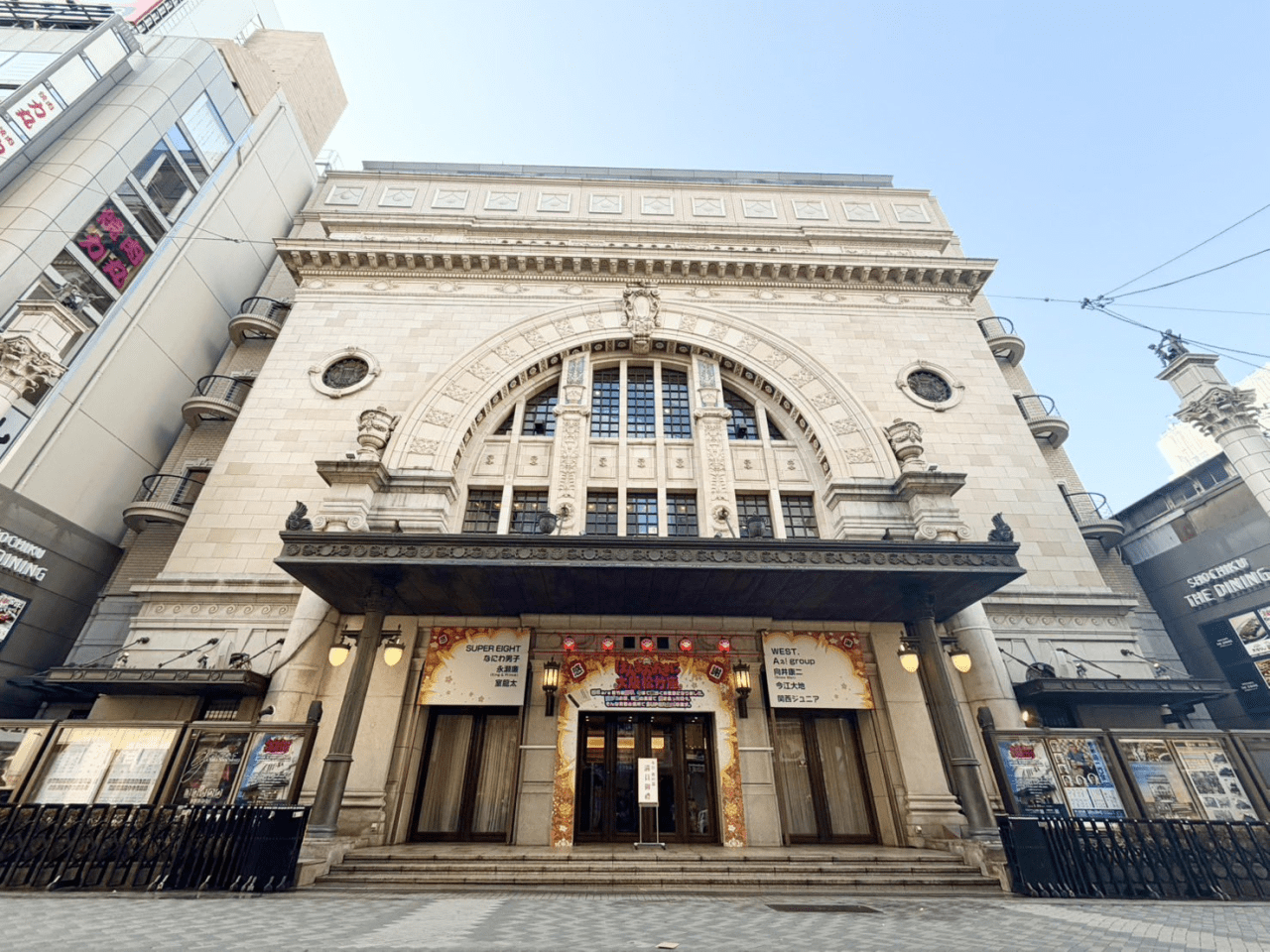
And to them, Osaka Shochikuza has always been more than a theater. The special farewell was not only held before a packed in-venue audience, but livestreamed globally on FAMILY CLUB online—allowing fans across time zones to witness the moment together in real time.
For decades, it stood as the emotional and creative home of Kansai’s talents under STARTO ENTERTAINMENT—a place where boys became performers, where performers became idols, and where idols, no matter how far they went, continued to return.
Shochikuza’s history with Kansai Juniors isn’t just a timeline of productions—it’s a record of growth, of moments layered on top of each other until they became inseparable from the people who stood there.
From the earliest concerts where future members of SUPER EIGHT first filled the stage with raw energy, to the passing down of works like ANOTHER and SHONENTACHI, each era added something new while carrying something forward. Traditions formed not by design, but by repetition—summer plays, winter concerts, unit stages, shared roles. The same stories, told by different voices.
It was here that debuts first took shape—WEST. stepping into a new chapter, Naniwa Danshi learning to stand within a space carved by those before them. And even when plans unraveled, the stage endured, finding ways to connect, to reach, to keep going.
Over time, the details blur. Dates, titles, even lineups begin to fade.
What remains is something else.
A feeling.
Of standing in the same place as those before you. Of inheriting something you didn’t build, yet are expected to carry. Of knowing that one day, someone else will stand where you once stood.
That is what Shochikuza became.
Not just a venue, but a place where Kansai learned how to become Kansai.
With its upcoming closure, produced by Nanwa Danshi’s Daigo Nishihata, the one-night-only event “Thank you Osaka Shochikuza Theatre!〜WE are Shochikuza Danshi! Filled with fondest memories of our Kansai Junior days in the tatami dressing rooms, we celebrate the special place of our youth with Ae! SUPER farewell ceremony〜” was never just another concert. It was a farewell. A reunion. And perhaps most importantly, a reflection of something that has long defined Kansai in a way that cannot be easily replicated elsewhere: the Kansai Family.
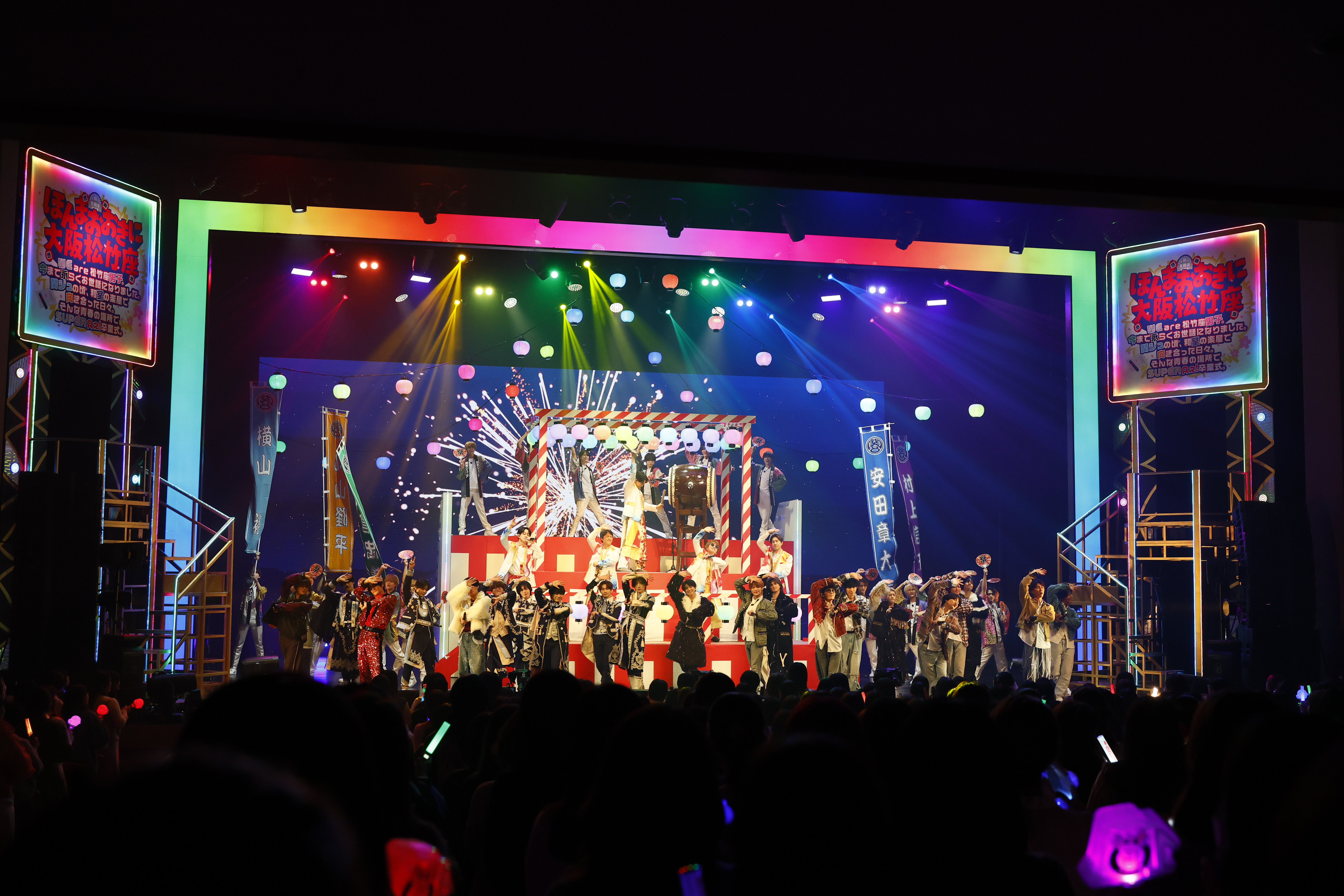
At a glance, the event was historic in scale. A total of 92 performers gathered on one stage—current Kansai Juniors alongside alumni who now stand at the forefront of the industry. SUPER EIGHT, WEST., Naniwa Danshi, Ae! group, alongside figures like Ren Nagase (King & Prince), Koji Mukai (Snow Man), Ryuta Muro, Daichi Imae, and Kansai Juniors returned to the very stage that shaped them.
But beyond the spectacle, what unfolded was something far more intimate.
As the familiar Shochikuza curtain rose, archival footage filled the screen—glimpses of a past that, for many in the room, was not distant history but lived experience. The opening sequence set the tone immediately: this was not simply a performance, but a confrontation with time itself.
Ae! group took the first step forward, dressed in black and gold, calling out, “Let’s make this the best graduation ceremony!” before launching into “Firebird.” As their first-ever original song and a defining fan favorite from their Junior era, its placement felt intentional—almost inevitable.
“Firebird,” a word often associated with the phoenix, carries imagery of rising from the ashes, of endings that become beginnings. For Ae! group, whose journey has been marked by persistence, reinvention, and growth, the symbolism lands with particular weight. It was a fitting beginning—not just energetic, but deeply reflective of who they are. This stage had always been a starting line.
Naniwa Danshi followed with “Aoharu -With U With Me-,” with a bright, almost disarming sincerity that echoed their Junior days. The song’s youthful optimism—so closely tied to their own journey from Kansai Juniors to debut—added another layer to the night’s reflective tone, reminding the audience not just of where they are now, but of the path it took to get there. It carried a kind of innocence that felt deliberately preserved, as if honoring the version of themselves that once stood on this very stage still searching for a future.
When WEST. appeared in their signature “EEJANAIKA” pose—a visual instantly recognizable to anyone familiar with Kansai idol culture—the energy in the room shifted again. “EEJANAIKA” has long been synonymous with WEST.’s identity: bold, chaotic, unapologetically Kansai. Its choreography and callouts are not just performance elements, but cultural markers, rooted in the humor and directness that define the region. Seeing that pose recreated here did more than introduce the next act—it anchored the moment firmly in Kansai’s legacy, bridging generations through something both iconic and instinctively understood.
As that energy carried forward and the three groups merged into “Ban Ban!!,” an anthem that has long stood as a shared heartbeat for Kansai talents and fans alike. Built on call-and-response energy and a choreography that invites participation, “Ban Ban!!” has historically functioned as more than just a performance piece—it is a unifier, a moment where individual groups dissolve into one collective. In this context, its inclusion felt especially deliberate: seniors and juniors, debuted idols and trainees, all moving together to the same rhythm that once defined their own beginnings. The line between past and present didn’t just blur—it synchronized, echoing the very essence of the Kansai Family.
Then came the arrival of Ren, Koji, Ryuta, and Daichi. Called onto the stage one by one, moving along the runway as they once had as Juniors, their entrances mirrored the very structure of Shochikuza performances past—where that same path once represented possibility, uncertainty, and the quiet determination to be seen.
Now, years later, they walked it again not as hopeful trainees, but as artists who had already carved out their place—some having taken their paths to Tokyo, carrying their Kansai roots with them rather than leaving them behind.
What once felt like a beginning now carried the weight of experience, yet the essence of that earlier version of themselves remained intact. In that overlap between who they were and who they have become, the scene recreated something long gone—but not lost.
A shared beginning.
The rotating stage revealed SUPER EIGHT, introduced through the powerful sound of Tadayoshi Ohkura’s drums, performing their debut song “Naniwa Iroha Bushi” with a presence that made the passage of time feel almost irrelevant. Many of those on stage
This is the Kansai Family in its purest form.
Not hierarchy, but continuity—and that spirit didn’t stop at the performances themselves, but carried seamlessly into what followed.
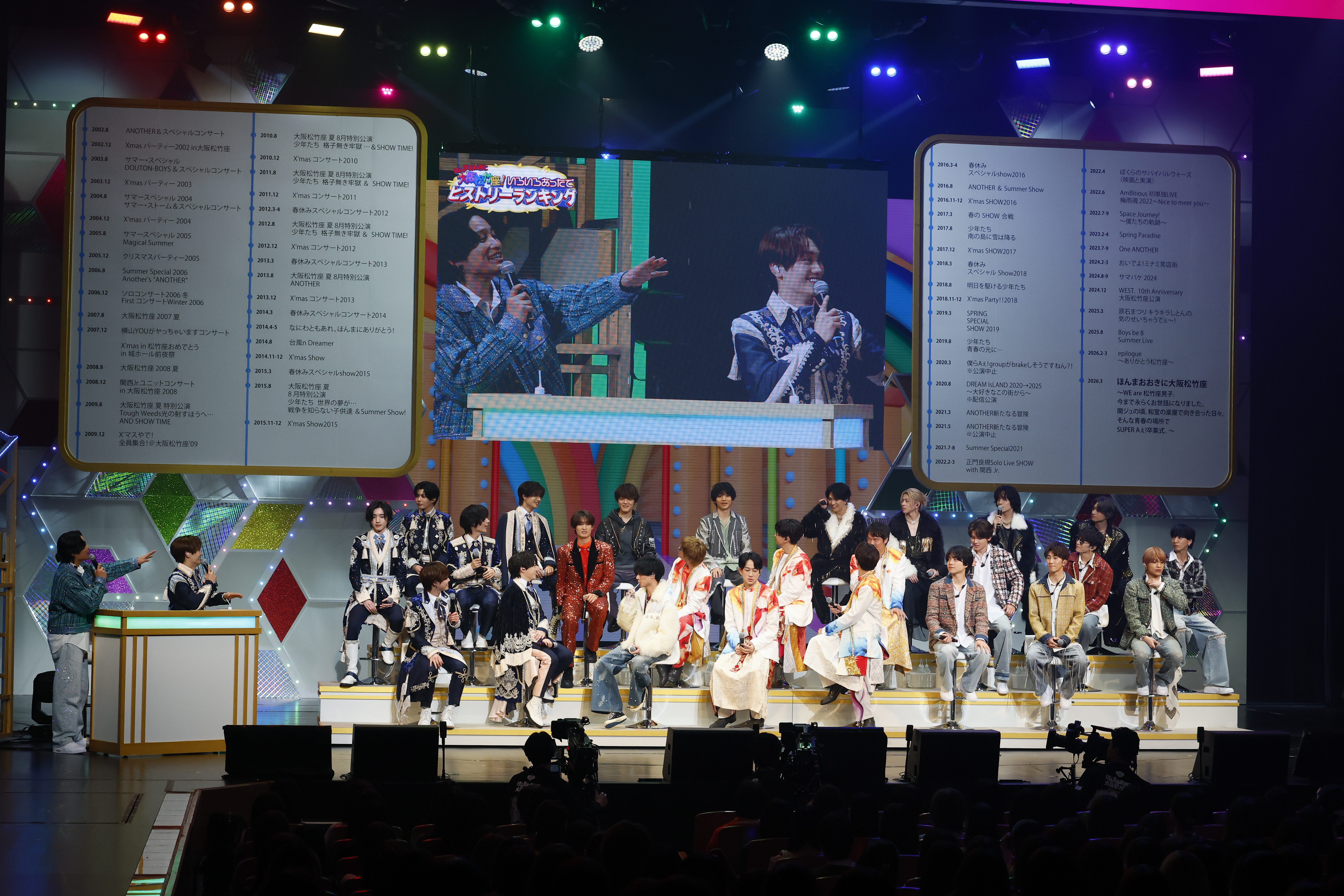
The MC and variety segments that followed might, at first glance, feel like light interludes—but even these carried weight. Led first by Shingo Murakami, with members like WEST.’s Daiki Shigeoka, Naniwa Danshi’s Kazuya Ohashi, and Ae! group’s Ken Kojima offering greetings before being joined by Ren, Koji, Ryuta, and Daichi, the stage quickly dissolved into the kind of loose, overlapping conversation Kansai is known for—equal parts chaotic and deeply familiar.
That atmosphere carried into the variety corner, hosted by WEST.’s Akito Kiriyama and Naniwa Danshi’s Joichiro Fujiwara, where a pre-survey-based segment titled a “history ranking” revisited memories from their time at Shochikuza.
Stories of forgotten lines during stage plays like SHONENTACHI, missed quick changes, and backstage chaos filled the theater with laughter. Yet beneath that humor was something else: a shared archive of mistakes, nerves, and small disasters that every member, regardless of generation, could relate to. It was a reminder that what connects them is not just success, but the countless imperfect moments that built them.
Because the Kansai Family was never built on perfection.
It was built on shared imperfection. And we could continue to watch this kind of imperfection forever.
That continuity became even more visible in the second half of the concert.
Beginning with “Tabibito,” a song passed down through generations of Kansai Juniors, the stage transformed into something closer to a living archive. When Hiroki Uchi appeared—singing as he had years ago—the response was immediate.
It wasn’t only surprise, but a clear sense of recognition across the venue. His delivery, from tone to phrasing, closely reflected how the song had been performed in earlier Shochikuza productions, creating an immediate sense of recognition among those watching who remembered it. The moment naturally bridged past and present on the same stage.
Rather than introducing something entirely new, it underscored the continuity that defines Kansai’s lineage—how what was built within Shochikuza has continued to be passed down, reinterpreted, and carried forward across generations.
What followed was a carefully constructed lineage of performance—beloved and treasured by fans throughout the years.
Former units such as 7WEST, B.A.D., BOYS, Ae Shonen, and Naniwa Ouji returned through their original members who were present, performing songs that are now carried by today’s Juniors, but in the past were their own pride and glory in the same way. Behind them, the current generation danced—not as background, but as continuation.
Koji’s performance of DOMOTO’s “2nd Movement” alongside Daigo and fellow Naniwa Danshi member Ryusei Onishi further emphasized this thread, reconnecting a past unit dynamic that once defined an era of Kansai Juniors.
Elsewhere, combinations like Funky8 members Joichiro, Kazuya, Seiya Suezawa, and Daichi delivered Kis-My-Ft2’s “Hair,” while songs like Kansai Junior classic “SUPER ROCKET” were reinterpreted by members who had once performed them as teenagers, now returning as fully realized artists.
The message was clear.
Nothing on this stage exists in isolation—each moment built upon what came before it, shaped by those who stood there in earlier years.
What is performed today is not separate, but part of a continuous flow, inherited and carried forward from one generation to the next.
Even the group-wide performance of “Kansai Island,” long considered a defining Kansai Junior anthem—beloved by artists and fans alike—carried that same meaning: less a performance, more a declaration of identity. If “Ban Ban!!” represents unity in motion, then “Kansai Island” represents belonging.
The song has long functioned as a musical shorthand for what it means to be part of Kansai: pride in one’s roots, a sense of place, and an unspoken understanding shared between performers and fans alike. Seeing all Kansai members deliver it together—voices layered across generations—transformed it into something larger than nostalgia.
It became a living statement that the Kansai identity for these STARTO talents is not tied to any single group or era, but continuously redefined by those who inherit it. In that moment, the stage was no longer divided by past and present, but held together by something constant.
And yet, the emotional peak came not in spectacle, but in stillness.
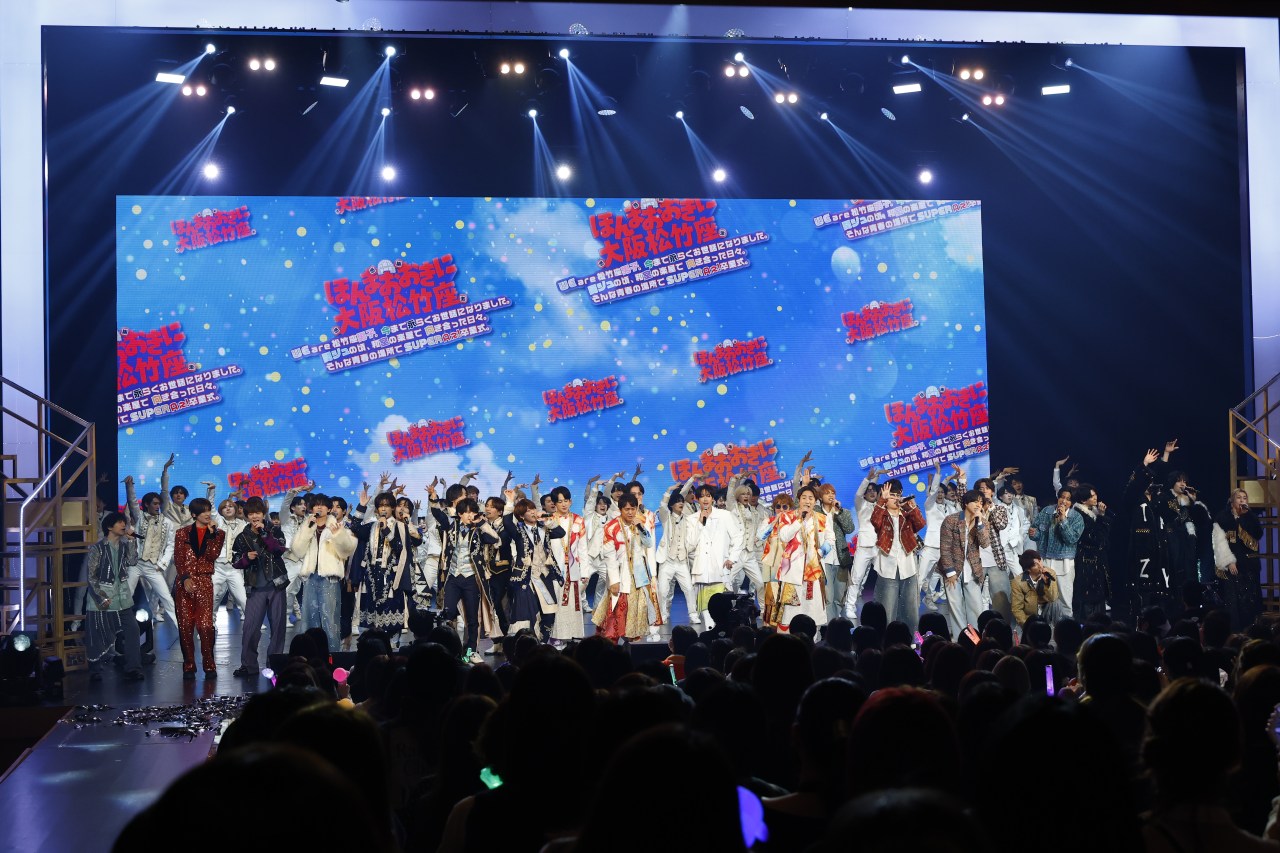
Ae! group’s Yoshinori Masakado delivered his closing remarks on behalf of the group in a way that felt unmistakably Kansai: heartfelt, slightly scattered, and deeply sincere. Thanking both the audience in the theater and those watching via stream, he described the night as a “festival“—a joyful, almost overwhelming moment made even more meaningful by the fact that all Kansai idols were able to stand together on the Shochikuza stage. Even as he momentarily lost his train of thought—distracted by a playful wink from SUPER EIGHT’s Ryuhei Maruyama, which he joked was “something you can never have too much of“—that very imperfection only reinforced the authenticity of the moment.
At its core, his message was simple: this was a happiness he would never forget. A view that would become a lifelong treasure. And more than anything, a shared time that mattered precisely because it was experienced together. Ending with a call to continue supporting “Team Kansai,” his words echoed the very theme the night had been building toward all along.
Daigo followed with a message that balanced gratitude with a quiet fragility. Thanking both the in-venue audience and those watching the livestream, he reflected on the breadth of experiences Shochikuza had given them—”bitter and sweet” moments alike—and how those experiences shaped their growth. Acknowledging the sadness of the venue’s closure, he framed the night as a “grand, luxurious graduation ceremony” made possible by this exact gathering of members.
More than the building itself, he emphasized the memories and the scenery that will continue to live on in both the performers’ and the audience’s hearts. And with a small, honest admission—cutting himself short before he could start crying—his words landed with a different kind of weight: not declarative, but deeply human.
Koji brought the Kansai spirit back to the surface—turning emotion into laughter without ever diminishing it. After thanking the audience, he playfully called out to each balcony, then immediately got teased for being too specific, doubling down on the bit as only Kansai comedians can. Jokes bounced across the stage, tsukkomi flying in from every direction, before he pivoted—almost mid-sentence—into sincerity.
Today may be the last time they hear voices inside Shochikuza, he said, but those voices will continue to reach them. Even as he joked about holding back tears—and got called out for it—his message was clear: if this is the end of a place, it shouldn’t be the end of the joy. Better to close with smiles, and keep building moments together. In true Kansai fashion, the sentiment landed not despite the humor, but because of it.
Before the final declaration, more voices added their own shades to the farewell.
Ryuta, who has stood on the Shochikuza stage since 2003, spoke with the perspective of someone who has lived through its eras. Reflecting on dancing behind SUPER EIGHT in his early days and now returning as an artist in his own right, he described the rehearsals alone as emotional—only to immediately undercut it with a laugh, calling everyone “a bit ridiculous” in the most affectionate Kansai way.
His tone shifted between nostalgia and comedy, between “I wish this moment would never end” and the blunt acceptance that “if there is a beginning, there is also an end.” Urging the audience to burn these memories into their minds—”one year from now, ten years from now“—even as he joked about “a hundred years” and got called out mid-sentence, his words captured something essential: the way Kansai processes endings not by resisting them, but by laughing through them together.
Daiki followed with a quieter, more introspective reflection. Describing Shochikuza as the place where he met irreplaceable friends, he spoke of it not just as a stage, but as the reason he can “like who he is today.” It was here, he said, that he met both his fellow members and the fans who gave meaning to his path.
Even as he admitted the sadness of its closure, he reframed it through connection: as long as those relationships remain, Shochikuza will continue to return to him—in memories, in conversations, in the stages he stands on next. It was not loss, but continuation through people.
And then came SUPER EIGHT’s You Yokoyama.
When You spoke, his words cut through the celebratory atmosphere with quiet clarity:
Shochikuza may close, but it will continue to live on within us.
As the eldest, his perspective carried both weight and distance. He spoke of Shochikuza as both a place of brilliance and of chaos—a stage lit by spotlights, but built on years of uncertainty, struggle, and even separation. The Kansai story, he reminded the audience, has always been one of meetings and partings. Of members who stand here today, and those who are no longer on this stage—but are still part of that story, still part of what they themselves call “Team Kansai,” a bond that does not end with lineup changes, departures, or distance, but continues to exist as a shared origin, a shared language, and a shared responsibility to carry each other forward.
And yet, because they are here now, he framed it simply: this moment is the “correct answer.” The fact that they could all stand together on this day was proof enough that every path—every detour, every goodbye—had led them here.
It was the people.
The closing performance of “Osaka Romanesque,” sung by all—including Hiroki—transformed the venue into something closer to a shared memory than a physical space. As penlights moved in unison across the audience, and images of past performances and dressing rooms filled the screen, the concert reached its most honest form:
A graduation ceremony not from a place, but from a time.
Even the encore carried meaning. Ending with the KAMIGATA BOYZ second single, “Sekai wo Akaruku Terashimashou,” the performers chose not to dwell in sentimentality, but to move forward—bright, warm, unmistakably Kansai. The song itself, associated with themes of connection and shared light, has often been described in Japanese media as a piece that embodies Kansai’s outward-facing energy—simple in structure, but expansive in feeling.
Rather than closing the night in quiet reflection, its inclusion aligned with a tone frequently noted in coverage of Kansai performances: endings are not framed as finality, but as continuation. In that sense, the encore did not function as a farewell, but as a reaffirmation—of spirit, of identity, and of the collective momentum that has always defined Kansai talents.
And yet, even as the final call of gratitude in true Kansai fashion rang out—
“Honma ookini, Osaka Shochikuza!”
—it did not feel like an ending.
It felt like a promise.
A promise that the values born in that space—the resilience, the humor, the willingness to lift others—will continue to live on through every generation that follows.
To understand this moment is to understand the legacy behind it.
Unlike their Tokyo counterparts, Kansai Juniors grew up with fewer resources and fewer opportunities. There were no permanent rehearsal studios, no guaranteed stage appearances, no steady pipeline toward debut. Every opportunity had to be fought for, created, or shared.
And so, they built something else.
They built each other.
From the early days of Kansai Juniors, to the rise of groups like SUPER EIGHT and WEST., to the newer generations led by figures like Ken Kojima, Takeyuki Mayumi, Takuya Nishimura, Toa Shimazaki, Shintaro Sumi, and many more, the Kansai Family has never been defined by circumstance, but by choice.
The choice to support. The choice to create. The choice to stay connected.
Osaka Shochikuza may close its treasured doors.
But the Kansai Family it helped raise is still very much alive now, and for many years to come. The true stage will always be wherever the boys stand.
For those who wish to revisit this moment, the archived livestream remains available for a limited time: March 29, 2026 (SUN) 19:00 (JST) 〜 April 5, 2026 (SUN) 23:59 (JST).
End on sale: April 5, 2026 (SUN) 22:00 (JST)

More Kansai STARTO on Dumpling Box







Something went wrong. Please refresh the page and/or try again.