
What does it mean when a long-running entertainment tradition returns after years of disruption?
In my latest editorial, I explored COUNTDOWN CONCERT 2025-2026 STARTO to MOVE as a case study in legacy-driven entertainment—where connection, shared history, and cross-generational culture matter as much as (if not more than) polish or rankings.
This article approached COUNTDOWN CONCERT 2025-2026 STARTO to MOVE through the lens of media strategy and legacy brand management, rather than as a conventional concert review. Instead of evaluating individual performances or production polish, it examined the COUNTDOWN as a long-running cultural asset—one that functions as a ritual of continuity, reinforcing brand identity through collective presence, intergenerational visibility, and shared memory.
What follows leans into something more personal—unapologetically subjective, shaped by attachment rather than distance. Where the editorial lens steps back to observe COUNTDOWN as a cultural structure, this piece moves closer, written from the heart and grounded in how the night felt to experience.
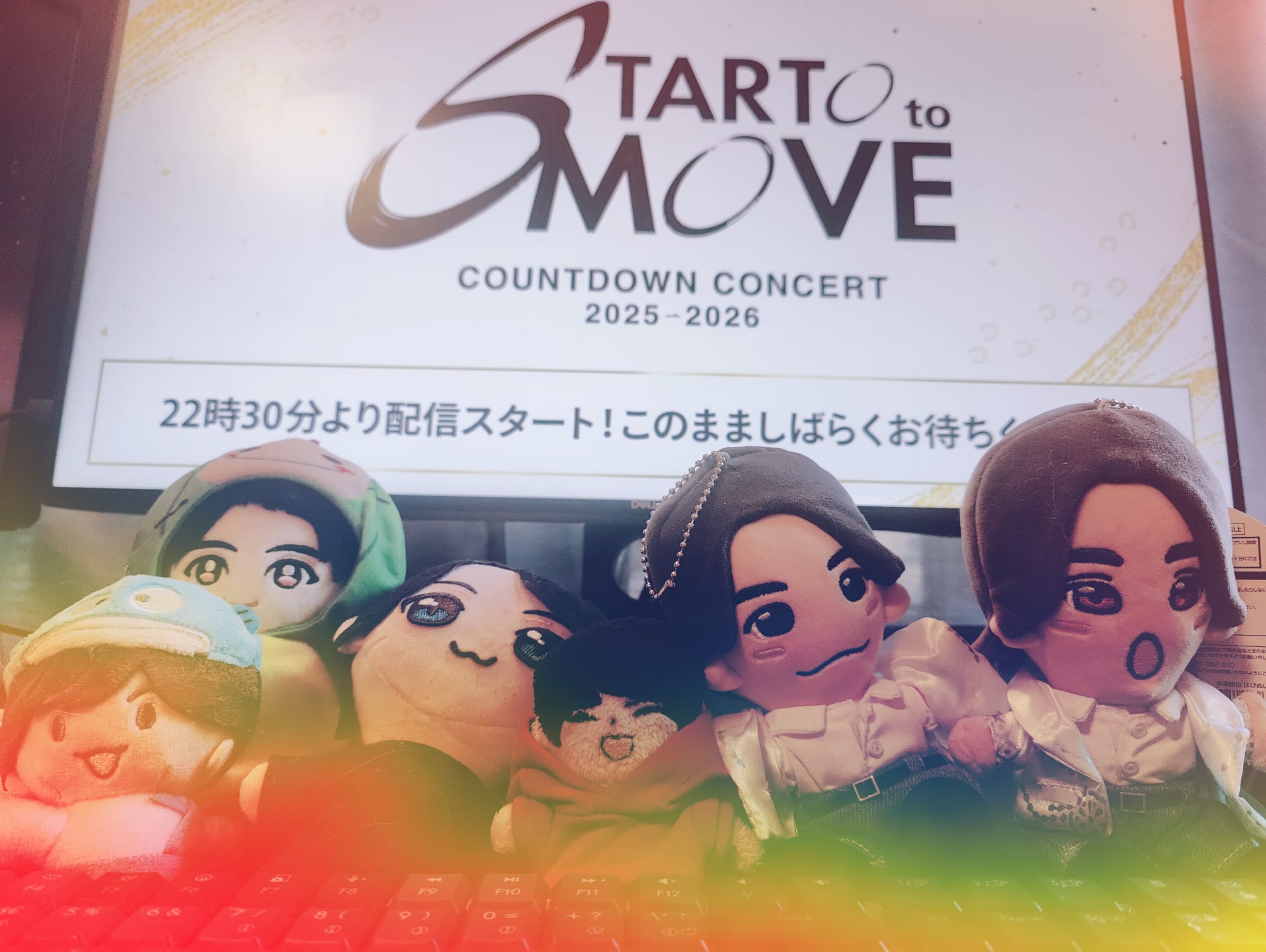
Watching COUNTDOWN CONCERT 2025-2026 STARTO to MOVE through the livestream, far from Tokyo Dome and separated by screens and time zones, I was struck by how quickly distance stopped mattering. The familiar anticipation settled in long before midnight—the quiet excitement of knowing that, after three years, this shared tradition was finally returning. Even without being physically present, the sense of gathering was unmistakable. It felt like stepping back into a space that had been waiting patiently, unchanged in spirit even as everything around it had shifted.
The opening moments carried an immediate emotional weight as the artists appeared one by one after the overture, a sequence that instantly brought back memories of the video once shared on the previous official STARTO X account. There was something deeply familiar about it, echoing the feeling of a long-awaited “Hello, world!”—as if the countdown itself was reintroducing us to a space we had missed.
The opening performance of V6’s “Can do! Can go!“—a song long treated as a kind of company anthem—set the tone for everything that followed: voices layered together, histories overlapping, and the sense that this countdown was about continuity before anything else. Even watching from home, it was impossible not to feel pulled into that shared breath.
As the first half unfolded, each group stepped forward with their own color while still feeling inseparable from a larger whole—something that can only exist when artists share years of history under the same roof. Hey! Say! JUMP—the group that introduced me to this sparkling world—brought a bright, buoyant energy that felt celebratory and reassuring, performing their recent viral hit “encore.” Their voices blended seamlessly, each note carrying a layer of emotional depth that mirrored the year’s reflections, evoking a soft ache for moments that slip away too soon yet promise more magic ahead.
One particularly endearing highlight was Kei Inoo’s attempt to infuse the lyrics with a festive twist, channeling the spirit of New Year’s Eve bells in a way that didn’t quite land as planned, but oh, it was so charmingly him—leaving me and his fellow members giggling and endeared, a reminder of how their imperfections only make them more lovable and relatable.
The 7-member line-up still feels like a pebble in your shoe, a quiet reminder of what has changed, but the way the group carries themselves—meeting the camera with steady smiles, reassuring gestures, and an obvious care for the fans watching—makes it clear that they are doing everything they can to tell us they are okay. There is a sincerity in how they perform, a determination to make us happy, that allows you, even if only for a moment, to forget what is still missing and simply accept what is standing in front of you.
Following, Ae! group stood out with visible determination, their performance carrying the weight and resolve of a group stepping forward together, singing their debut anthem “《A》 BEGINNING.” The performance felt bittersweet, as seeing them as four instead of five after Keita Richard Kusama’s decision to withdraw from the group was still a fresh wound for many, myself included. That absence, however, does nothing to diminish the fact that they remain a powerhouse and a formidable group in today’s entertainment landscape.
Their debut song now carries a weight beyond its original meaning—not simply a starting point, but a declaration of unyielding determination and a resolve to keep moving forward, no matter how difficult or uncertain the path may be. The youngest member, Masaya Sano, declared with heartfelt, but steady, determination: “We’re Ae! group, now with four members. But as long as you’re here with us, we’ll keep being idols for life. Please continue to support us next year.” Ae! group has proven once again that they’ll neither be defeated by rain nor defeated by wind; no matter what obstacles may come their way, they’ll show you that they can face any obstacle earnestly.
After Ae! group’s Yoshinori Masakado flashed Travis Japan’s familiar signature pose, the group stepped onto the stage with a grace and confidence that felt instantly recognizable. “Welcome To Our Show Tonight” showcased their sharp choreography to perfection, and watching them move so effortlessly together felt like being personally invited into their world—one built on polished charisma and an infectious sense of rhythm. Even through the screen, there was a rush of nostalgic joy and bright anticipation as they danced with precision and ease, each movement carrying a quiet confidence honed over years.
Dressed in outfits that leaned fully into showmanship, with shimmering details catching the light, they claimed the stage from the very first beat. What stayed with me most were the small interactions between them—the exchanged glances, the shared energy, the unspoken cues that spoke of trust and familiarity. Those moments stirred memories of late-night MV marathons and the excitement of following their journey beyond borders, reminding me how their dedication transforms each performance into something deeply felt, held together by unity and genuine passion.
Naniwa Danshi brought warmth and playfulness to the night, their youthful brightness lightening the atmosphere the moment they appeared. It was hard not to feel your heart flutter as their performance of “I Wish” landed like a gentle, almost private whisper within the scale of the countdown—a soft moment that felt personal even through the screen. Their signature Kansai charm radiated naturally, carrying a nostalgic warmth reminiscent of reconnecting with a familiar crush who has only grown more endearing over time. Wrapped in hopeful melodies and twinkling energy, their stage evoked memories of innocent dreams and shared joy.
Often seen as one of the most defining groups of their generation’s image of J‑Pop, Naniwa Danshi stepped onto the main stage in outfits that blended festive sparkle with youthful ease. Their cheerful greeting set a cozy, welcoming tone, drawing viewers effortlessly into their world as their voices wove together with relaxed harmony. The sincerity of their delivery deepened the family-like atmosphere of the night, creating a sense of closeness that persisted even through minor streaming hiccups, making the moment feel all the more alive and shared.
There is something that quietly shifts whenever Kento Nakajima steps onto the stage. It feels as though the space narrows, drawing you into a world shaped entirely by his presence. In his solo spotlight, the vastness of the dome softened into something intimate, filled with sweet nostalgia and controlled charisma. After a three-year wait for this tradition to return, watching him command the stage alone felt less like a spectacle (though, everything with Kenty is one) and more like a personal message—an assurance carried through his unwavering sparkle that reminded me why his performances have always felt so dedicated toward the fans.
Beginning with his classic idol anthem, “CANDY ~Can U be my BABY~,” at the center of the dome, his voice carried a familiar charm that balanced playfulness with confidence. The song echoed memories of his group days while fully embracing his solo identity, the cheers rising around him like a shared warmth that translated even through the screen. The transition into “IDOLIC,” a more modern take on an idol anthem, carefully structured around his identity as an idol, sharpened the mood—with Travis Japan’s Noel Kawashima and Ryuya “Shime” Shimekake joining as backup dancers—their synchronized movements reinforcing his commanding presence. The moment of transformation—the damn shoulder reveal, the shift in intensity—felt emblematic of his evolution, blending allure with self-assuredness. His declaration of aiming for a solo dome within two years added a sense of forward momentum, turning the set into a quiet milestone rather than a standalone highlight. As his segment concluded, it left behind a lingering sense of brightness, carrying Kenty’s enduring idol essence into the promise of what lies ahead in 2026.
King & Prince took the stage with a quiet confidence that immediately drew both the dome and those of us watching at home into their world. Opening with their buzzworthy recent release “Theater,” they moved toward the center stage as if following parallel paths meant to converge, their shimmering outfits catching the light as Kaito Takahashi’s expressive energy and Ren Nagase’s composed intensity blended into vocals that felt theatrical yet deeply personal. The performance captured their current chapter with striking clarity, leaving me breathless at how naturally it reflected where they stand now.
As they transitioned into “HEART,” the atmosphere softened and deepened, the song fitting their duo dynamic with remarkable ease. Their voices intertwined with sincerity, carrying a sense of gratitude and quiet resilience that felt especially poignant. The closing moment—standing back to back, exchanging unguarded smiles—felt less like a pose and more like a shared promise, one that reached across the screen and left me smiling through happy tears. Together, the two songs highlighted their growth as a pair, amplifying the night’s sense of unity and forward momentum while gently acknowledging the paths that led them here.
It was a set that distilled King & Prince’s essence—bridging the elegance and emotional clarity of J‑Pop’s golden era with the sharper, more contemporary edge of today—leaving a warm, reflective ache in my chest and the feeling that their time on stage had passed far too quickly.
A.B.C-Z bounded onto the stage for their medley of “Vanilla” and “FORTUNE,” a combination that felt like a tailor-made treat after the event’s long hiatus. Watching these four, with their unbreakable bond and acrobatic flair, reclaim the spotlight wrapped me in a cozy blanket of nostalgia and exhilaration. There was a bittersweet note, too—I couldn’t help but miss former member Fumito Kawai’s unique flair, a reminder that change inevitably comes with its own quiet losses—but that feeling was gently pushed to the background, especially since “Vanilla” has always held a special place in my heart as one of their most irresistible tracks, its smooth, seductive vibes pulling at memories of countless replays that got me through ordinary days with a spark of idol magic.
They eased into “Vanilla” with that signature elegance, their outfits catching the lights as they moved in perfect sync, Ryoichi Tsukada’s dynamic presence and the group’s harmonious delivery evoking a tender intimacy that had the arena humming along, stirring fuzzy feelings of affection for how they blend playfulness with depth, making it feel like a whispered secret shared with every fan in the dome.
The transition to “FORTUNE” exploded with energy, lasers slicing through the air and transforming the space into a full-blown party zone, the beats pulsing with infectious joy that had everyone on their feet—Ryoichi’s still jaw-dropping acrobatics stealing the show in a highlight moment, a perfect showcase of their athletic artistry and the sheer fun they bring to every performance. It was a set that captured their essence—timeless, talented, and full of heart—leaving a glowing warmth in my chest as the countdown built.
The anticipation peaked when timelesz emerged, ready to ignite the stage. After the three-year pause, seeing the eight of them—now in their refreshed lineup—felt like a heartfelt embrace layered with something quietly bittersweet. As someone who loved Sexy Zone in its original five-member form, it was impossible not to feel the weight of time: the age restrictions that once kept them from fully sharing COUNTDOWN stages, the hiatuses, the gradual goodbyes. And yet, watching the remaining members stand together with such steadiness carried its own kind of warmth. Even with Kento taking the stage earlier on his own, knowing that the four original members were sharing this moment together eased that ache, wrapping the night in nostalgia and resolve, like witnessing a fandom story that has learned how to endure and keep moving forward.
Bursting onto the main stage in outfits that blended sleek modernity with their signature flair, they kicked off with “Rock this Party,” a tune co-written by Fuma Kikuchi, Shori Sato, and So Matsushima that pulsed with upbeat party vibes—their synchronized moves and infectious smiles, drawing the crowd into a wave of joy that mirrored my own giddy excitement. The transition to “Steal the Show” amplified the thrill, shifting into powerful, dynamic choreography that showcased their athletic prowess and unity, with moments like Fuma’s commanding leads and the group’s seamless formations evoking a rush of pride and tender affection for how they’ve grown since formation, stirring memories of their journey from auditions to this grand stage. It was a performance that captured timelesz’s essence—timeless yet forward-moving—leaving a lingering sparkle in my chest.
Kis-My-Ft2 claimed their moment under the spotlights, delivering “&Joy” with a sophistication that always leaves me breathless and brimming with affection. It was a polished confidence shaped by years of experience, their stage presence carrying both ease and depth. The song’s message—about finding small moments of happiness even when daily life feels overwhelming—felt especially fitting at year’s end, like gently washing away the weight of the past months and stepping into the new year with a clearer heart. Released that very day, “&Joy” radiated a sense of simple, shared happiness, its bright melody and the group’s warm smiles making it feel like the most natural way to close out 2025 together.
When NEWS made their entrance with their enduring hit “Chankapaana,” the atmosphere shifted instantly. Seeing Keiichiro Koyama, Shigeaki Kato, and Takahisa Masuda appear in soft pink outfits brought a wave of gentle nostalgia—familiar, comforting, and unmistakably theirs. They moved straight into the 2013 classic with an ease that comes only from years of shared history, their voices blending naturally as playful glances and relaxed coordination reminded me why this song has remained so deeply loved.
One moment stood out in particular: the subtle countdown twist woven into the lyrics. Shigeaki’s words of thanks for 2025, followed by Keiichiro’s calm reassurance and Takahisa’s firm promise, turned the performance into something quietly symbolic. Rather than a dramatic gesture, it felt like a shared intention—simple, sincere, and perfectly suited to a night about crossing into a new year together.
And oh, Takahisa’s breathtaking long tone on the final, iconic “Chankapaana” note echoed through the dome with such clarity and strength that it felt like a quiet handoff to what came next, amplifying the night’s seamless flow.
Snow Man took the stage with “CHARISMAX,” a song that came to define their year and felt perfectly placed within the countdown. Built on a fusion of the word charisma and the idea of reaching a peak, the track carries an infectious energy rooted in para‑para influences from the late ’90s and early 2000s, reworked through a modern dance sound and rap elements. Watching them perform it on the main stage—nine members moving in sharp unison, dressed in coordinated outfits that stood out vividly under the lights—brought back that familiar thrill of seeing Snow Man fully in their element.
Their tight synchronization anchored the performance, with Koji Mukai’s playful flair and Ren Meguro’s steady presence giving the stage both momentum and balance. Shota Watanabe’s subtle lyric change in the chorus, shifting the meaning toward welcoming the new year, tied the song neatly into the spirit of the night, while Ren’s brief words of thanks for the year drew an extra swell of cheers. More than just a hit performance, it felt like a snapshot of where Snow Man stands now—confident, expansive, and steadily reaching beyond familiar borders, while still grounding the moment firmly in the shared rhythm of the countdown.
The shuffle medleys became one of the night’s emotional highlights, unfolding as a space where the rules softened, and the spirit of the countdown revealed itself most clearly. Dance-focused selections allowed performers known for movement to shine, while dramatic staging and effects honored the histories behind each song rather than trying to outshine them. Regional pride surfaced in Kansai-centered moments that felt celebratory rather than exclusive, and quieter collaborations brought long-standing bonds to the surface. Watching familiar pairings reunite and unexpected ones emerge carried a gentle emotional pull—one that made it impossible not to linger on certain moments that stayed with me long after the music moved on.
V6’s “Wait for You” was one such moment. Performed by a handpicked lineup of STARTO’s most prominent dancers, the stage leaned fully into the song’s nostalgic undercurrent. The choreography was clean and intentional, each movement executed with precision that respected the era the song comes from while still feeling current. What surprised me most was how naturally the vocals blended into that atmosphere—especially Naniwa Danshi’s Kazuya Ohashi, whose voice carried a clarity and warmth that stood out even among such a skilled lineup. His delivery reminded me why his vocal tone has always been one of my personal favorites within the agency.
KAT-TUN’s “NEVER AGAIN” landed as an emotional jolt. It has long been one of my favorite songs from the group, and seeing it included at COUNTDOWN carried an added weight this year—especially knowing that KAT-TUN is the most recent group to have disbanded, and that none of its former members were present on this stage. That absence made the choice feel intentional rather than nostalgic, as if the song itself was being entrusted to the next generation. That feeling only intensified when my personal favorites, Travis Japan’s Genta Matsuda and Ae! group’s Yoshinori Masakado, appeared together. Even without direct interaction, their shared presence was overwhelming in the best way—one of those moments that leaves you momentarily incapable of forming proper (and decent) thoughts. Adding to that intensity was timelesz’s Masaki Hashimoto, whose high note was delivered with impressive control and confidence, elevating the performance and catching me completely off guard.
TOKIO’s “Sorafune” carried a different kind of weight. While Masahiro Matsuoka’s appearance on drums was undeniably powerful, my attention kept returning to Ae! group’s Seiya Suezawa. Known for his striking high range, this performance highlighted the richness of his lower register instead. Hearing him anchor the song from that place was deeply satisfying, revealing another facet of his voice and reinforcing why he is one of my favorite vocalists within STARTO—and in J‑Pop as a whole. There is something quietly magnetic about his tone, regardless of range.
ARASHI’s “Still…” became, for me, the emotional core of the entire countdown. While every participant delivered the song with care, the moment that lingered most was the exchange between timelesz’s Yoshitaka Hara and Snow Man’s Ren Meguro during the rap section. Their shared history from their Junior days as part of Uchuu Six surfaced without needing explanation, carried by the meaning of the lyrics, the emotion evident enough to bring tears to Hara’s eyes. It was a rare instance where legacy, chosen family, and time itself seemed to converge—felt not only inside Tokyo Dome, but reaching outward through screens to everyone watching from afar, and in that moment, it perfectly embodied what COUNTDOWN has always meant to me: a place where history is honored, bonds are chosen and reaffirmed, and shared memories continue to move forward together.
The appearance of senior figures added further layers of meaning. Their brief but impactful participation felt less like surprise for surprise’s sake and more like a visible handover—experience standing alongside momentum. These moments reinforced the idea that this countdown exists on a long timeline, where presence itself carries significance. Even through the screen, the atmosphere shifted, thick with recognition and respect.
NEWS returned with one of the songs closest to my heart: “Ikiro.” It is often framed as an encouragement song, but what has always resonated with me is how firmly it plants itself in the present rather than promising an easy future. The lyrics do not point toward a visible goal or a guaranteed light ahead—instead, they acknowledge exhaustion, repeated failures, and moments of standing still, before gently insisting on continuing anyway. Hearing it during COUNTDOWN, at the exact moment when one year gives way to the next, made that perspective feel especially poignant.
What makes “Ikiro” so beautiful is its refusal to romanticize perseverance. It recognizes despair without resolving it, focusing instead on the act of living here and now. Lines that speak of having fallen to the bottom, of starting over again and again, felt less like declarations and more like quiet truths. In that sense, the song does not tell you that everything will be okay—it simply tells you to keep going.
Watching NEWS perform it with steady conviction—after going through formation changes and all throughout the years since debut—their voices grounded and sincere, turned the song into a moment of collective stillness amid the celebration. It was a reminder that COUNTDOWN is not only about joy and spectacle, but also about carrying what we’ve lived through into the next moment, together.
SixTONES’ own solo segment soon followed, and it arrived with unmistakable force. Coming straight from their appearance at the NHK Red and White Festival, they emerged through smoke and flame to perform a three‑track medley of “Golden,” “Kokkara,” and “ABARERO.” It was an entrance that suited them perfectly—bold, unapologetic, and charged with intensity.
The song choices turned up the heat inside the dome, and even watching from home, I found myself moving along instinctively, pulled into their rhythm. SixTONES have an innate ability to command space and turn any moment into something captivating, and this set encapsulated that strength in full. While their absence from the shuffle medleys was felt, the sheer impact of this entrance more than made up for it, reaffirming why their presence on any stage is always an event in itself.
Just before midnight, the connection widened beyond Tokyo Dome. The live link to WEST., performing simultaneously in Osaka for their SPECIAL LIVE “WESTA!,” brought an element of their signature chaos and humor that felt uniquely fitting. Watching two venues move toward the same moment from different places underscored how far this celebration stretched, reminding viewers that the countdown has always been bigger than a single stage.
As the new year arrived, cross-group collaborations took center stage. Familiar combinations delivered songs filled with warmth and romance, while others leaned into friendship and shared history. Groups with long-standing ties performed side by side, their ease with one another evident in small gestures and playful exchanges. For me personally, these collaborations carried some of the night’s most quietly emotional moments.
Naniwa Danshi joining King & Prince for “Cinderella Girl” was one such highlight. I had initially hoped to see Ae! group and Naniwa Danshi share the stage, and that brief sense of loss was very real—but it quickly softened into something else entirely. Watching the complete duo of Ren and Kaito and the Naniwa members together felt like a circle gently closing, especially remembering how Ren was unable to participate in last year’s WE ARE! Let’s Get the Party STARTO!! concert. Seeing Kazuya nuzzle his whole face into Ren’s—full-bodied, unrestrained affection and all—instantly recalled how he had done the same with Kaito during WE ARE!, like an overjoyed puppy greeting someone he adores. Ren naturally gravitated toward Daigo Nishihata as well, a pairing that felt comforting in its familiarity, only missing Yoshinori Masakado to complete the Infinity3 trio. Joichiro Fujiwara, meanwhile, made a point to line up with Kaito, visually echoing the bond they built during their memorable “Theater” collaboration online. What could have felt like compromise instead became a reminder of how these relationships continue to weave together across time and stages.
Another collaboration that caught me completely off guard—in the best way—was Ae! group and Kento. It was not a pairing I ever would have predicted, and perhaps because of that, it left a particularly strong impression. Seeing the formation as five for “Chameleon” stirred complicated feelings at first; the absence of the original Ae! group five is still a tender wound, and that discomfort surfaced briefly. Yet it was clear throughout the performance that Kento stood there with deep respect—for the group, for their history, and for the position he occupied in that moment.
Perhaps it was also because Kento himself has lived through formation changes, both chosen and unavoidable; no matter how they come about, those shifts leave a mark you carry with you. That understanding seemed to sit quietly in how he carried himself on stage. Nothing about the performance felt like replacement or imbalance. As the performance unfolded, those initial pangs eased, replaced by appreciation for how naturally the two sides met in the middle.
“Chameleon” revealed a side of Kento we rarely get to see, while Ae! group’s take on “JUST KENTY☆”—a song far removed from their usual discography—felt surprisingly fitting. Rather than clashing, their energies complemented one another, Ae! group adding their own sparkle to Kento’s already overflowing idol brilliance. By the end, what lingered was not what had been lost, but the quiet satisfaction of seeing something new take shape without erasing what came before.

The annual year-animal segment brought levity and laughter, offering a moment of unfiltered fun amid the spectacle. Watching artists of different ages compete with earnest determination and obvious amusement highlighted another side of this tradition: entertainment that allows idols to be playful, self-aware, and human. A reminder that their style of entertainment has always extended beyond music and polished stages alone. Even through the livestream, the joy of that shared silliness was contagious.
Worldwide, the response was a mixture of excitement, relief, and gratitude at simply having COUNTDOWN back, alongside open acknowledgment of technical hiccups and uneven moments. Watching from home, those imperfections felt secondary. If anything, they highlighted just how much this tradition still matters, and how deeply people care about seeing it continue.

This year’s COUNTDOWN was not flawless, but that imperfection has always been part of its character. The harsher waves of negativity felt misplaced when viewed against an event built on togetherness rather than comparison. While the song selections were not always what I might have chosen personally, they felt intentionally curated to emphasize legacy and the respect each of the twelve participating groups holds for the seniors who shaped the path before them.
The overall direction differed from past iterations, but it remained faithful to the agency’s history—bringing everyone together under one roof, not to compete, but to share a single purpose: offering joy, reassurance, and connection at the turn of the year. There are certainly areas worth refining in the future, and individual criticisms stand on their own. For now, though, I find myself feeling quietly content with this year’s COUNTDOWN, grateful for its return and for what it chose to prioritize.
As the broadcast drew to a close and the final performances faded, what lingered was the feeling of having shared something meaningful. Each artist had stood not to compete for attention, but to contribute to a collective moment shaped by memory, affection, and forward momentum. Even from afar, COUNTDOWN CONCERT 2025-2026 STARTO to MOVE reaffirmed its role as a place of return.
For a fangirl watching through a screen, it was enough to step into 2026 feeling included, grounded, and hopeful—reminded that movement does not always mean leaving things behind, and that sometimes, simply gathering again is its own kind of progress to move forward.
For those who want to revisit the night—or experience it for the first time—COUNTDOWN CONCERT 2025-2026 STARTO to MOVE remains available as an archive on FAMILY CLUB online through January 17. The concert is also streaming on Netflix, where slightly different camera work offers an alternate perspective on familiar moments. In addition, a behind‑the‑scenes episode is scheduled to arrive on Netflix toward the end of January, promising a closer look at the atmosphere, interactions, and preparations that shaped this long‑awaited return.

Photo assets © STARTO ENTERTAINMENT.
FAMILY CLUB members: 3,900 yen (tax included)
General: 4,400 yen (tax included)
Repeat Broadcast Period
January 7, 2026 (WED) 22:00 (JST) 〜 January 17, 2026 (SAT) 23:59 (JST)
※No restrictions applied on frequency of viewing or schedule thereof during the repeat broadcast period.