
Outside a venue, before doors open, fans line up their acrylic stands against barricades and café tables. Someone orders dessert they won’t finish, because it makes a better backdrop for a photo. Phones come out. A favorite face is centered carefully in the frame. Later, inside the hall, there will be a moment — a glance, a wave, a seat so close it feels unreal. A divine seat (so-called “神席”; kami seki). And when it’s over, people linger, not because they expect anything more, but because leaving feels wrong.
None of this is written into a script. None of it is promised. And yet, for anyone who has lived inside idol fandom, this sequence is instantly familiar.
“Table Talk” is a Dumpling Box series that looks beyond headlines to explore how entertainment culture actually functions — not just through industry decisions, but through the people who sustain it. This time, the table is set somewhere else: among the fans whose quiet, consistent support makes the system itself possible.

Tamon’s B-Side (多聞くん今どっち!?) does not exaggerate this world. It recognizes it.
The story revolves around Utage Kinoshita, a high school girl who works part-time as a housekeeper. She has devoted her life to her favorite idol, Tamon Fukuhara, from the group F/ACE. Then one day, Utage ends up being assigned to Tamon’s house! There she discovers that off-stage, he is nothing like his wild idol persona. A gloomy, introverted boy with no self-confidence, Utage still finds herself falling for him anyway.
Rather than heightening fan behavior for spectacle, it presents something quieter and more disarming for readers unfamiliar with idol culture: familiarity. The main character, Utage Kinoshita, is not framed as an outlier, a cautionary tale, or a comedic device. She is written with the kind of precision that comes from observation, not invention. To idol fans, she is immediately legible. To everyone else, she may look exaggerated — and that gap in perception is exactly where this story does its most important cultural work.
Utage’s routines are familiar to anyone who has lived inside fandom for long enough. She organizes her days around releases and appearances. She regulates her emotional responses. She is constantly negotiating boundaries — not because someone tells her to, but because she understands the unspoken rules of being a “good fan.”
This is not obsession. It is maintenance.
What Tamon’s B-Side captures so accurately is that modern fandom requires emotional labor. Fans are expected to care deeply, but not disruptively. To support enthusiastically, but responsibly. To feel close, but never entitled. Utage does all of this instinctively, because the culture she inhabits has trained her to, even on top of her work as a housekeeper (after all, a fan needs to make a living to support their fave…).
From the outside, this level of calibration can look excessive. From the inside, it is simply how one survives in a space built on proximity without access.
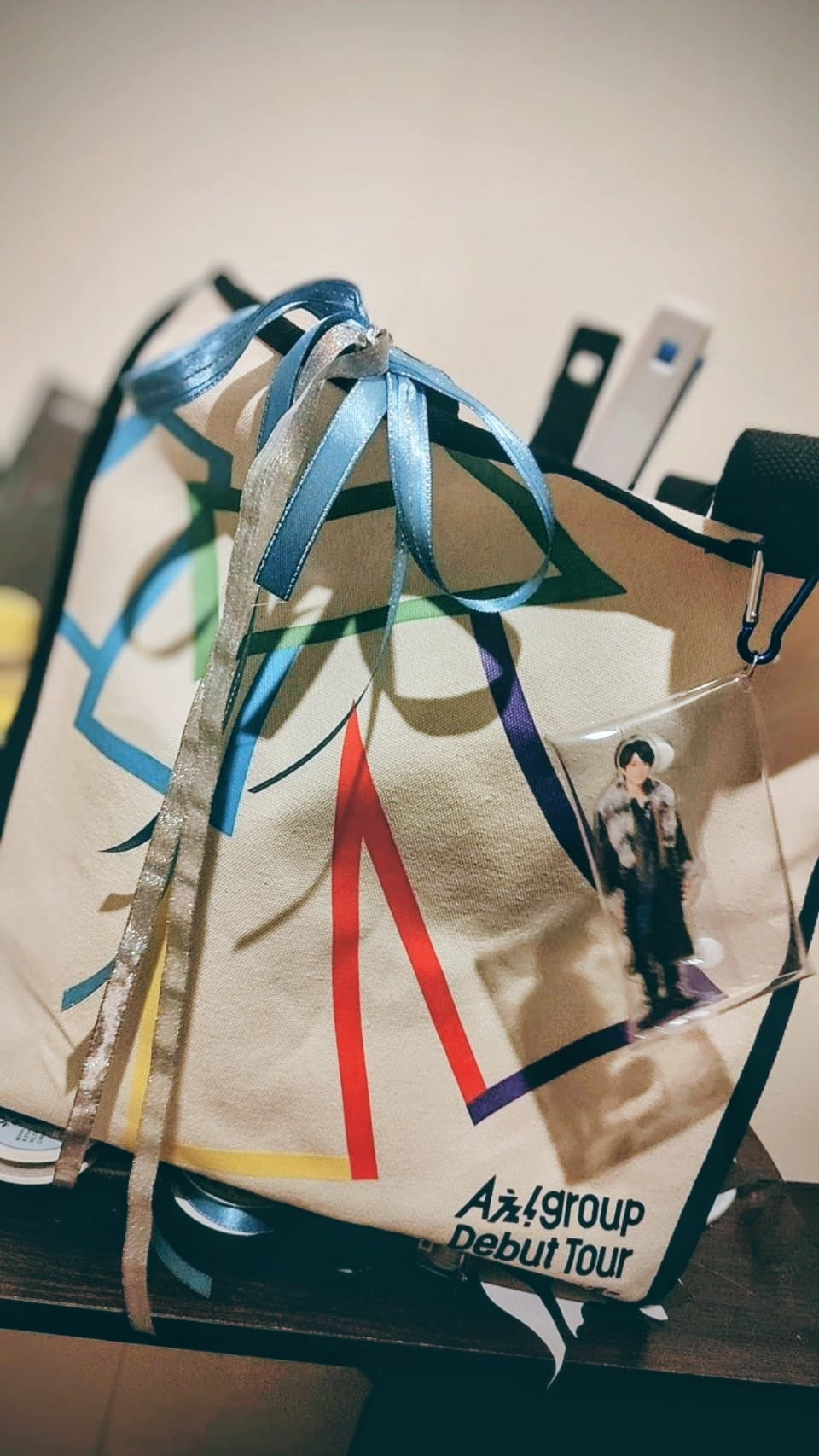
This disconnect becomes especially visible in the way fans are often judged in public conversation by others who are not invested in this culture. Online, it is not uncommon to see comments questioning why someone would bring a bag full of merchandise, plushies, banners, or photocards to a concert — why they would need anything more than a phone, the ticket, and a bottle of water. The implication is that everything beyond the bare minimum is unnecessary, indulgent, or performative.
But for fans, those objects are not clutter. They are tools. They hold practical purpose — for cheering, signaling support, protecting belongings — but they also carry memory and intention. They are how fans prepare themselves emotionally for a fleeting encounter, how they mark the day as different from all others. What looks excessive from the outside is, on the inside, simply readiness.
This is the foundation of what is commonly referred to in Japan as oshikatsu (推し活)— literally, “supporting your favorite.” At its core, oshikatsu is not about consumption for its own sake. It is a set of practices through which fans choose how to show care: attending lives, preparing outfits and goods, displaying acrylic stands, learning chants, budgeting time and money, and documenting moments that will otherwise disappear as soon as the lights go out. It’s a lifestyle in itself.
Crucially, oshikatsu is also governed by restraint. It is not about crossing boundaries, but respecting them. Knowing where to stand, when to cheer, what to bring, what not to ask for, and when to step back is part of the culture itself.
While many fans do collect an overwhelming amount of goods connected to their favorite, no two events are ever the same — and so each outing requires intention. Fans choose carefully which items to bring, which to display, and which to leave at home, reading the room, the venue, the atmosphere of the day. A single concert might call for one well-loved uchiwa; another for acrylic stands, plushies, or banners pulled from years of accumulated memories.
For some, a few select items are enough. For others, the act of collecting and curating is part of the joy. There is no right or wrong way to practice oshikatsu in that sense. What matters is attentiveness — to the moment, to the space, and to the person being supported. In that light, the bag full of items is not evidence of excess, but of preparation, literacy, and care.
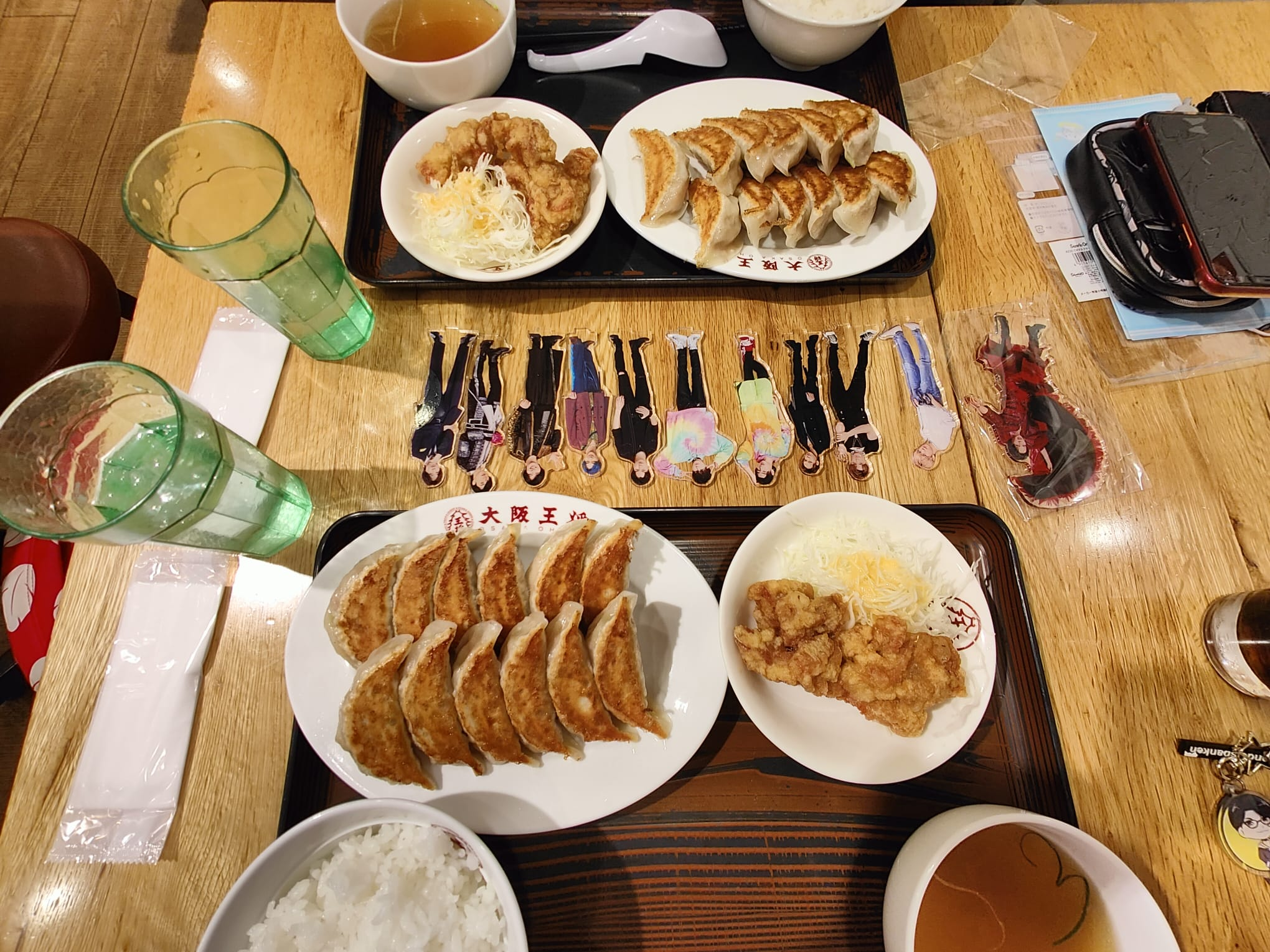
Utage, notably, leans toward the side of fans who collect and obsess — not because she lacks restraint, but because this is how her devotion takes shape.
There is a small exchange early in the story that captures this with surprising clarity. At one point, Tamon asks Utage whether taking photos of his face — of his goods, his acrylic stands, his photocards — is actually fun. She answers immediately, without hesitation: it is the most fun.
The moment passes quickly, almost as a joke. But it reveals something essential about oshikatsu. Documenting a favorite’s presence is not about ownership or fantasy. It is about inclusion. About saying, I was here. This mattered. I want you to be part of this moment too. What looks, from the outside, like fixation is often simply joy made visible.
This dynamic is not unique to idol fandom. Intense enthusiasm toward any interest—anime, manga, films, sports teams, creators—has long been dismissed as “too much,” “annoying,” or socially awkward. What has changed is not the intensity, but visibility. Algorithms reward passion, merchandise ecosystems encourage participation, and community spaces normalize emotional investment. The line between “casual enjoyment” and “being a fan” has blurred, even as judgment lingers.
Tamon’s B-Side quietly situates idol fandom within this broader cultural shift, treating Utage’s dedication not as an exception, but as a recognizable way of engaging deeply with something that matters.
Even as idol culture becomes more visible globally, fandom itself remains something people often feel compelled to explain or soften.
Visibility Without Legitimacy
K-pop fandom, for example, is often treated as more familiar simply because it has achieved wider global visibility. Concerts sell out stadiums, albums chart internationally, and fan projects are regularly acknowledged in mainstream spaces. That familiarity, however, should not be mistaken for immunity. K-pop fans, too, are frequently subject to the same judgments — expected to justify their investment of time, money, and emotion, and praised only when their passion appears productive, aesthetic, or palatable. Anything that reads as too sincere still risks being dismissed as excessive.
Japanese idol fandom, and oshikatsu in particular, occupies an even more complicated space. It is deeply embedded in everyday life for many fans, yet still treated as something niche, unserious, or embarrassing by those outside it.
What Tamon’s B-Side does differently is refuse to frame this devotion as something that needs defending.

While Utage represents the recognizable face of fandom, Tamon Fukuhara embodies a different but equally familiar reality within Japanese entertainment: the split between public persona and private self.
On stage, Tamon is everything an idol is expected to be—confident, magnetic, untouchable. Off stage, he is withdrawn, insecure, and visibly exhausted by the weight of expectation. This contrast is played for humor, but its foundation is deeply real. Japanese idol culture has long relied on carefully maintained images that leave little room for visible doubt or fatigue, even as conversations around burnout and mental health slowly gain traction.
What makes Tamon’s B-Side resonate is that it does not frame this duality as a shocking reveal. Instead, it treats it as an assumed condition of the job. The question is not whether idols have a “real self” behind the mask, but how long they can sustain the performance without breaking.
One of the most telling responses to Tamon’s B-Side has been how often viewers remark on its pacing — specifically, how little it relies on internal monologue or explanatory dialogue despite originating from a shoujo manga tradition.
This is not accidental. The story moves quickly because Utage’s behavior requires no translation for those who recognize it. Her reactions are legible through action alone: how she hesitates, how she lowers her voice, how she stops herself before crossing a line, and, of course, the typical, expected over-the-top reactions. The series trusts its audience to understand what it means to be a “well-mannered fan,” but also how one is usually perceived.
That shared literacy is powerful. It allows the narrative to skip moral justification and linger instead on observation. Utage does not need to explain why she prioritizes her idol’s performance over her own feelings, or why she carefully regulates her enthusiasm. Anyone who has navigated fandom understands instinctively.
In this sense, Tamon’s B-Side is not slow or introspective in the way shoujo stories are often stereotyped to be. It is efficient precisely because it assumes familiarity. It moves at the speed of recognition.
Familiar Language, Familiar Feelings
Stories like Tamon’s B-Side use manga and anime as a shared language — one where heightened emotion and visual shorthand allow meaning to be conveyed through pacing and behavior, rather than explanation. These are mediums where heightened emotion is expected, where internal monologue is allowed space, and where repetition can quietly normalize behavior rather than justify it.
Instead of pausing to explain why Utage feels the way she does, the story assumes her feelings are reasonable. Her devotion is not framed as something to overcome or outgrow. It simply exists — woven into her daily life the same way work, family, or routine might be.
This approach places idol fandom alongside other accepted emotional structures, rather than isolating it as a spectacle.
In doing so, the story performs an act of normalization that feels subtle but deeply intentional.
That normalization extends beyond character writing and into presentation. The live performance sequences of F/ACE, in the anime, are rendered with an attention to choreography, camera movement, and musical structure that far exceeds what is typically expected from a romantic comedy. By leaning into realism rather than parody, the series collapses the distance between fictional idols and real ones.
The result is disarming. What could have felt like exaggeration instead reads as sincerity. The performances are not there to mock idol culture — they are there to participate in it, earnestly and without apology.
And for many fans, that participation does not end on the screen.
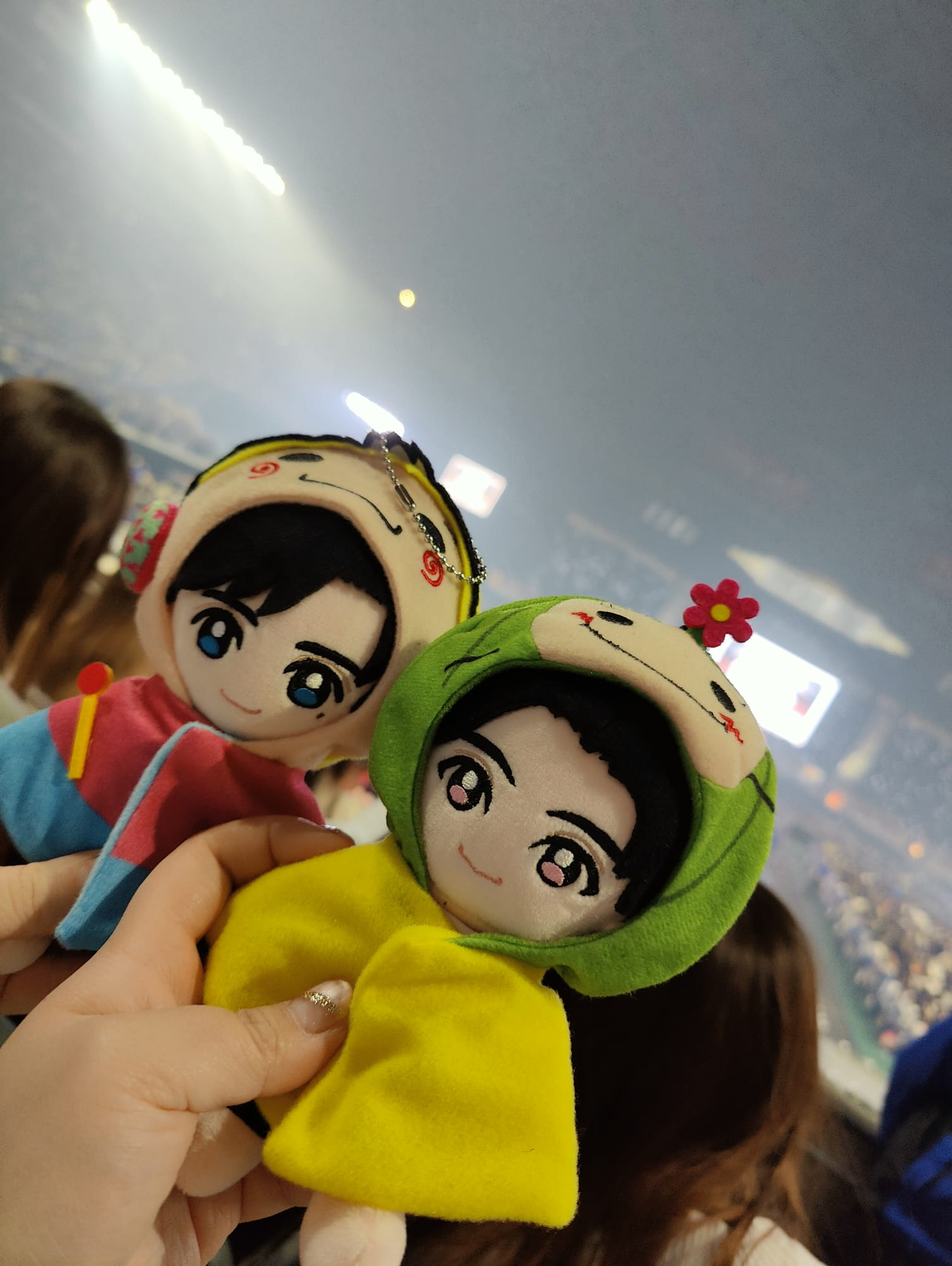
What happens around a show is often less about ritual than about decision-making. Fans are constantly choosing: what to bring, what to leave behind, how much of themselves to put forward on a given day. Acrylic stands come out briefly, then go back into bags. Goods are rearranged, swapped, or not used at all. Even something as small as ordering a drink becomes a choice shaped by mood, memory, and context.
These moments aren’t performed for an audience. They’re acts of calibration — ways of staying present without overwhelming the experience itself. When the moment ends, lingering isn’t about prolonging excitement, but about letting the moment settle before returning to ordinary time.
There are stories fans trade quietly among themselves: the unexpected eye contact that feels like time stopped, the wave that landed just for you, the seat that felt impossibly close — a divine seat that turns a performance into something almost unreal. None of these moments are guaranteed. None of them are demanded. And yet they are remembered with an intensity that rivals the performance itself.
A rare, fully present moment — one where everything you prepared, planned, and carried with you feels quietly justified.
There are parts in the story where it might feel impossible — the idea that an idol could truly notice anyone in the crowd, the way Tamon notices Utage, seems too convenient, too fictional. But anyone who has stood in an audience knows that these moments don’t arrive with fireworks. They are small and almost mundane: a glance held half a second longer than expected, a wave that lands unmistakably in your direction, a shared laugh that feels oddly private despite the noise around it. It isn’t dramatic, and it isn’t guaranteed. But when it happens, you know. The certainty doesn’t come from extravagance, but from recognition — fleeting, fragile, and deeply real.
These rituals are not excess. They are continuity. They are how fans extend a fleeting, one-directional encounter into something they can carry home.
At one point in the story, Tamon asks Utage whether taking photos of his face — of his goods, his acrylic stands, his photocards — is actually fun. She answers without hesitation: it’s the most fun.
The moment passes quickly, almost as a throwaway line, but it captures something essential about oshikatsu that is often misunderstood. Documenting a favorite is not about illusion or substitution. It is about inclusion. About marking a moment and saying, I was here — and I wanted you to be part of it too. The joy comes not from pretending proximity where none exists, but from acknowledging connection where it is allowed.
Seen this way, Utage’s answer is neither naïve nor excessive. It is simply honest. Oshikatsu brings joy because it gives shape to feeling — because it allows fans to carry fragments of fleeting moments forward, without demanding more than what was freely given. What Tamon’s B-Side understands is that Utage’s behavior does not exist in a vacuum — it mirrors practices that already structure real fandom, quietly and collectively.
Recognition Over Revelation
What ultimately anchors Tamon’s B-Side is not its humor or its romance, but its restraint.
Utage’s devotion is intense, but never careless. Her voice is never shrill, her admiration never reckless. Even in moments of emotional overflow, there is an underlying attentiveness — to boundaries, to impact, to what it means to support rather than consume. This is a portrayal of fandom that feels deeply considered, and it resonates because it reflects how many fans actually behave.
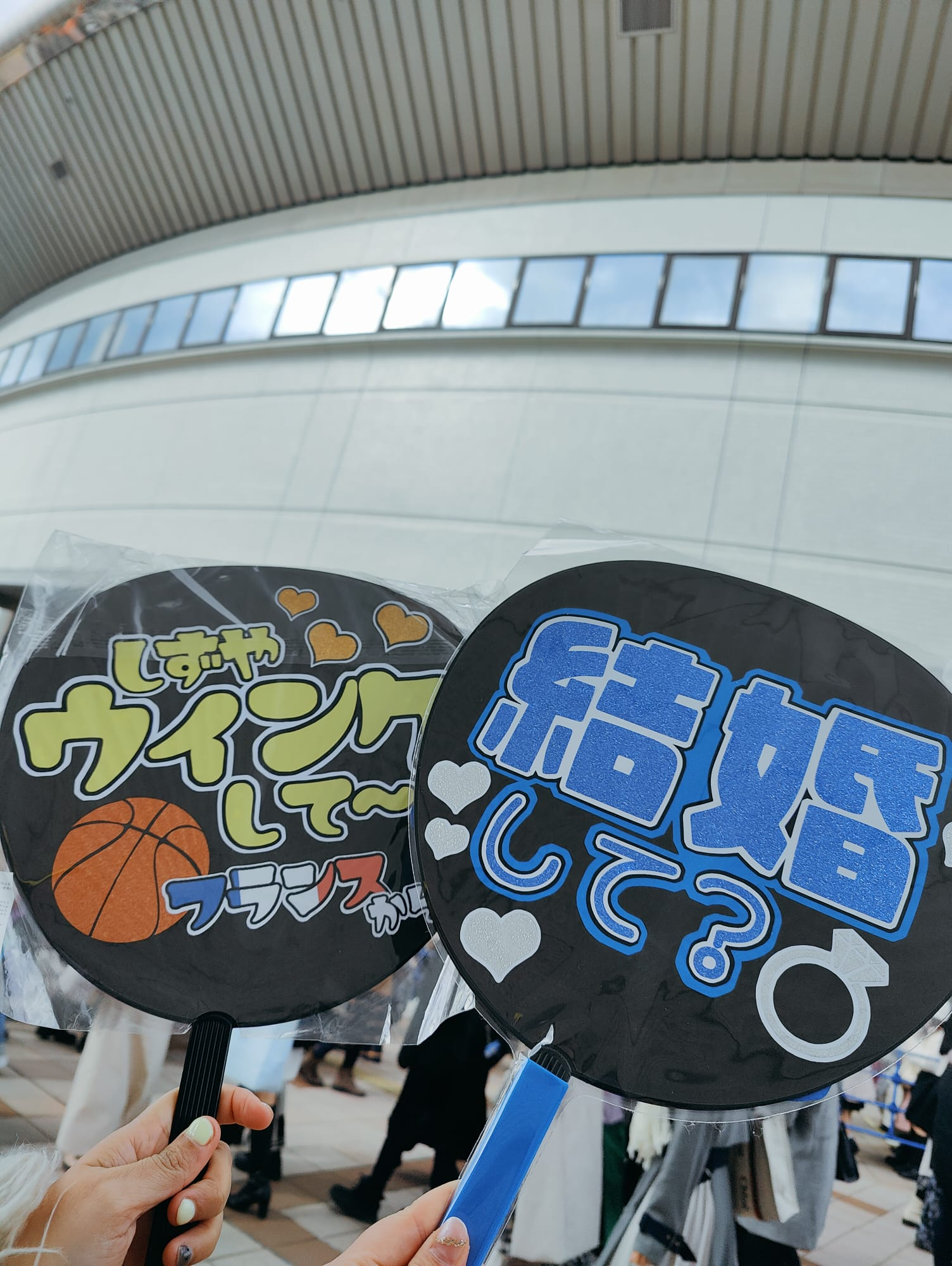
At the same time, Tamon’s collapse behind the scenes is not played as a shocking twist. It is treated as the natural consequence of sustaining a persona that leaves no room for doubt. His insecurity is exaggerated for comedy, but its emotional core is uncomfortably real: the fear that affection is conditional, that praise is polite rather than sincere.
Together, Utage and Tamon form a closed circuit of care — one that blurs the line between supporter and supported, without pretending that line does not exist. The series is careful to show that this flow is not one‑sided: Tamon is sustained by his fans as much as they are moved by him. In a sea of faces, it is easy to believe that individual support disappears into noise, that one voice or one gesture cannot possibly matter. Tamon’s B‑Side quietly insists otherwise. In the current digital landscape, where artists live alongside constant metrics and fleeting attention, even the smallest sign of sincerity — a comment, a cheer, a presence — can become an anchor. The bond depicted here is not parasitic or imaginary, but symbiotic: a shared ecosystem where creation and support continuously give shape to one another.
For readers outside idol fandom, Tamon’s B-Side may read as an introduction — a glimpse into a world they haven’t experienced.
For fans, it offers something rarer: recognition.
Utage is not there to teach lessons or provoke shock. She exists to be seen. Her careful balance of affection and restraint, hope and self-awareness, mirrors the reality of countless fans whose lives are shaped — quietly and consistently — by the act of support.
In presenting this without judgment or spectacle, Tamon’s B-Side joins a growing body of works that treat fandom not as an anomaly, but as culture.
And in doing so, it leaves us with a quiet question:
If this feels familiar, why does it still so often feel misunderstood?
Watch Tamon’s B-Side with English subtitles on Crunchyroll