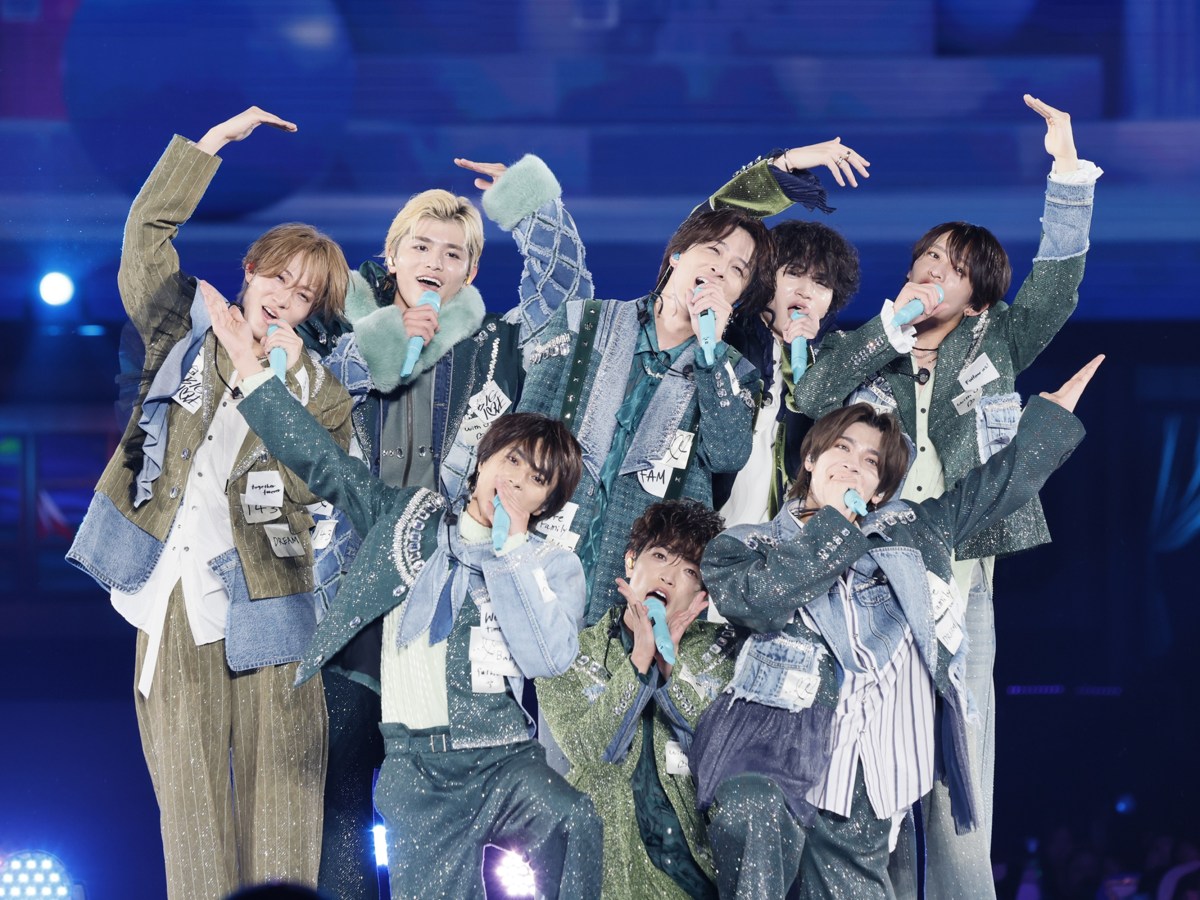
timelesz is a fairly recent discovery for me. I enjoy their music and have always recognized how talented they are, but they were never one of those groups I’d obsessively collect every edition of every release from.
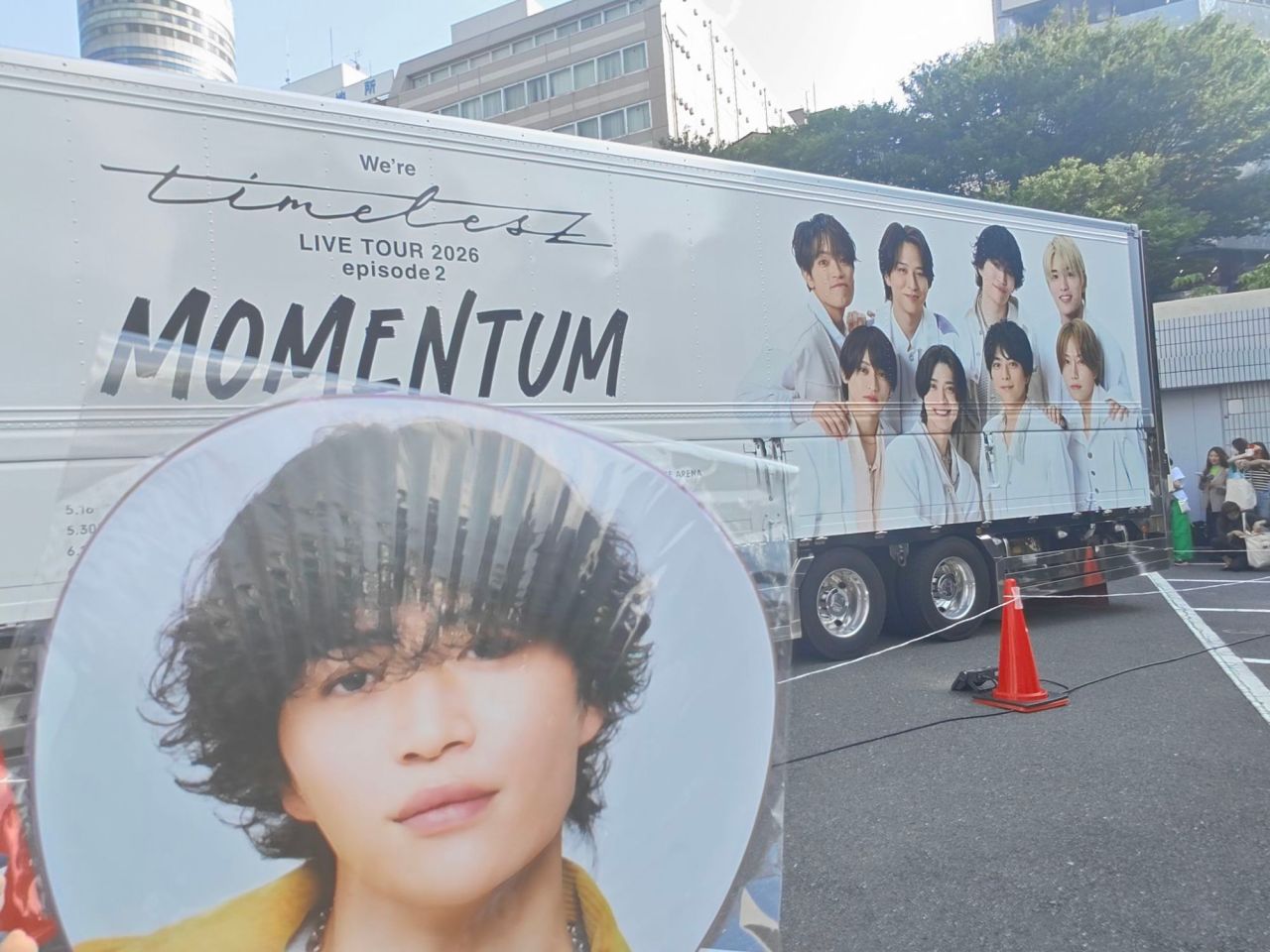
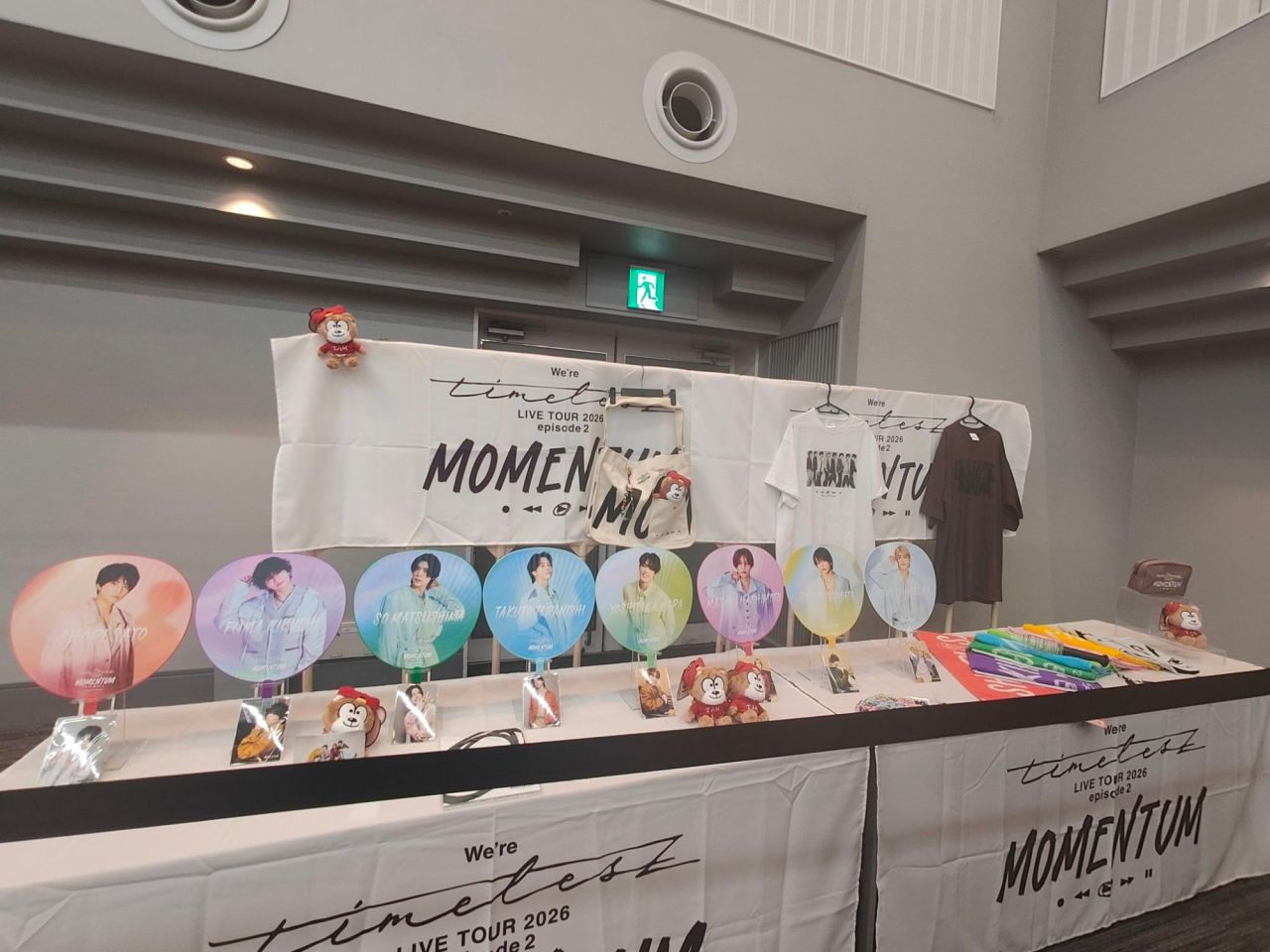
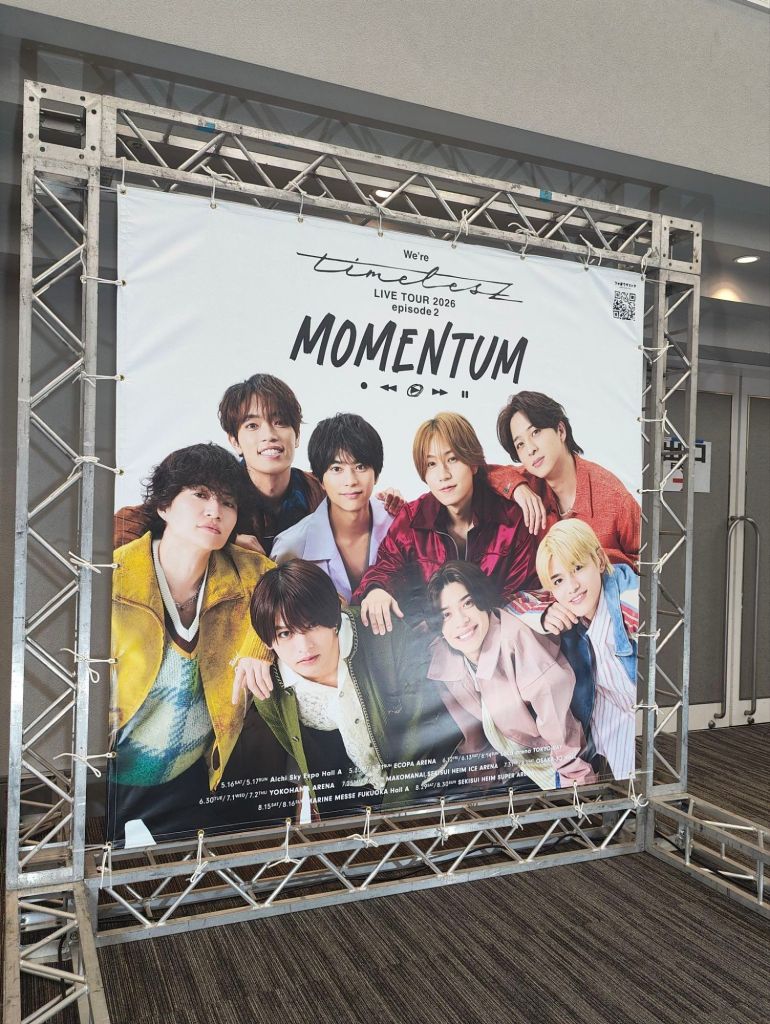
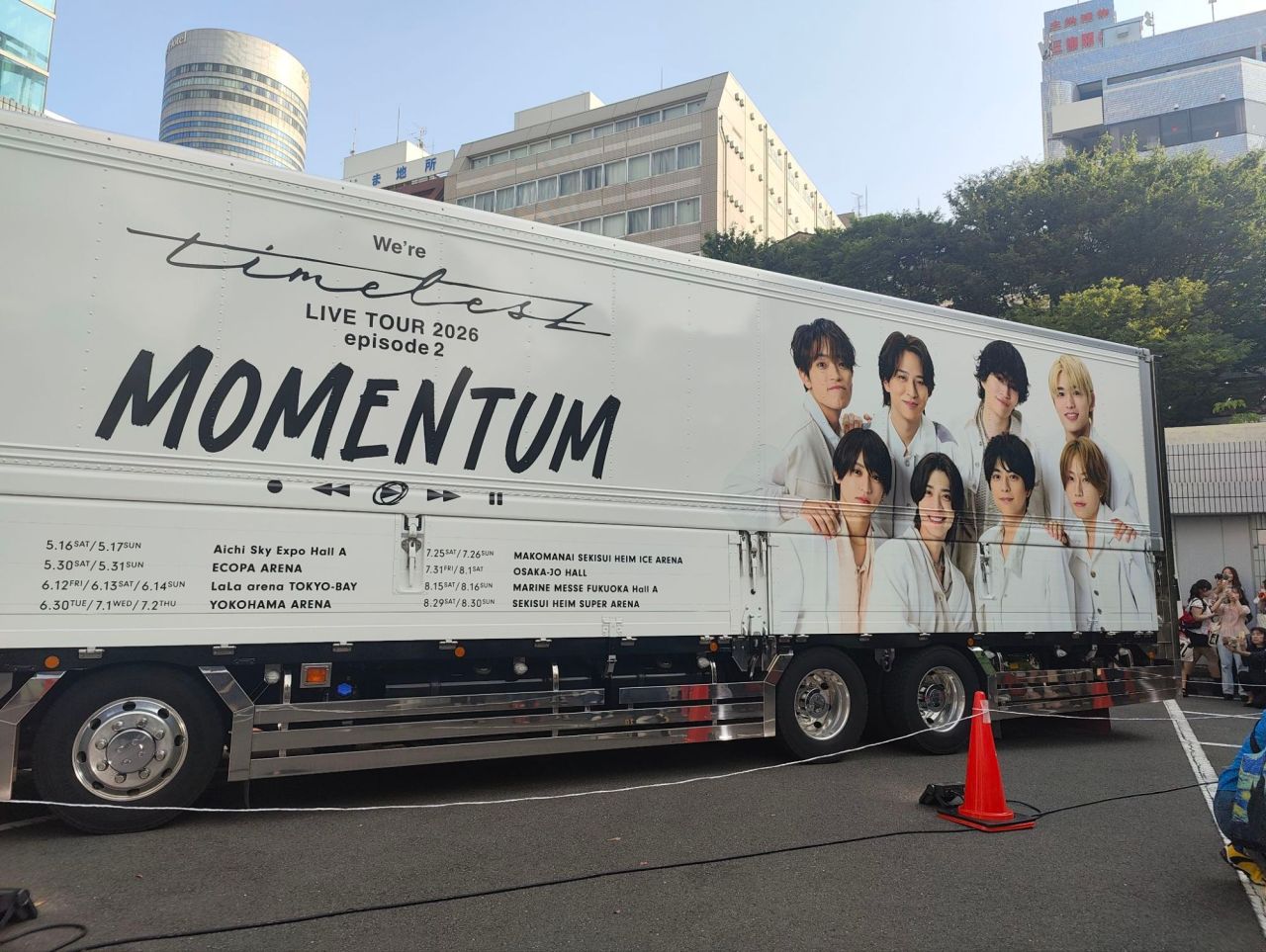
Then I spent an afternoon with them—alongside my Fuma-tan friend—at Yokohama Arena during their sold-out We’re timelesz LIVE TOUR 2026 episode 2 MOMENTUM, and realized that was probably about to change.
For those unfamiliar, timelesz is a popular boy band under the umbrella of STARTO ENTERTAINMENT, Japan’s premier male idol agency. Originally debuting in 2011 as Sexy Zone, the group reinvented itself as timelesz and, in 2025, made history with the Netflix audition series “timelesz project -AUDITION-“ to find new members. The current lineup pairs original members Shori Sato, Fuma Kikuchi, and So Matsushima with newcomers Takuto Teranishi, Yoshitaka Hara, Masaki Hashimoto, and Taiki Shinozuka.
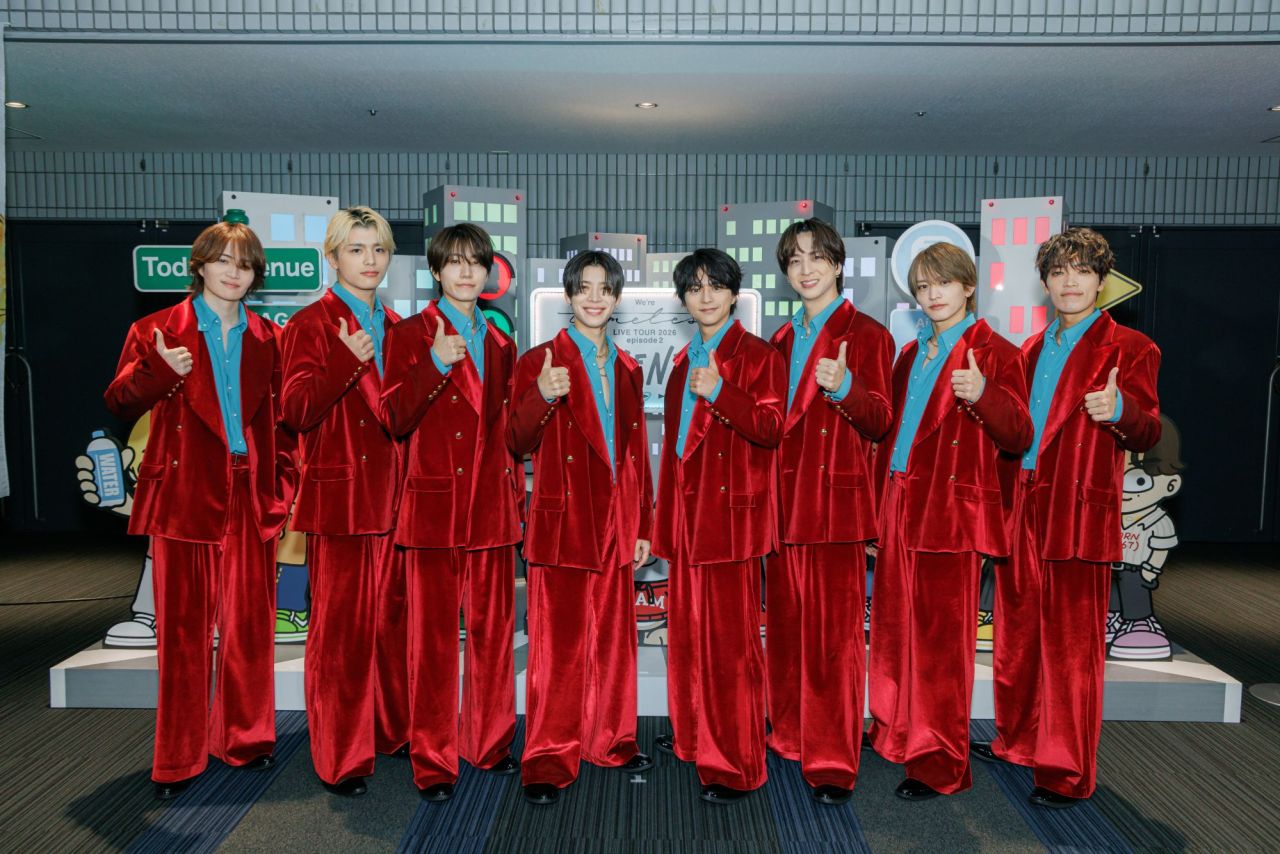
When the lights went down, a crowd of more than 17,000 screamed with anticipation, growing even louder as the members emerged to “Mighty Beast.”
One of the standout tracks from their sophomore album MOMENTUM, its muscular rock sound and unapologetic swagger made it the perfect introduction to their show. As fireworks erupted and confetti drifted across the arena, the eight members emerged to deafening cheers.
It was on.
So Matsushima, in particular, radiated star power from the very first moments, immediately commanding the audience’s attention.
That confidence carried through the performance of their latest single, “Steal the Show,” and right into “Anthem -episode 1-,” the first single the group released after the name change. Written as a declaration of resilience, growth, and new beginnings, it already carries weight on record. But live, surrounded by thousands of fans, it became something even more powerful:
A celebration of the journey that brought all eight members together.
The easy camaraderie shared by original members Shori Sato, Fuma Kikuchi, and So Matsushima blends effortlessly with the excitement and hunger of the five newcomers. It’s a chemistry that feels completely genuine. No one fights for the spotlight because they don’t have to. Every member has a chance to shine, and every single one of them seems just as happy celebrating everyone else’s moment.
No one embodied that spirit more completely than Taiki Shinozuka.
Whether flashing an infectious grin toward the audience or throwing himself into the choreography with unbridled enthusiasm, there was an undeniable magnetism to every moment he spent on stage, especially during “Rock This Party,” which showcases exactly why the group’s future feels so exciting.
Its irresistible hooks and explosive energy transformed Yokohama Arena into one enormous celebration. Takuto Teranishi embraced every second of it, bouncing across the stage with infectious enthusiasm and encouraging both the crowd and his fellow members until the entire arena was swept up in the song’s momentum.
There’s that word again: momentum.
It’s exactly what timelesz has.
They’re getting better. They push harder. And they’re refusing to slow down.
While they may not be the most technically dazzling dance unit, I don’t think they need to be. What makes them such compelling performers isn’t flawless precision. It’s authenticity. They perform with a genuine joy that’s impossible to manufacture. Every laugh between members, every playful interaction, every spontaneous moment feels real, and that sincerity becomes infectious.
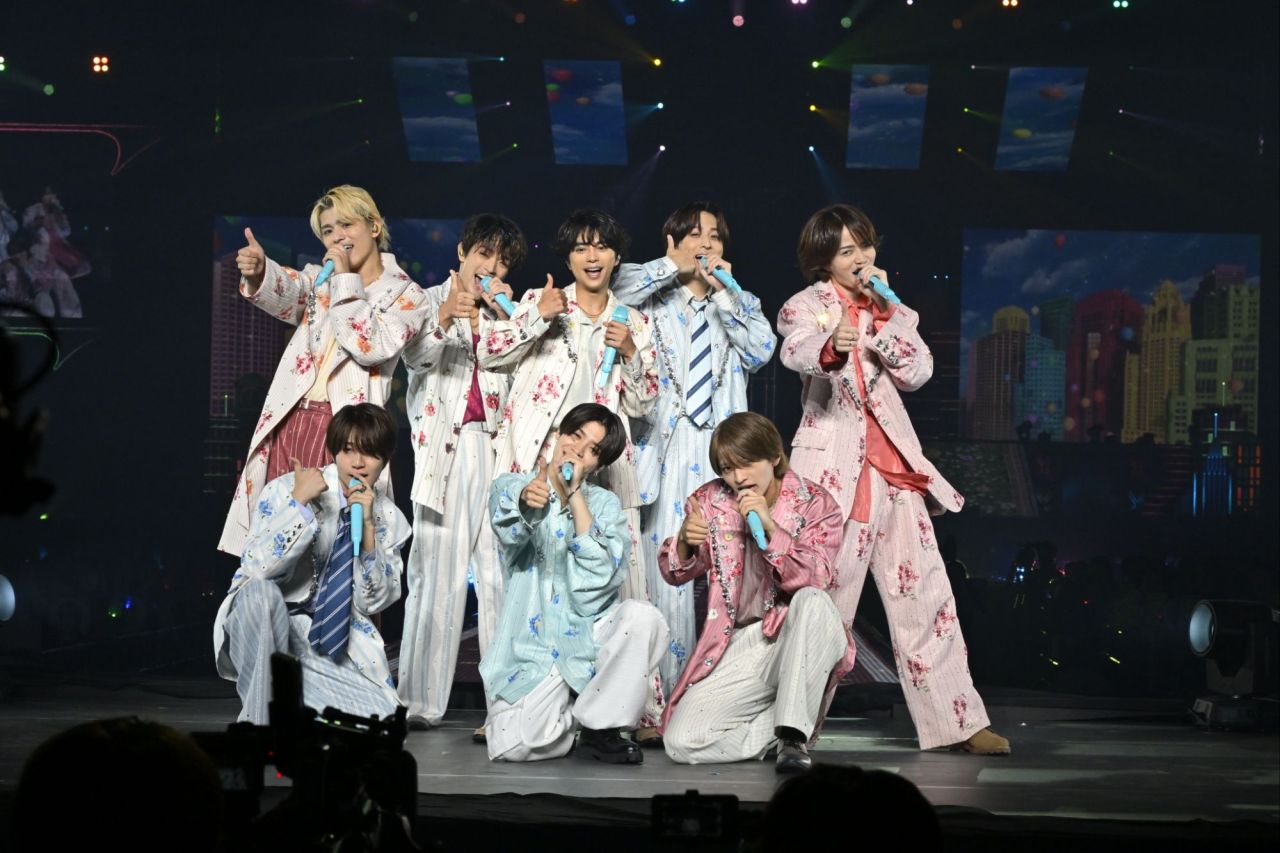
Even in the notoriously reserved press section, smiles were wide, hands were clapping, and more than a few people were moving to the beat.
timelesz invites everyone to their celebration.
It’s a philosophy perfectly encapsulated by “We’re timelesz,” one of the strongest self-introduction songs in STARTO ENTERTAINMENT’s catalogue. Funky, playful, and overflowing with personality, it gives each member a chance to step into the spotlight before effortlessly handing it to the next. It’s a clever introduction, but even more importantly, it perfectly plays into their identity as a group.
And this was where Yoshitaka Hara became particularly difficult not to watch.
Hara absolutely thrived during the number. His seemingly permanent smile lit up the arena every time the cameras found him, earning enthusiastic cheers from every corner of the venue. There’s something wonderfully unguarded about the way he performs. He doesn’t simply hit his mark, deliver his part, and move on. He seems genuinely delighted to be there, and somehow that delight travels.
More than once throughout the afternoon, I caught myself watching him even when someone else technically had the spotlight.
Watching Hara interact with the audience served as a reminder of what makes idol concerts unlike any other live experience. Technical excellence will always matter, but connection matters just as much. For those few minutes, timelesz somehow made a venue filled with more than 17,000 people feel surprisingly intimate.
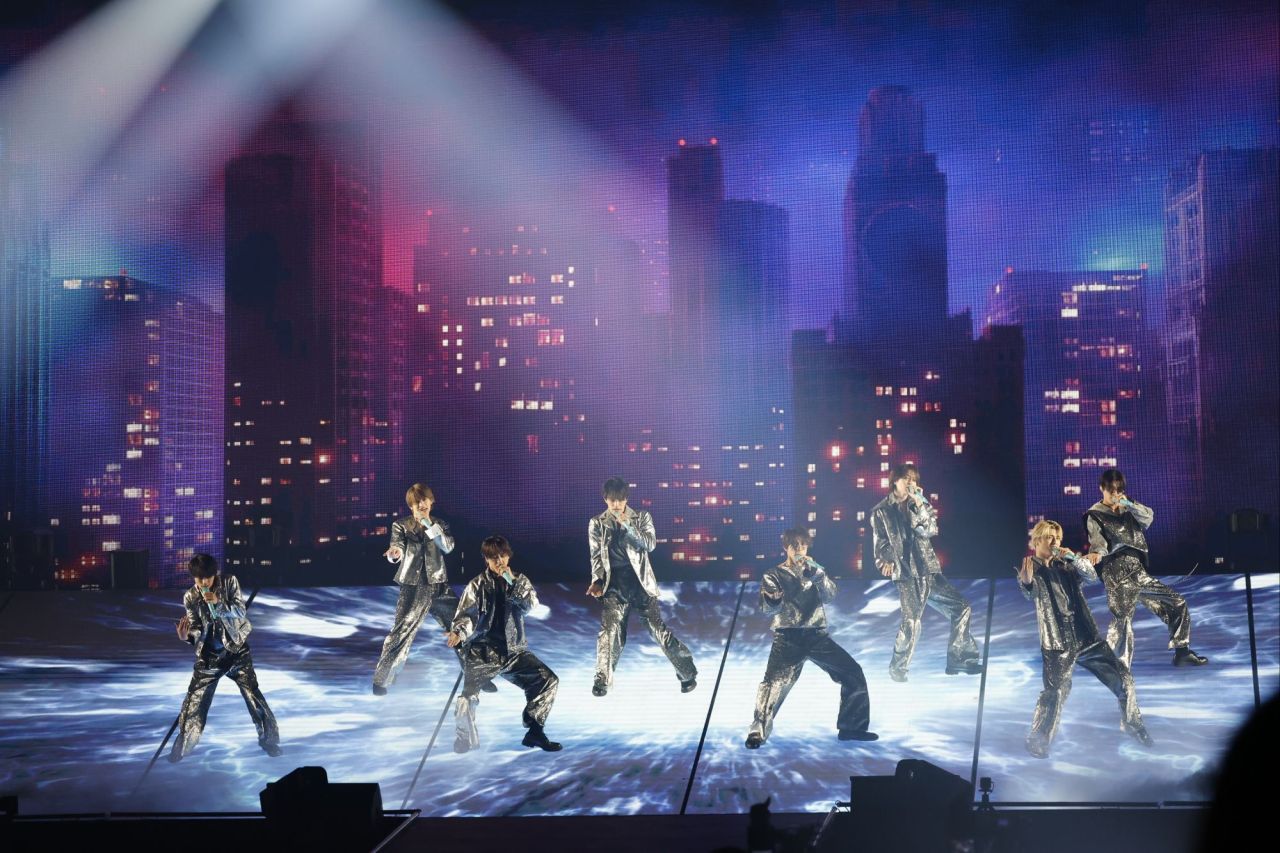
While the guys are the reason fans braved the rainy summer afternoon, the production design of this concert was by no means just a simple backdrop. Built around a colorful comic book-inspired cityscape, the stage felt like a living extension of the group’s personality. It transformed constantly throughout the afternoon, shifting effortlessly from bustling city streets to a sun-soaked beach before blossoming into a field of flowers. Each change gave the concert a fresh visual identity while never pulling attention away from the eight performers at its center.
The lighting was equally imaginative. Razor-sharp lasers carved through the arena, pyrotechnics exploded with cinematic precision, and waves of confetti punctuated the show’s biggest moments. Spectacle for the sake of spectacle can sometimes overwhelm a concert, but here it always felt purposeful, amplifying the emotion of each performance rather than competing with it.
For more than two and a half hours, the music, staging, and visuals flowed together with remarkable confidence, creating a show that never seemed to lose momentum.
Yet for all the dazzling production, the concert’s greatest special effect was something no lighting designer could create.
Connection.
One of the things that truly sets timelesz apart from many of their contemporaries is the bond they share, not only with one another, but with their fans. There’s an ease to their interactions that simply can’t be manufactured. Whether exchanging quick smiles during choreography, laughing at an unexpected mistake, or encouraging one another from across the stage, they perform less like eight individuals sharing a spotlight and more like eight friends inviting thousands of people into their world.
During the MC, the polished performers who had spent the previous hour commanding the arena suddenly became eight friends joking with one another. Stories turned into playful teasing. Teasing became uncontrollable laughter. Hara, unsurprisingly, seemed completely at home in the chaos, reacting to the others with the same enormous grin he’d been wearing for most of the afternoon.
Moments like these are easy to overlook when discussing concerts, but they’re a huge part of what makes STARTO performances so unique. They remind you that behind the larger-than-life stage production are eight genuinely likable young men who seem to enjoy spending time together just as much as they enjoy entertaining their fans.
Then, with “GOOD TOGETHER,” it was time to step back onto the speedway of sound.
Driven by an irresistible disco groove, the song immediately shifted the atmosphere back into celebration mode and encouraged fans to do the same by singing along. While some artists put on incredible concerts, and every STARTO group does, timelesz makes you feel like you’re part of the party.
Another thing timelesz does exceptionally well is the anthem track.
Case in point: “4分間だけ時間をください” (“Just Give Me 4 Minutes”).
Opening with a solitary guitar, the song quickly crescendos into a soaring pop-rock symphony tailor-made for live performances. Lyrically, it’s one of the group’s most direct and heartfelt declarations, a love letter to the fans who have stood by them. It’s the kind of song that feels destined for a live arena and has already become one of the defining tracks of the MOMENTUM era. Masaki Hashimoto proved particularly captivating here, finding the perfect balance between earnestness and youthful charm.
“柔な理性” (“Fragile Reason”) feels like the opening theme to a late-night anime series. It’s one of those songs that reveals new layers every time you hear it, and live, its emotional complexity becomes even more apparent. It proves timelesz is capable of delivering vulnerability with the same confidence they bring to their biggest arena anthems.
One of the group’s most heartfelt ballads, “君の傘” (“Your Umbrella”), was the official closing number of the show and was absolutely breathtaking to experience live. Every member delivered a beautiful performance, but there is an understated sincerity to the vocals of Shori Sato and Fuma Kikuchi that gave the song particular emotional weight.
For me, it was the most moving song of the night.
And had the concert ended there, I would’ve been okay with that.
But there’s always the encore.
Always.
After more than two hours of relentless singing, dancing, and seemingly endless interaction with the audience, most performers would be running on fumes.
Not timelesz.
Somehow, they looked like they were just getting started… again.
Feeding off the crowd’s enthusiasm, the eight members bounded back onto the stage with the same infectious excitement that had defined the opening moments of the concert.
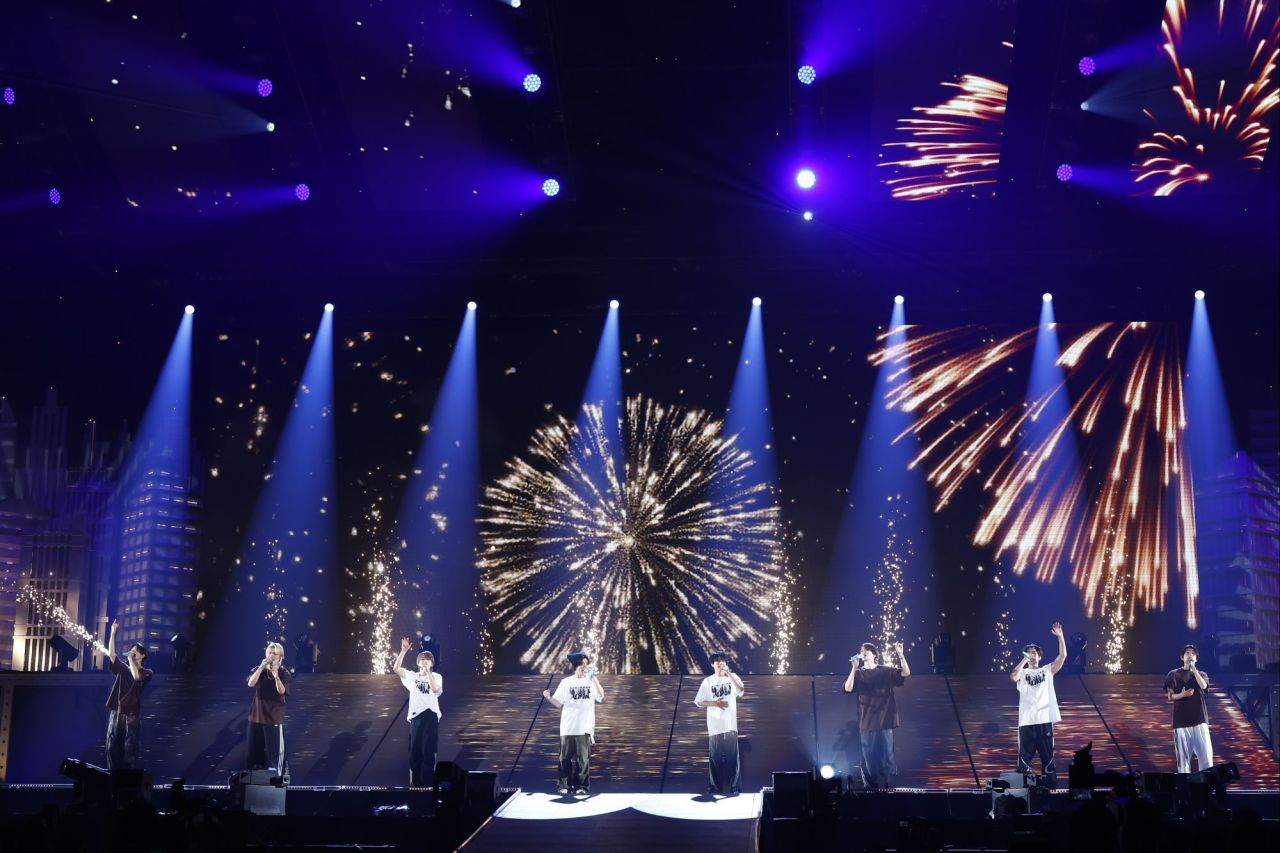
The encore introduced two new songs, “Kienai Hanabi” (“timeless fireworks”) and “Bi Bi Bingo!,” the latter instantly becoming one of my favorite performances of the afternoon. Youthful and energetic, it was pure pop perfection. After making their way through the crowd, the group returned to the stage and continued racing from one end to the other, displaying a seemingly boundless energy that somehow refused to wane even after more than two and a half hours of performing.
And yes, somehow, Hara was still smiling.
At this point, I was beginning to suspect it might actually be his natural resting expression.
Before stepping into Yokohama Arena, I appreciated timelesz as an enjoyable idol group. By the time the lights came up two and a half hours later, I understood why more than 17,000 fans had packed the venue.
Their greatest strength isn’t flawless choreography or overwhelming spectacle. It’s the infectious sincerity with which they perform. Every smile feels genuine, every interaction feels earned, and every song is delivered with the kind of enthusiasm that reminds you why live music matters.
And somewhere between “Mighty Beast,” 17,000 screaming fans, and Yoshitaka Hara grinning his way through seemingly every available camera angle, timelesz got me.
I walked into the arena as a casual listener.
I walked out wondering how much of their music I could buy before I’d be forced to live off a diet of instant noodles and Tang.