
As previously announced in Dumpling Box, SixTONES’ Taiga Kyomoto stars in the famous musical titled “Mozart!”, where he plays Wolfgang Amadeus Mozart, in a double cast alongside the famous musical actor, Yuta Furukawa.
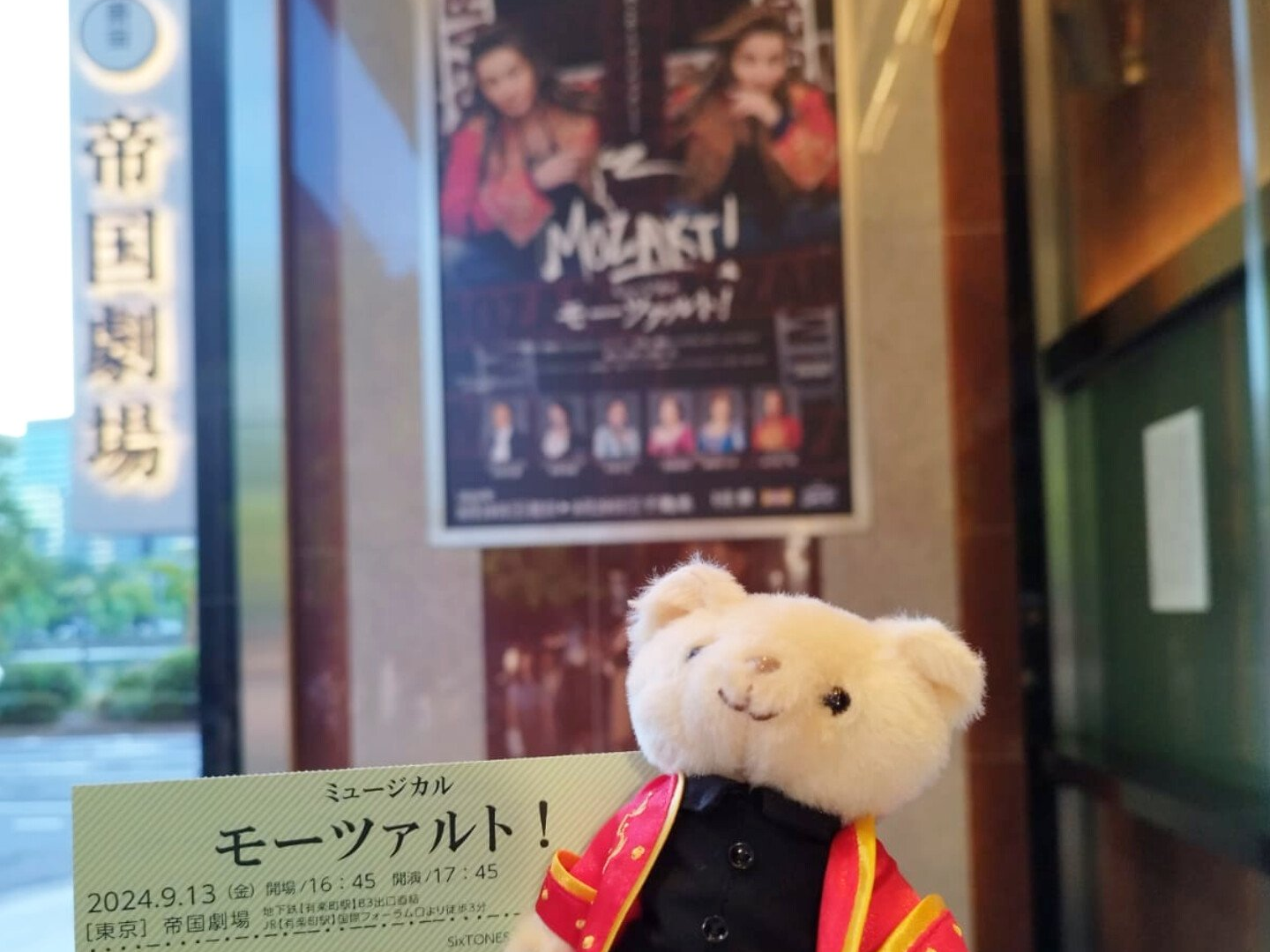
Dumpling Box had a chance to see the musical, which runs at the famous Imperial Theatre until 29 September, then in Osaka in October and ending in Fukuoka in November.
The cast of the day Dumpling Box was present were Taiga Kyomoto as Wolfgang Amadeus Mozart, Tatsuki Kōju as Baroness Waldstetten, and Himari Shiraishi as Amade.
So we wrote a detailed review of Mozart for you!
Synopsis REVIEW
*Be aware of spoilers ahead!
The musical begins with Constanze (played by Kiho Maaya), dressed in black clothes that cover her entire body, where she is with two mysterious men, who want to discover where Wolfgang Amadeus Mozart is buried. When they start digging, the scene changes and begins to tell the story of the famous Wolfgang Amadeus Mozart, starting from the time when he was a child.
Wolfgang as a child is playing the piano at the Salzburg court, and his father, Leopold Mozart (played by Masachika Ichimura) says he is proud of his son’s talent. In that part they perform the song Kiseki no Ko (奇跡の子), one of the musical’s most iconic songs. With all the voices of the cast united and echoing through the theatre, it is a wonderful song that is a great way to start this highly acclaimed musical. This scene also features Wolfang‘s sister, Nannerl (played by Otsuka Chihiro).
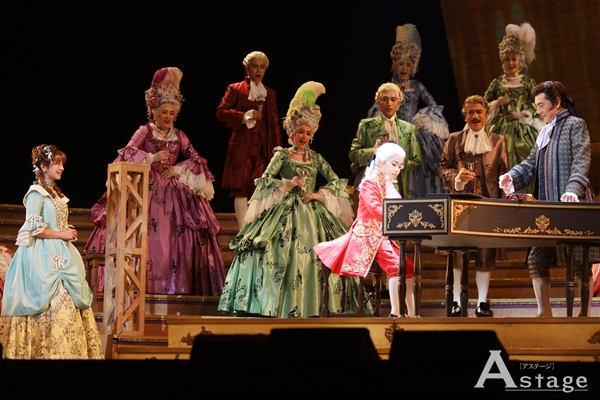
Years passed and Wolfgang continued his musical activities in his native Salzburg. The embodiment of his talent is Amade, who takes the form of the Wolfgang as a child. It is Wolfgang who lives in reality, and Amade is what lives in him. He lives by his father’s teaching that “an artist is hard on himself”, and always holds his pen to appeal to Wolfgang‘s playful, freedom-seeking side as he writes his songs. The box Amade has is his own talent. Amade carries it with him at all times and doesn’t even want to give it to Wolfgang himself.
In this part, Wolfgang performs one of the main songs, called Boku Koso Music (僕こそ音楽). Taiga Kyomoto perfectly plays an innocent, happy and hopeful Wolfgang, full of love for music and in no doubt that he is loved by those around him. Taiga Kyomoto‘s expressions, which he has perfected through many years of experience in musicals, as well as the voice of happiness, are the highlights of the song. Definitely a song that makes you smile while wishing Wolfgang to be happy.

However, young Wolfgang is tired of composing in the service of Archbishop Koloredo (played by Yuichiro Yamaguchi), lord of Salzburg. He confronts his father, who tells him not to defy the archbishop. Finally, he explodes in anger at the Archbishop for constraining him.
Wolfgang leaves Salzburg with his mother in search of fame and musical freedom, but he is no longer as popular as he was as a child, and heads for Paris. Instead, however, he runs out of money for the journey and loses his mother on the way.
After learning of his mother’s fateful end, Wolfgang sings Zankoku na Jinsei (残酷な人生). Wolfgang’s cries of grief at the death of his kind mother were sad.
Wolfgang returns home disappointed and wants to leave his hometown to test his strength. His father Leopold, who opposes him, with the help of the sympathetic Baroness Waldstetten (played by Tatsuki Kaju), who recognised his musical talent from an early age, renews his determination to pursue his musical career in Vienna. In this scene Baroness Waldstetten performs the song called Hoshi kara Furikin (星から降る金), where she tells him, “Let me tell you a story about a king and a prince in a castle in an enchanted forest”.
In the tale she explains while singing the song, the king wants the prince to stay in the castle because he is worried that the outside world is dangerous, but the “spirit of longing” whispers to him to “go away“. No doubt this is a comparison with exactly what Wolfgang is going through.
After the wonderful performance and voice of Baroness Waldstetten who completely dominated the theatre, Leopold, Nannerl and Wolfgang perform in a trio a wonderful song called Watashi hodo omae wo aisuru mono ha inai (私ほどお前を愛するものはいない), where their voices are absolutely integrated.
Wolfgang moves to Vienna and quickly meets Constanze, the daughter of an acquaintance of the Weber family, at a Vienna show, and falls in love with her. Constanze sings to Wolfgang Kono mama no Anata (このままのあなた), which has the same melody as Boku Koso Music (僕こそ音楽). It is, so to speak, a response song to Wolfgang‘s wish to love me as I am. Constanze senses that Wolfgang has a talent that is not quite human, though she does not know what it is, and she is attracted to him, who trusts his talent and tries to live freely.
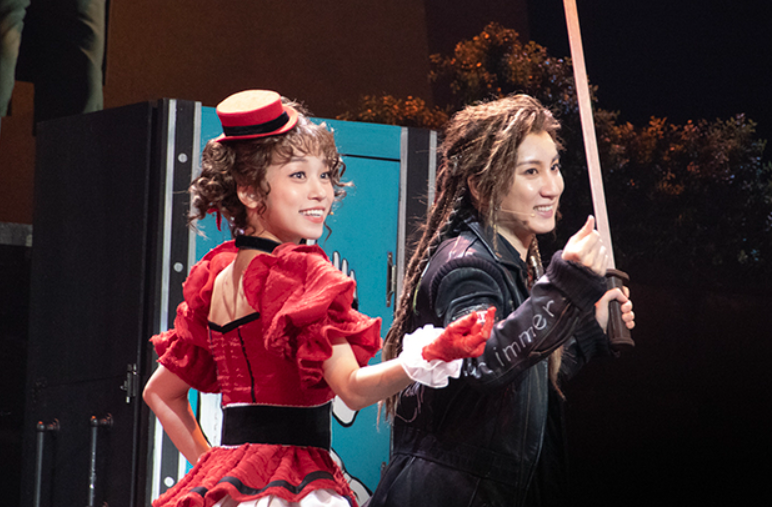
In this part, while Constanze sings, Wolfgang plays an animal. In the performance we had the pleasure of attending, he played the dog and pawed Constanze twice. But sometimes he has also played an elephant. It’s a part where they improvise on the spot, making each performance unique.
At this time, in Salzburg, Leopold and Nannerl perform a fantastic duet between father and daughter, called Owari no nai Ongaku (終わりのない音楽). Nannerl has her own talent, but she gave it up, although she cannot forget her dream. Leopold is convinced that his son’s success will make everyone happy. These two people, who look in different directions, have complex feelings that do not fit together. When at last their voices come together in the part of the song that says It’ll be like old times…. But their feelings for the music and their pure love for their son/brother are the same. They are not on the same page, but they are a family that tries to be united in some way… It is a song that symbolises the feelings of father and daughter.
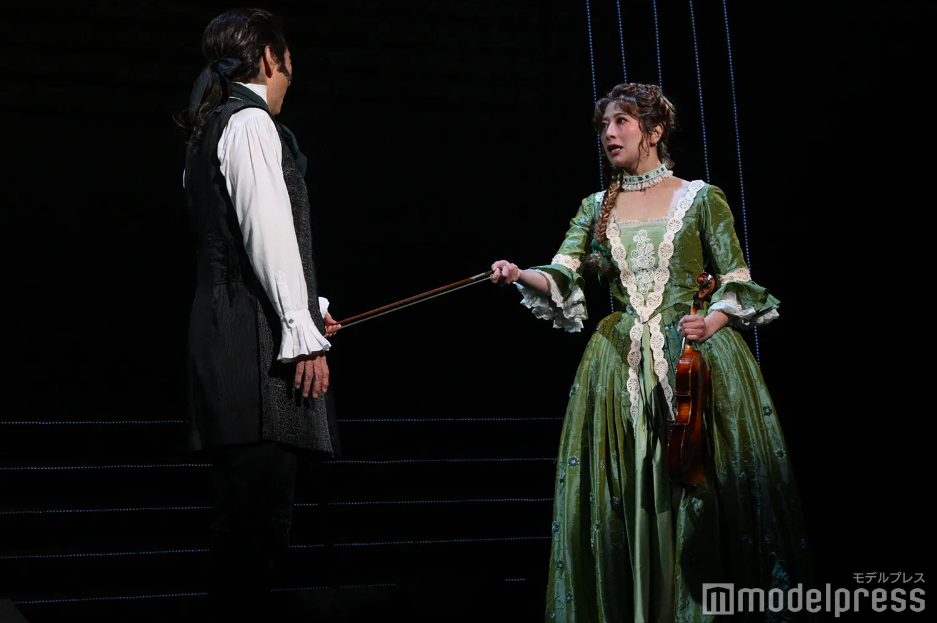
However, after Wolfgang and Constanze‘s happiness, a plot by Archbishop Koloredo prevents Wolfgang from performing. Wolfgang again confronts the archbishop and their relationship breaks down for good.
The first act ends with Wolfgang‘s splendid performance singing Kage wo nogarete (影を逃れて). Wolfgang is bound by his musical talent, Amade, and wants to be free, but cannot. To escape the shadow is to escape fate, and only then can you live your life. Taiga Kyomoto perfectly shows the feelings of Wolfgang‘s desperation to be free. It is certainly an impressive song to close the act, where at the end of the song the whole cast sings, making it a powerful scene.

Wolfgang performing Kage wo nogarete.
Source: mdpr.jp
In the second act, after the break-up with the archbishop, Wolfgang is the talk of Viennese society.
Constanze visits Wolfgang‘s home in Vienna and they deepen their love by getting married and singing the song Aishiteireba Wakari Aeru (愛していれば分かり合える).
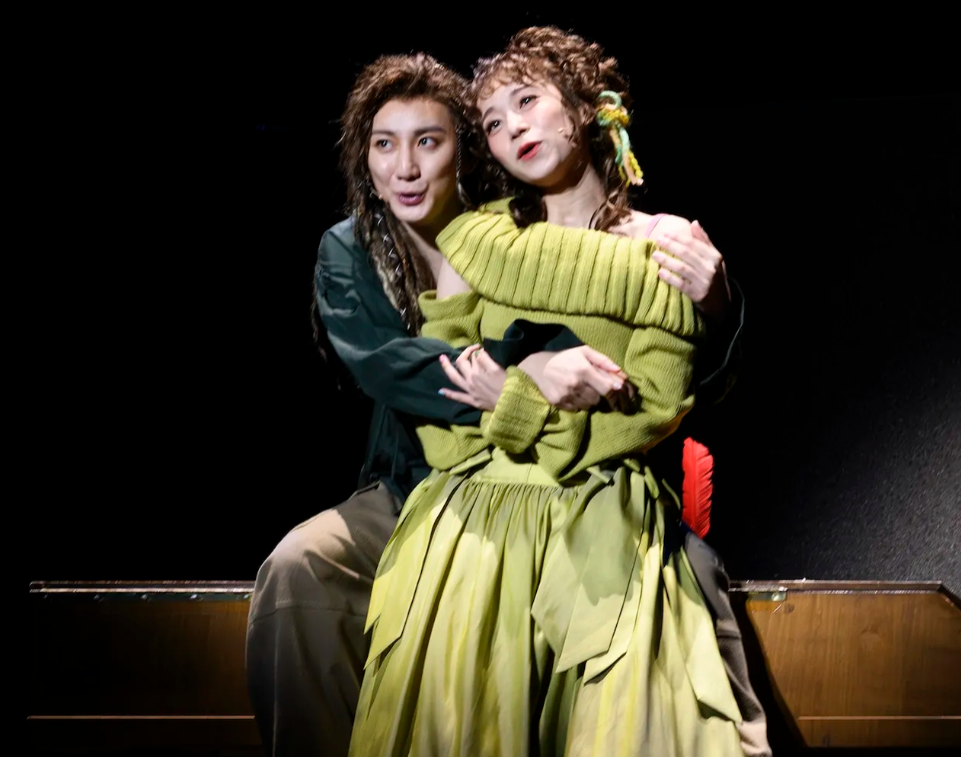
On the other hand, in Salzburg, Leopold and Nannerl perform the duet Prince wa dete itta (プリンスは出て行った), in which they think of Wolfgang when he leaves for Vienna.
Wolfgang achieves success with his opera The Marriage of Figaro, among others. However, his father Leopold arrives in Vienna and complains about his haughty son and leaves Vienna. Wolfgang sings with the song Naze Aisenai no? (何故愛せないの?).
Constanze‘s anguish, being the wife of a genius begins to manifest itself little by little and she sings the solo called Dance wa yamerarenai (ダンスはやめられない). At the same time, as a musician’s wife, she feels she must inspire his talent, but is unable to do so and instead struggles with her inability to perform household chores like a normal wife. She is also tormented by Wolfgang‘s excessive talent, as she is unable to stand aside and understand her husband, who is suffering and heading towards madness and despair because of his talent. As the song progresses, more and more feelings of self-sacrifice flood her inner self, and it was painfully evident that she was driving herself into a state of devastating emotion. A wonderful vocal expression that you can’t miss a single moment of.
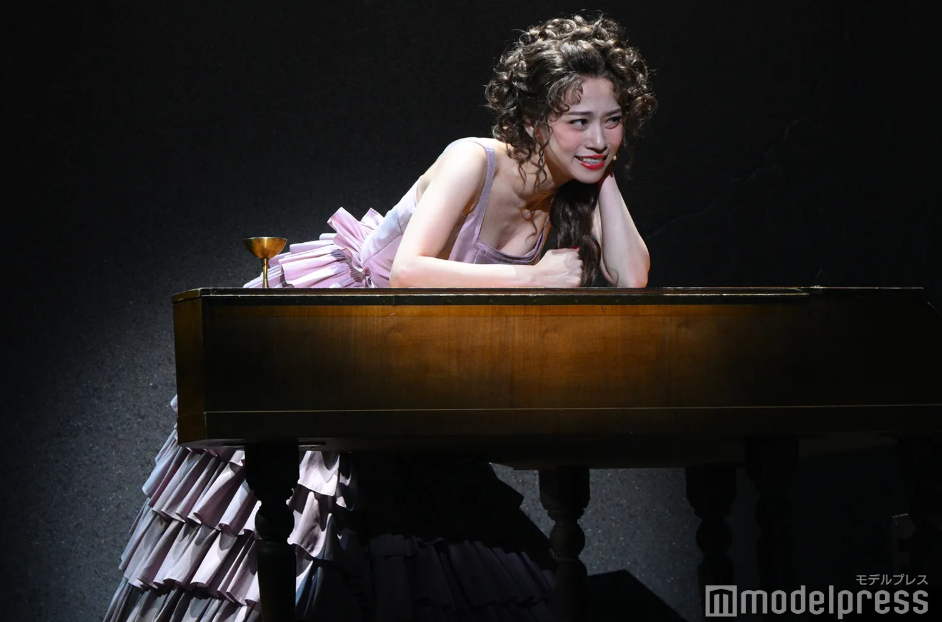
Then, Wolfgang‘s father dies suddenly. After receiving the news of his father’s death from his sister, Wolfgang shows his feelings towards his father through the song Chichi e no kaigo (父への悔悟). Taiga brings his musical acting skills to the fore, crying real tears over the loss of his father.
Later, he is commissioned to compose the ominous Requiem, despite the success of his opera The Magic Flute. And in the commission he is instructed to use his own talent. Wolfgang struggles to compose the Requiem, but in the end finds that he cannot compose. Before he takes his own life, he remembers for a moment how happy he used to be composing music, and in the end he decides to take his own life, along with Amade, his talent. Wolfgang‘s madness is so disturbing that it leaves you breathless, or rather, you forget to breathe.
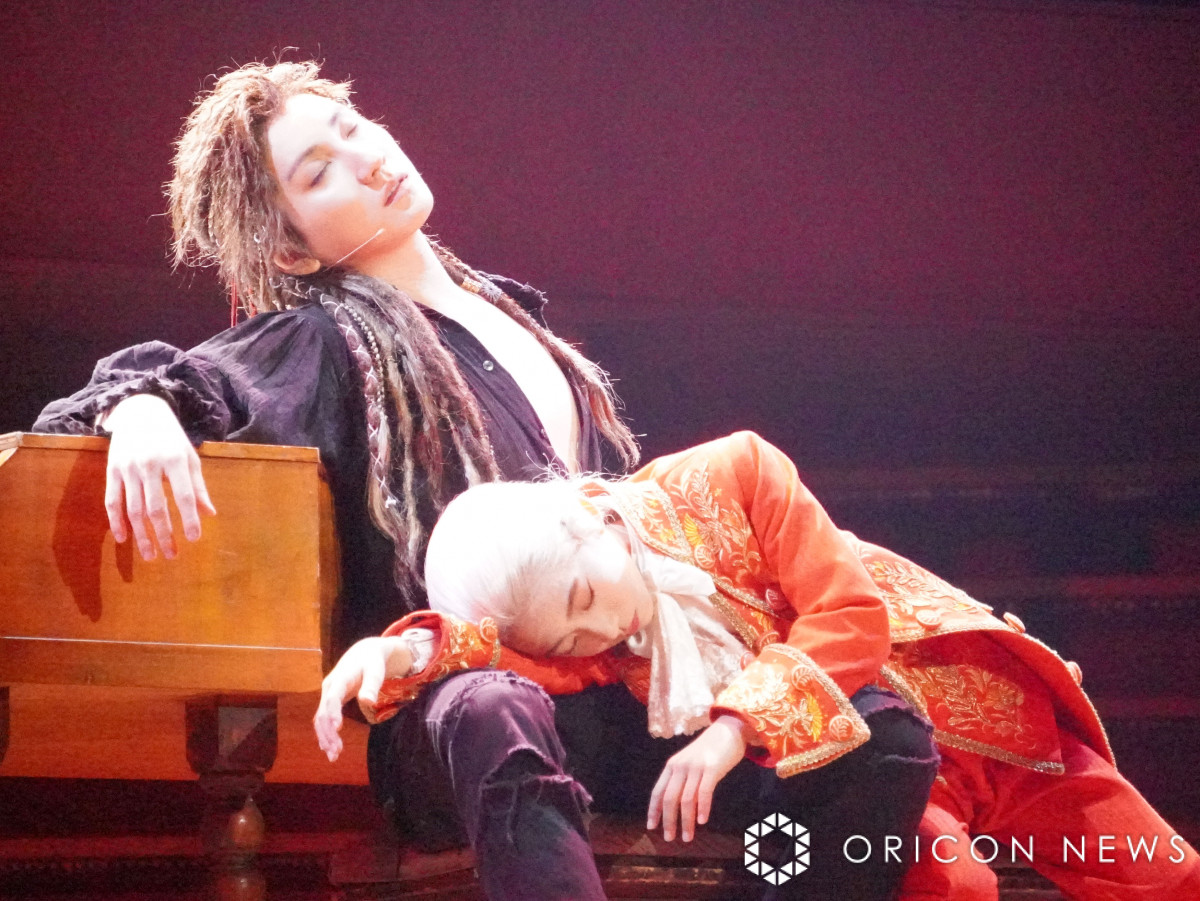
The second act, and the musical itself, ends with the same song that ends the first act, Kage wo nogarete (影を逃れて). Definitely a perfect song for the theme of this musical.
In the first curtain call they introduced the cast based on the songs that have had the most representation in the characters, where it ended with Taiga addressing a few words to the audience “Thank you so much for visiting us today.”
Then at the second curtain call the audience gave a splendid standing ovation. Finally, the orchestra gave us a medley of the most emblematic songs of the musical, where the audience participated by applauding in various ways.
In the third curtain call Taiga appeared alone, to greet the whole audience.
PERSONAL OPINION
The story is not entirely based on historical facts, but it is a pleasure to see it from the perspective of how each character perceives and thinks about Wolfgang‘s talent and actions.
It is the story of Wolfgang’s struggle against himself. Without Amade (his talent), he might never have succeeded as a musician, or even tried to live freely. But his talent is a burden that prevents him from living freely. Freedom and talent do not seem to go hand in hand.
Wolfgang is dominated in every possible way. The physical domination – freedom of work and movement – belongs to Archbishop Koloredo. The father dominates the mentality, forcing him to live his life as a musician and not allowing his mind to wander to other things. Financial domination is exercised by the Weber family, who take all the money he earns, whatever he earns.
The music in the play is beautiful and striking, as everything revolves around music. The sound of wind, piano and strings is very characteristic, as well as the rocking electric guitar. Wolfgang‘s lifestyle was probably quite ‘rock “n” roll’ for the time. The electric sound that symbolises this is very pleasing to the ear.
The costumes of the cast as Wolfgang, Constanze and the freedom-seeking Weber family have modern (non-modern European) elements, such as jeans and printed T-shirts. The period coincided with the outbreak of the American War of Independence and the French Revolution, so perhaps the world and the era itself were beginning to swell in an attempt to escape the ‘shadows=past’.
There are a number of scenes in the musical where you can participate by clapping, which is appreciated as the musical is very intense, and so you can switch off a bit about the misfortunes of Wolfgang and all those around him.
It is definitely a musical that I understand why it has such a long run in Japan. When you see it for the first time you are fascinated by the music and the acting of the cast, as well as the period costumes and the stage set.
On Toho’s Official Channel they uploaded a promotional video using scenes from the musical itself. If you want to see scenes from the musical, don’t hesitate to check it out!
Follow Taiga on X and Instagram!▼
https://twitter.com/TAIGA_KYOMO33
https://www.instagram.com/minarai_art