
As a fan of the STARTO ENTERTAINMENT Junior group, 7 MEN Samurai, I try to attend as many of their shows as I can. Consisting of members Reia Nakamura, Katsuki Motodaka, Rinne Sugeta, Taiko Sasaki, Taiki Konno, and Rei Yabana, 7 MEN Samurai are known for their dance and band image as a group. From concerts to stage plays, I will do anything within my power to be able to support them in their endeavors as an up and coming unit. When MASSARA, their first starring stage play as a complete group, was announced, I knew that I needed to attend.
Before going to see MASSARA, I hadn’t seen much information about the plot of the play floating around on various platforms. I had been told the play was directed by Sota Kawashima of GANMI as well as the screenplay by Narushi Fukuda. A friend who read interviews from the group stated how Yabana was the main character of the story, and I knew the group were rehearsing for MASSARA while performing this year’s concert tour, and JOY!. There was a big question mark in my head surrounding what I would be watching, but I settled in my seat and was excited to experience it.
MASSARA tells the story of six young adult friends: Haruki (Reia), Kazuto (Katsuki), Dan (Rinne), Taka (Taiko), Ryo (Konno), and Kei (Yabana). The six characters all meet in Kei’s hospital room, for he has injured his ankle, and reminisce about their time as friends starting in their first year of high school to the present. These stories come from the pictures that Kei has taken over the course of their friendship and are moments that we the audience watch unfold on stage.
What I loved about these memories are that they are scenes that give depth and insight to the characters we are briefly introduced to in Kei’s hospital room, but they also include some form of a musical number using songs from senior STARTO ENTERTAINMENT groups.
In Dan’s memory, the story occurs while the friends are in their first year of university, but Dan hasn’t followed in his friends’ footsteps. Instead, he is working on a construction site, bumbling through the day while performing a rendition of SUPER EIGHT’s Nantoka Narusa (ナントカナルサ). With his friends, he laments that he feels lesser for not going to university as well.

Within this memory, Haruki swears that he will never work a boring office job once he graduates from university. He wants to have some kind of work that is interesting though, in the present, he currently works in an office with Ryo. This particular performance of SHONENTAI’s Kurui Kaketa Haguruma (狂いかけた歯車) uses desks on wheels and computers to highlight the strict and regimented world of an office setting. Later in the play, Haruki laments that he fell into that work because he didn’t know exactly what he wanted to do and decided to become an office worker to fill the time until he decided.

Taiko’s performance and memory is a stark contrast to the previous one. During the winter of their second year of high school, Taka falls in love with a girl who takes his coffee order. His performance of Hey! Say! JUMP’s White Love compares Taka’s romantic ambitions to being just like filming a romance movie. As quickly as the roots of love are planted, they’re quickly ripped away by Ryo announcing he’s going out on a Valentine’s Day date with Taka’s crush, to which the others in the friend group cheer him up.
In the summer of their third year, the friends form a rock band with Ryo as the lead singer to which they perform at their school’s culture festival to great applause. But behind the scene Kazuto is feeling crushed under the pressure to study and get good grades. Though he achieved a great score on his test, an 89, it isn’t perfect enough for him. Katsuki dances a rendition of TOKIO’s Amagasa (雨傘) in a rainy world as other Juniors in the production show the lyrics of the song on umbrellas and other props.
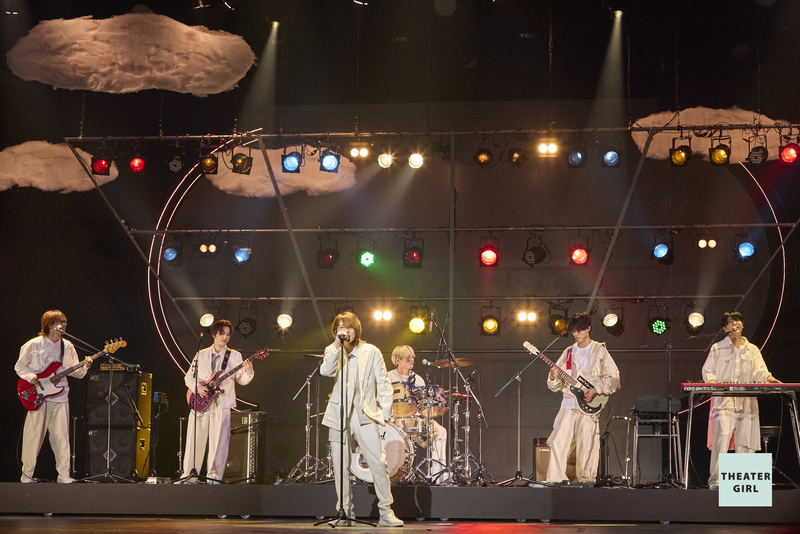
All of these songs and dances are impeccably performed along with other Juniors dancing with them. 7 MEN Samurai fully engross themselves into their characters, breathing life into them on the stage, and every moment the audience watches is absolutely engaging. For those with limited Japanese, the story is told in a way that makes the plot easy to understand. There also wasn’t a moment where I wanted to tear my eyes away or look at my watch to see how much longer was left of the show. I wanted to stay fully encompassed in this world they had created on the stage.
While the show can be quite silly at times, ad libbed moments making each show feel fresh and unique for those lucky enough to go multiple times, there is a serious side to MASSARA that struck me. Though not explicitly shown on stage, in the last memory of the play there is a heavy allusion to the reason for Kei’s ankle injury.
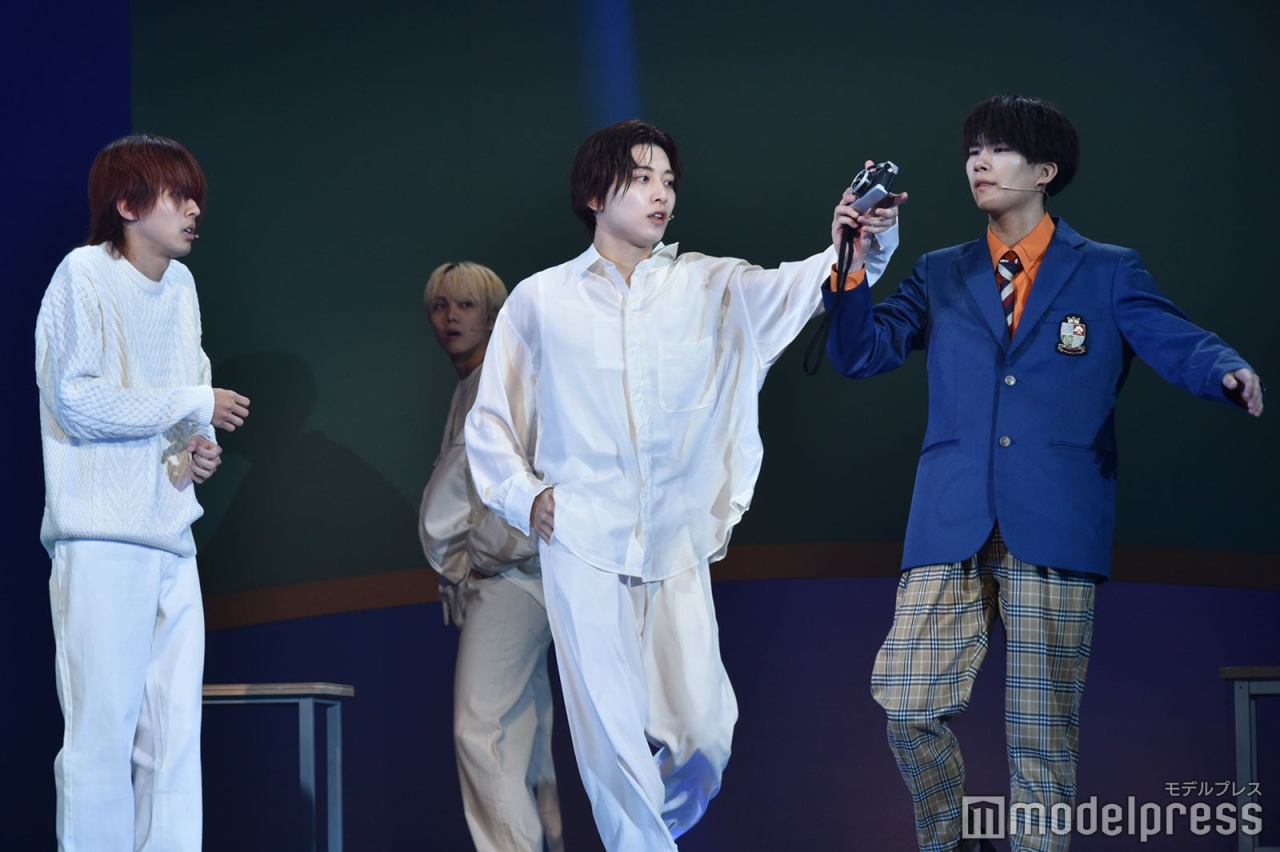
During his first year of high school, Kei was heavily bullied by his classmates with his camera being stolen and passed around. That is until Haruki, Kazuto, Dan, Taka, and Ryo step in to fight off the classmates and get Kei’s camera back. Their new friendship is cemented in their conversations after the fight, and a physical representation of it is created by Kei taking a photo of his five new friends.
It’s how all of the previous memories all end. Kei takes a photo of his friends while he is stuck behind the camera. Though he now has people who love and support him, these pictures are still a barrier that keeps Kei divided from the people he cares about the most. It’s these depressive and suicidal thoughts that keep clawing at his heart, and, off stage, he attempts to kill himself. It is heavily alluded to as this being the reason why his ankle is now injured.

MASSARA isn’t afraid to bring up these kinds of heavy topics, and it is refreshing to see how they unfold on stage. Each member of this group has dreams and ambitions, life not treating them the most kindly, but it is the message at the end of it all that strikes home to any person in attendance: no matter your age, your career path, or the decision that you make in life, everyone is free to follow their dreams and their passions. You are in control of your destiny.
It is what makes the performance of timelesz’ RUN so powerful. The friends take Kei out of the hospital to the park as they sing this song, but the message isn’t to run away from your past and your problems. Rather it is to run towards the future, your dreams and what you want to accomplish in your life. The play tells the audience that if you haven’t found your dream, it’s okay, for the future is bright and full of hope. But, when you find it, chase it with all of your might. It is a wonderful message so full of hope that I found myself unable to keep myself from crying, and I continued to cry as Kei was included in a photo with his friends for the first time.

Though the story of MASSARA is incredibly impactful, building throughout the course of its hour and forty minute run time, the world of MASSARA felt very muted and one dimensional. Except in rare circumstances, the settings and costumes are monochromatic, focusing more on shades of black, tan, and white, to create a world that feels very sterile. It’s a world that lacks individuality and favors constraint and uniformity. It’s a staging decision that feels a little lackluster until the very end when the members of this friend group decide to chase their dreams.
The final song of the play is one called re:start (リスタート), which was also the opening number of the entire production. This time, the song is performed at the park which features a large wide slide with a half circle stage attached to the bottom of it. As the members of 7 MEN Samurai stand at the top of it, color begins to bleed through the fabric of the slide and the members begin to paint their clothes with color. Throughout the song, they repeatedly go up and down the slide, making their white outfits colorful. It is a beautiful visual message of how we all are individuals that bring life and color the world around us.

MASSARA is an absolutely incredible play, one that will hands down be one of my favorite STARTO productions, but it isn’t without any faults. Though it boasts an impressive supporting cast, these supporting cast members are largely regulated to the performances and aren’t seen outside of those moments. In my humble opinion, I believe there could have been ways to include them in various scenes to bring a bit more action to the stage. Whether a few walk across the stage or are hanging out in the background, I think doing so could have added a bit more dimension.
I cannot sing the praises of MASSARA more than I already have. It’s been a long time since an original STARTO production touched my heart in this kind of way. The characters are beautifully vibrant in this stark world, and the story instills a feeling of hope in all that come to watch. If this is the level of production and story we can come to expect in this new era of STARTO, I cannot wait to see how MASSARA will evolve in years to come. But, more than anything, I am excited to see 7 MEN Samurai continue to grow and push themselves in the future.
Keep yourself updated with 7 MEN Samurai on the following sites!
YouTube | Instagram | TikTok | X | Official website