
Watching Yoshinori Masakado (Ae! group) take the lead in TV Asahi’s “ムサシノ輪舞曲 (Musashino Rondo)” was more than just exciting—it was emotional and heart-wrenching.
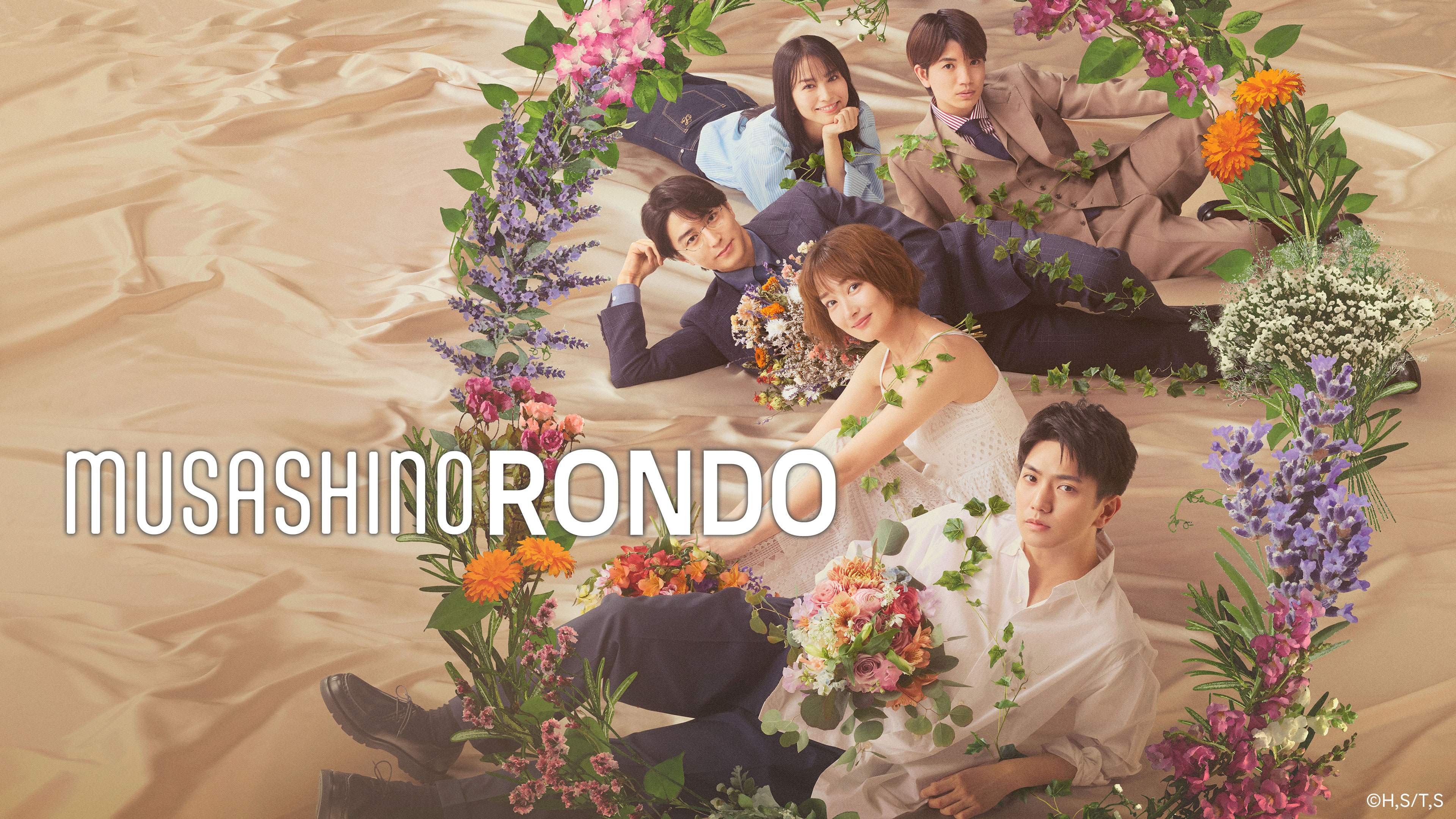
Adapted from Haruka Kawachi’s manga with the same name published in FEEL YOUNG, this romantic drama that aired from April to June 2025 marked a string of firsts: his first lead role in a serialized drama, first romantic role, and debut as the central figure carrying a production—with Ae! group providing the theme song
More than being a milestone for him, it was also about watching him grow—not only in front of the camera but behind the scenes as well. From the very first episode, it was clear that Masakado was stepping into new territory with courage and sincerity, balancing the pressure of expectations with his gentle, hard-working nature.
For international viewers, Musashino Rondo is also available on Rakuten Viki with English subtitles (and more!), making it easier than ever to experience Masakado’s first leading role. Whether you’re watching it for the first time or reliving the quiet heartbreak, the hopeful growth, and the ultimate emotional release, Masakado’s work is now available for the world to experience.
※ This article may contain spoilers for the drama’s later episodes and finale.

While the drama depicts a pure love story, it is packed with heart-fluttering moments, including hugs and kisses, as well as a love triangle that will keep viewers on edge. With unexpected twists and turns, Musashino Rondo is a rather mature, emotionally charged romance, bringing the viewer along the emotional journey of realizing love that had been right beside them all along.
Masakado plays Ryuhei Agawa (25), the son of a soba shop owner, who has been devotedly in love with his neighbor, Tamaki Musashibara (Rin Takahashi), since childhood. Ryuhei is reserved and rarely expresses his emotions, but during his middle and high school years, he confessed his feelings twice—only to be met with rejection. To Tamaki, he was nothing more than “the boy next door”, and their relationship remained unchanged for 10 years. Though he dated other women during that time, they always saw through him—realizing his heart was never truly with them—and the relationships ended in failure.
Tamaki is a ballet instructor who teaches at her home studio. She has a straightforward, no-nonsense personality and tends to act dominant around her younger brother Bunta (Yugo Kochi (SixTONES)). However, she also has a soft spot for falling in love easily. Despite Ryuhei’s unwavering affection, she never took his words seriously, brushing them off as “childish nonsense” since she had known him since infancy. But everything changes when she falls head over heels for one of Ryuhei’s colleagues—her ideal type. As she struggles with her growing attraction to this new man—Tamotsu Kinugasa (Yu Inaba)—Ryuhei suddenly begins aggressively pursuing her, making her see him in a new light for the first time.
What unfolds is a bittersweet, melodramatic yet addictive adult love story brimming with longing, unspoken feelings, and moments that had viewers clutching their hearts—from sudden kisses and back hugs to emotionally charged confrontations. The series quickly gained a reputation for being addictive, especially as the triangle with Kinugasa and, later, the sincere magazine editor Yoriko Numata (Yuka Kageyama) intensified Ryuhei’s emotional journey.
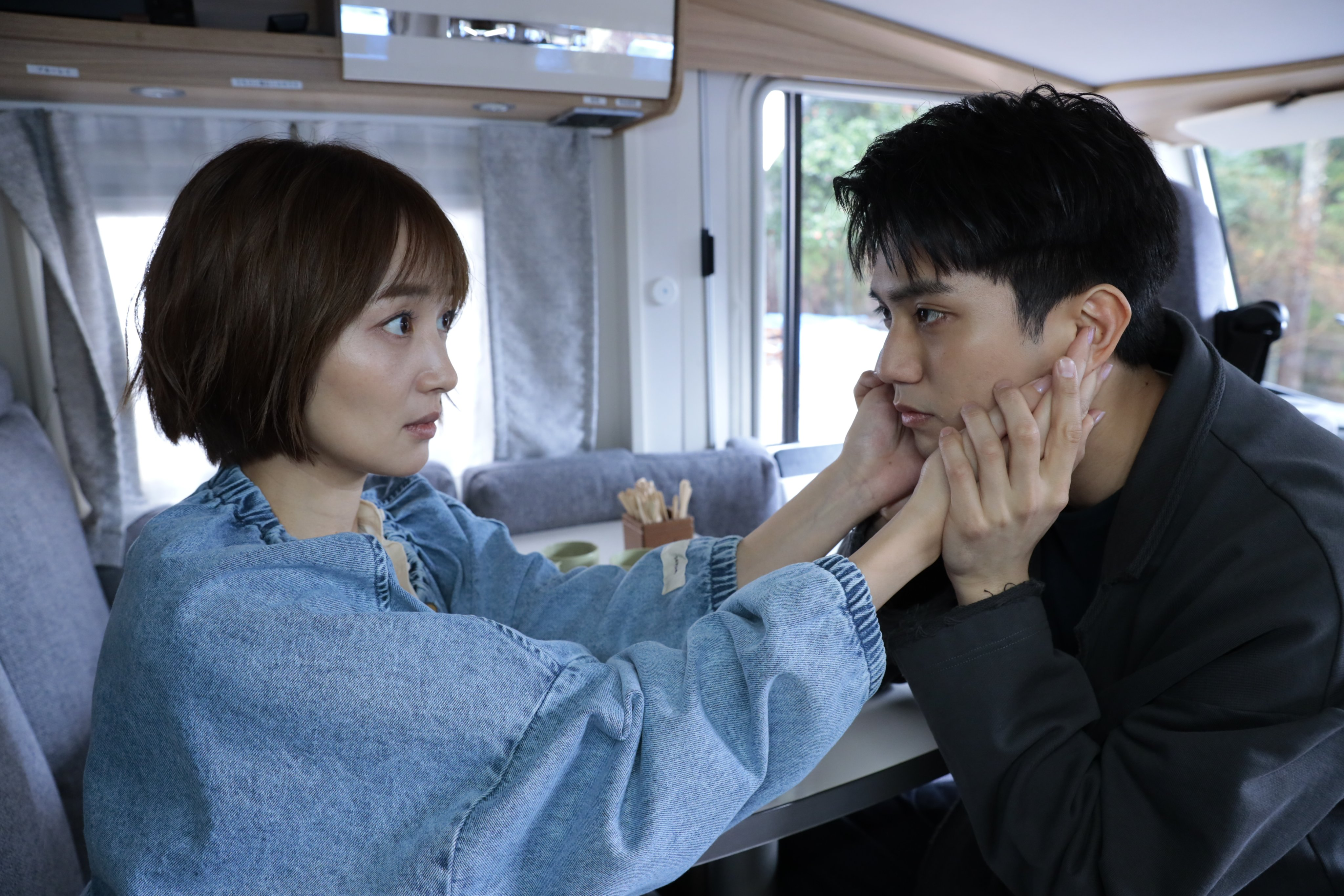
To say Masakado exceeded expectations feels like an understatement. He’s always been an exceptional actor, as seen in works like Sen, shoku; 染、色, SUNA, Moving in Kyoto, as well as various plays when THE GREATEST SHOW-NEN was running. As Ryuhei, he delivered a character full of yearning, vulnerability, and quiet strength.
His expressive eyes told entire stories, especially during the quieter scenes—like the silent jealousy, his internal turmoil, or his brave but trembling resolve to move forward. The throbbing kiss scenes and tender moments weren’t just romantic—they were quite transformative, and executed with precision and care that felt realistic. They carried the weight of years of longing and the hope of something finally, maybe, changing.
Despite struggling to balance this new job with his soba shop duties later in the story, Ryuhei’s father offers gentle support, reminding him that it’s never too late to chase a dream. It’s here Ryuhei begins to find a new purpose outside of unrequited love: “To master something I love and be useful to someone—that sounds incredible.“
While it felt like this turning point came a little late in the story, it comes with a bittersweet realization. When Ryuhei later returns to the ballet studio, he quietly tells Tamaki, “You’ll be fine even without me.”
In that single line, there is a clear desire to let go, not out of defeat, but self-acceptance. Tamaki, recognizing his change, tells him, “You’ve changed. You seem more grown-up.” That moment stayed in the air long after the episode ended. It wasn’t just about Ryuhei moving on from his long-held feelings. It was about him growing into himself, and a nod to the biggest reason why Tamaki was so reluctant to see him in a new light.
Masakado particularly shone in Ryuhei’s turning point at this point: grappling with a new career opportunity and a heartfelt confession from Yoriko. His restrained reactions—hesitation, self-reflection, and quiet acceptance—made the character’s growth feel lived-in and authentic.
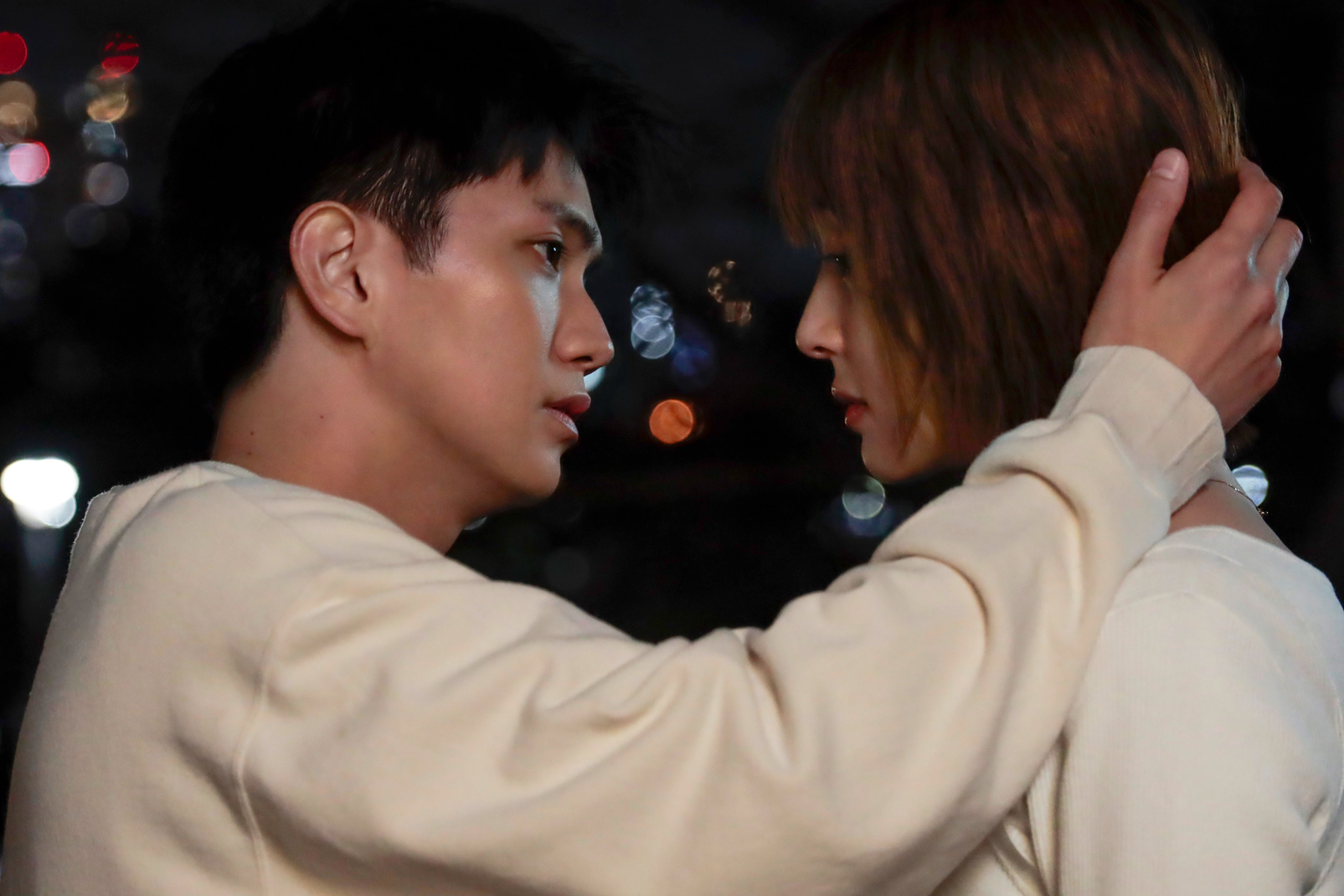
Musashino Rondo isn’t just a romance. It’s a story about choosing courage, letting go of childhood illusions, and daring to pursue real, imperfect love. And for fans of Yoshinori Masakado, it was a journey that felt deeply personal.
The drama’s title, “Rondo,” refers to a recurring musical theme—and that’s what this story became. A refrain of love, longing, hope, and resilience. A loop that finally, after ten years, finds resolution.
The drama’s structure—true to its name—circles back through motifs of longing, self-doubt, and eventual transformation. Beyond the central triangle of Ryuhei, Tamaki, and Kinugasa, Musashino Rondo explored the idea of “rechoosing” one’s path in life. Whether it was Tamaki confronting the future she wants as a ballet instructor or Ryuhei leaving behind unrequited love to discover his own identity, the finale brought those threads together into a story about agency, growth, and emotional honesty.
Viewers praised its ability to blend innocent romance with mature themes, and the resolution of the central love triangle left many in tears. Some called it the perfect happy ending for a ten-year love story finally fulfilled, describing how deeply it moved them, and some felt it was too cliche. But in the words of Masakado himself, “Good for you, Agawa-kun!“
While some viewers appreciated the fast-paced, late-night drama style that allowed for bold choices and emotional impact, others felt the second half rushed certain plotlines—particularly Yoriko’s arc that came a little late. Still, even those critiques were softened by the show’s emotional payoff and its sincere conclusion, which many agreed gave Tamaki’s choice genuine weight and closure.
While the drama’s ending is a happy one in itself, it is certainly one for Ryuhei most of all. From Tamaki’s perspective—or even from a viewer’s—the resolution can feel a little rushed or spontaneous. It leans on the classic “you don’t know what you’ve got until it’s gone” trope, and with Tamaki dragging her feet throughout much of the drama, it doesn’t quite land as an absolute conclusion for anyone but Ryuhei.
There were stretches where Tamaki’s indecisiveness felt drawn out, leaving viewers to fully soak in Ryuhei’s desperate, slow-burning devotion while almost screaming at the screen for Tamaki to stop leading him on. Despite all this, the scenes where Ryuhei pours everything into showing Tamaki that he can be a man too—and a true partner—are completely addictive. Because Masakado portrays this so beautifully, it makes you almost want to be in Tamaki’s shoes, just to feel a little of the love he offers: a love so deep, strong, and overwhelming that it almost hurts.
Fans described the overall tone as frustrating in the best way—reflecting the manga’s slow-burn tension, but amplified through Masakado’s subtle, expressive acting.
Even describing the finale as the pinnacle of adult romance drama, a balance of emotional ache and heart-fluttering relief. Ae! group’s theme song “Destiny” also struck a chord, often cited as perfectly mirroring Ryuhei’s emotional journey—so much so that some fans said just hearing it brought his feelings rushing back.
The visual direction also deserves recognition—from its soft, pastel-toned aesthetic to the floral, artful promotional materials. And throughout, the use of “Destiny” grounded the show in emotion, acting almost like a second narrator to Ryuhei’s arc, becoming the soul of the drama.
For Masakado, the ending of Musashino Rondo was something deeply personal. In his own words:
“When I first read the script for the final episode, I just thought, ‘Good for you, Agawa-kun!‘ Watching it on broadcast made me realize all over again that everyone in Musashino found their way to something good. It’s an ending I really loved.“
His gratitude extended beyond the cast and crew. Reflecting on the overwhelming turnout at the “Pon-chan Meet & Greet,” which drew over a thousand fans in Tokyo (one could argue that Pon-chan is the MVP of the series, and not Masakado), Masakado said, “I was amazed to see so many people gathered for the event. It really hit me how far this story reached. It’s become an incredibly meaningful project for me—both as Masakado the individual and as part of Ae! group. Thank you so much for supporting Musashino Rondo!“

While Musashino Rondo excelled in delivering emotional highs, some fans noted the pacing faltered slightly in its final stretch. As mentioned, Yoriko’s late introduction and resolution felt a bit compressed, and some wished for more intimate solo scenes that could have given us deeper insight into Ryuhei’s internal journey. But even so, Masakado carried every scene with quiet charisma and emotional resonance.
Masakado’s performance as Ryuhei is at the emotional core of Musashino Rondo—and it’s no exaggeration to say it marked a turning point in his acting career. As a young man quietly carrying a decade-long unrequited love, Masakado brought a rare emotional authenticity to the role, capturing Ryuhei’s vulnerability, inner conflict, and slow-burning resolve with striking nuance. From the boldness of his first confession to the soft devastation of near-rejection, every scene was layered with unspoken feeling. His ability to balance boyish charm with aching maturity made Ryuhei feel utterly real—like someone we’ve all known or once were.
His chemistry with Rin elevated the romantic tension, but it was the moments Ryuhei stood alone—facing his future, his family, or his past—that lingered most. Masakado’s natural charisma—and his well-loved riakoi status—honed from years with Ae! group, translated effortlessly to screen, creating a character that resonated deeply with viewers. For many fans, Ryuhei wasn’t just a role—it was a reflection of growing up, moving on, and choosing love with your whole heart.
Rather than leaning into melodrama for its own sake, Masakado infused his portrayal of Ryuhei with restraint. It’s in the smallest gestures—a hesitant glance, a breath before speaking, the quiet heartbreak when he realizes love might not be enough—where his acting shines.
Despite the slow-burn charm of the series, much of the tension came from Tamaki’s indecisiveness. As mentioned, her hesitations left viewers both frustrated and captivated, watching Ryuhei pour ten years of quiet devotion into a love that seemed perpetually out of reach. When she finally begins to see him in a new light, the shift feels sudden—but Masakado’s performance makes the payoff irresistible. Every glance, restrained confession, and trembling moment of resolve turns that long stretch of yearning into something achingly satisfying, transforming the frustration into the very thing that made the romance addictive.
In the end, Musashino Rondo is not just a success for Masakado—it’s a statement, and captures the complexity of love, the beauty of letting go, and the quiet joy of finding yourself. It shows his ability to anchor a story that demands emotional nuance and maturity, and it cements his place as a rising actor with heart, presence, and depth.
If you haven’t watched yet—start from the beginning, and dive into the decade-long love story and yearning. And if you have—welcome to the swamp. You’re not alone. Like the director promised, Musashino Rondo definitely showcased the charms of Masakado and made us fall even more for him.
