
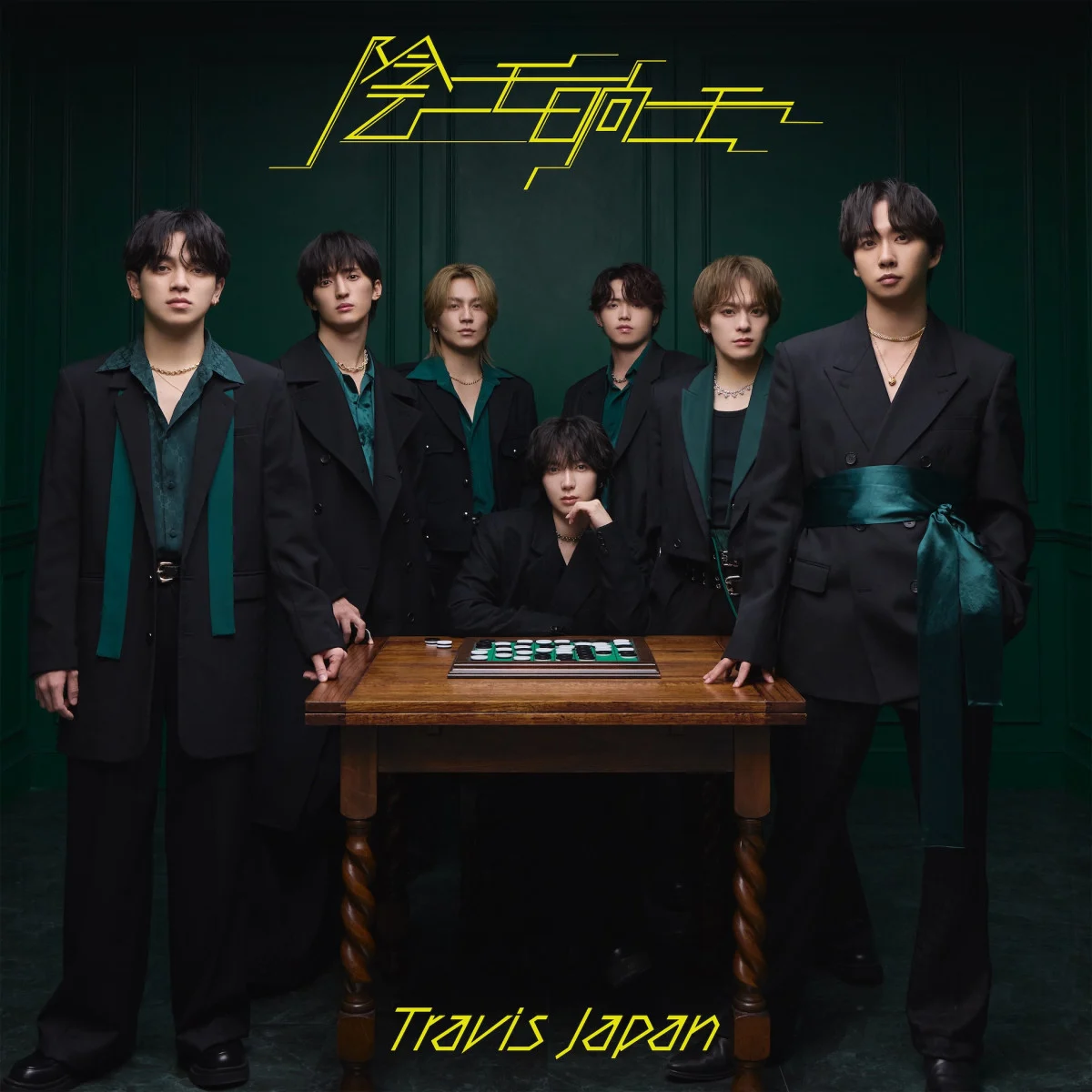
On February 16, 2026, Travis Japan released their highly anticipated digital single Kage ni mo Hinata ni mo (陰ニモ日向ニモ) — the lead track from their second physical CD single scheduled for April 15. The music video followed with its official premiere at 18:00 JST the same day, marking the visual launch of this new era.
The title functions as the guiding metaphor: existing both in shadow and in sunlight. Not opposition, but coexistence. Not a battle between light and dark, but an acknowledgment that both shape identity. In a pop landscape that often favors clarity — bright love songs or straightforward heartbreak — Travis Japan lean into contrast. Into nuance. Into the psychologically complex space in between.
“Kage ni mo Hinata ni mo” walks a careful line between melancholy and hope. The verses unfold in a lower register, tempo-driven stanzas that give the vocals a grounded, almost confessional quality. The phrasing feels conversational at times, as though the emotions are being revealed rather than performed. When the pre-chorus arrives, the vocals expand while the instrumental pulse remains steady, creating tension through restraint. The chorus does not erupt into maximalist brightness; instead, it swells deliberately — like light breaking through clouds — delivering catharsis without abandoning introspection.
That balance defines the track’s identity. The dynamic contrast between shadowed verses and luminous chorus embodies the song’s central duality. It is restraint and release. Stillness and motion. Long-time listeners will recognize this interplay as central to Travis Japan’s artistic DNA, but here it feels elevated — more controlled, more intentional.
Rhythmically, the song leans toward a mid-tempo pop-ballad structure, yet subtle percussive details prevent it from feeling static. Soft electronic beats underpin the verses, while fuller drum patterns add weight in the chorus without overwhelming the vocals. The groove remains steady and grounded, allowing the emotional arc — not rhythmic complexity — to take precedence. The production is clean and contemporary, cinematic yet intimate. Strings and atmospheric pads enrich the texture, but the mix leaves space for breath — space for Travis Japan’s vocal presence to shine.
One could frame this era as cool and mature, a more polished and dignified Travis Japan, but it’s more than just that. What we get here is more than being drawn to their composed sensuality and emotional depth. What we get is a level up of technical difficulty, with many expressing admiration for how seamlessly the members navigate its vocal shifts and dynamic control.
While many of Travis Japan’s earlier Japanese releases leaned into accessible, easy-to-follow melodies built for collective sing-alongs or performance-based tracks that perfectly complemented their commanding stage presence, their more recent work shifts the focus toward technical precision and performance depth over broad public familiarity. Both approaches have their place, but this era feels different. It feels like Travis Japan stepping forward with the confidence of artists who have truly earned their stripes — fully embracing their identity as Japan’s Unique Tigers.
There is a shared recognition of the atmosphere surrounding this release — a quiet confidence and natural sensuality that feels assured rather than exaggerated.
Lyrically, the song explores perseverance and unseen effort. The hinata — sunlight — represents the polished exterior, the grace presented to the world. The kage — shadow — holds doubt, obsession, vulnerability, and the private labor done out of sight. Rather than glorifying triumph alone, the lyrics acknowledge the hidden work behind it. In the context of an idol group whose journey has required relentless training and global expansion, that message resonates deeply. The strength of the writing lies in its sincerity and emotional control rather than overt melodrama.
There is also something culturally resonant about its timing. As the theme song for the TV Asahi drama Zenbu, Anata no Tame Dakara (ぜんぶ、あなたのためだから) —which stars member Ryuya “Shime” Shimekake — “Kage ni mo Hinata ni mo” operates on two narrative layers at once. Within the drama’s story of devotion, moral tension, and emotionally charged loyalty, the song functions not merely as background music but as emotional commentary. Its fixation on protection, exclusivity, and unwavering resolve mirrors the drama’s central conflicts, where love is not gentle but consuming.
The connection becomes even more layered, knowing that one of the group’s own members inhabits that dramatic world on screen. The song feels less like an external tie-in and more like an extension of the narrative universe — its atmosphere echoing the drama’s intensity, its duality reflecting the characters’ internal struggles.

The music video deepens this duality through recurring visual motifs. A go board appears repeatedly, evoking strategy, territory, and calculated sacrifice. Love, in this framework, becomes deliberate rather than impulsive. Every move carries consequence. The black and white stones visually echo the song’s stark emotional binaries, reinforcing a world where gray areas feel scarce.
Floral imagery also plays a central role. Living blossoms in full color are contrasted with dried arrangements suspended in stillness. The pristine white flower referenced in the lyrics transforms from metaphor into visual anchor. Purity is something to protect, yet preservation carries tension. When flowers are frozen in time, the question arises whether they are being safeguarded or contained. The video leaves that ambiguity unresolved.
Mirrors and repeating reflections amplify the theme of dual selves. Members appear multiplied within mirrored rooms, confronting their own gaze from endless angles. Identity fragments yet also strengthens. The repetition suggests both isolation and recognition — shadow and sunlight occupying the same frame.
Even the circular scope-like framing and constantly shifting backdrops contribute to a sense of observation. It feels as though the viewer is peering into a carefully contained world — or perhaps being observed in return. The environments shift through vignettes of floating florals into faceted black geometric chambers, inverted skies suspended above endless horizons, and concentric white tunnels that pull inward. Each setting feels self-contained yet unstable, underscoring the quiet tension beneath the song’s composed exterior. The aesthetic never fully settles, mirroring the emotional tension at the song’s core.
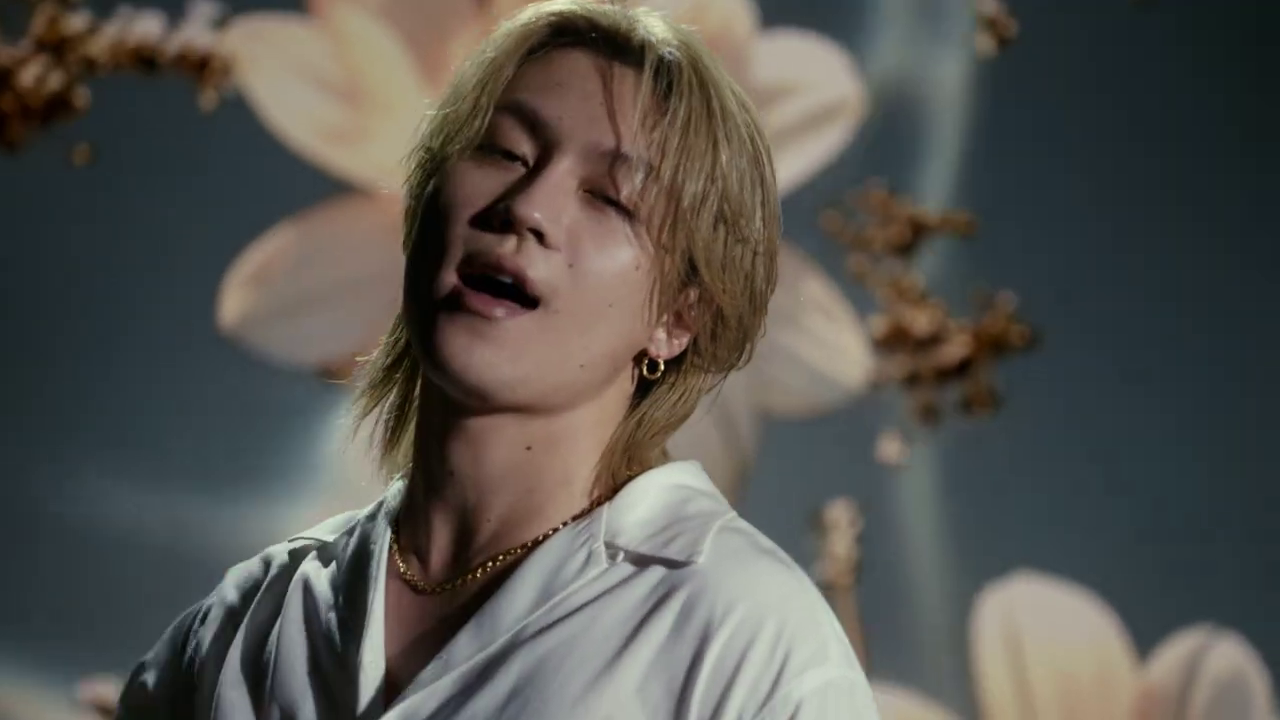
And it would not be complete without mentioning the presence of blond Genta Matsuda. Framed against the floating florals, his close-ups carry a softness that contrasts beautifully with the song’s underlying tension. There is something almost disarming in the way his expression lingers between vulnerability and quiet certainty — especially in the circular floral vignette, where light seems to gather around him rather than simply illuminate him. In the geometric chamber and concentric tunnel shots, that same composure shifts into something more introspective, as if he is standing at the center of the song’s emotional gravity (and my heart).
In this sense, “Kage ni mo Hinata ni mo” becomes more than a love song. It reads as a study of controlled devotion — intense, even dangerous in its depth, yet consistently measured. The passion never spirals out of control. It remains strategic, guarded, intentional.
As the April 15 CD release approaches, that artistic statement expands into a carefully constructed physical era. The single will be released in four formats — Edition T, Edition J, Regular, and a FAMILY CLUB limited edition — each reflecting a different facet of the group’s identity. The T edition includes the continuation of their Junior-era favorite “Dance With Me with Lesson 2,” alongside a bonus disc featuring the music video, making-of footage, and a self-filmed behind-the-scenes vlog. The J edition emphasizes their greatest weapon — dance — through a dedicated performance video and making content, as well as the coupling track “Kimi ga Iru Dake de.”
The Regular edition includes “As We Are” and “On My Road,” previously heard only within their ABC TV program Travis JapanノJUST!シン日本遺産, now receiving official audio release. Meanwhile, the FAMILY CLUB limited edition offers an expansive bonus video disc and a 28-page photobook, including the variety segment PTJG ~トラジャ完璧王決定戦!~, revealing their off-stage personalities alongside their polished performance image. Pre-orders for the FC edition close on April 1 at 23:59 JST, reinforcing the limited and collectible nature of this release.
If the digital version of “Kage ni mo Hinata ni mo” presents the emotional core — innocence and obsession, light and darkness coexisting — then the physical rollout reinforces Travis Japan’s multidimensional appeal. Performance, vulnerability, variety, nostalgia, and technical precision converge within a single project. It is not simply a single release; it is a curated statement of who Travis Japan are at this moment — artists equally at home in shadow and in sunlight.



More Travis Japan
For fans overseas, you can order your copies of the ‘‘s travelers‘ album at CD Japan!
Bundle (DVD / Blu-ray). Limited Edition T (DVD / Blu-ray), Limited Edition J (DVD / Blu-ray), and Regular edition.
More Travis Japan on Dumpling Box






Something went wrong. Please refresh the page and/or try again.
いつも細やかな記事でファンとして嬉しいです。各SNSサイトなどのリンクの添付までしてくれてあり、有難うございます。
いつも読んでくれてありがとうございます!💜