
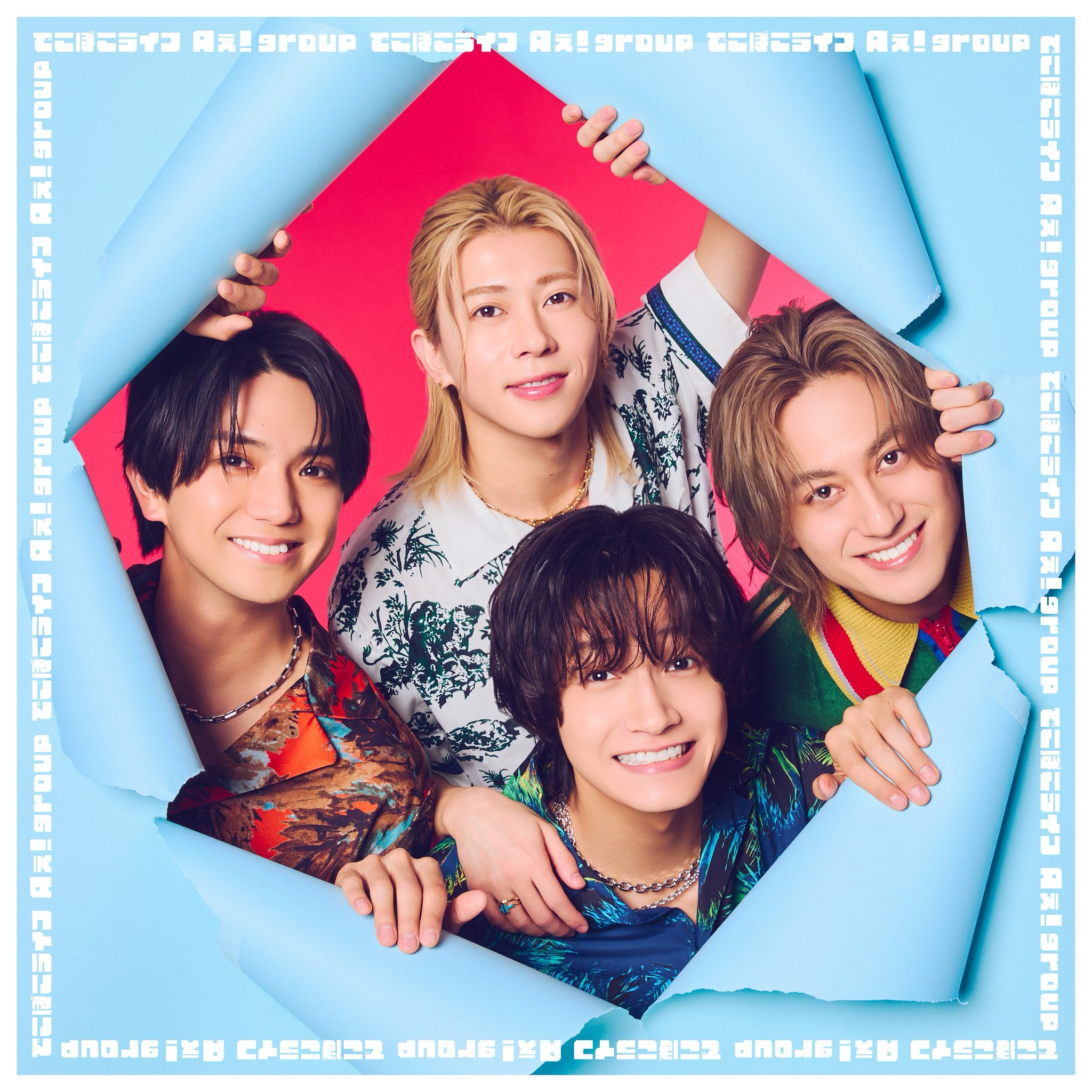
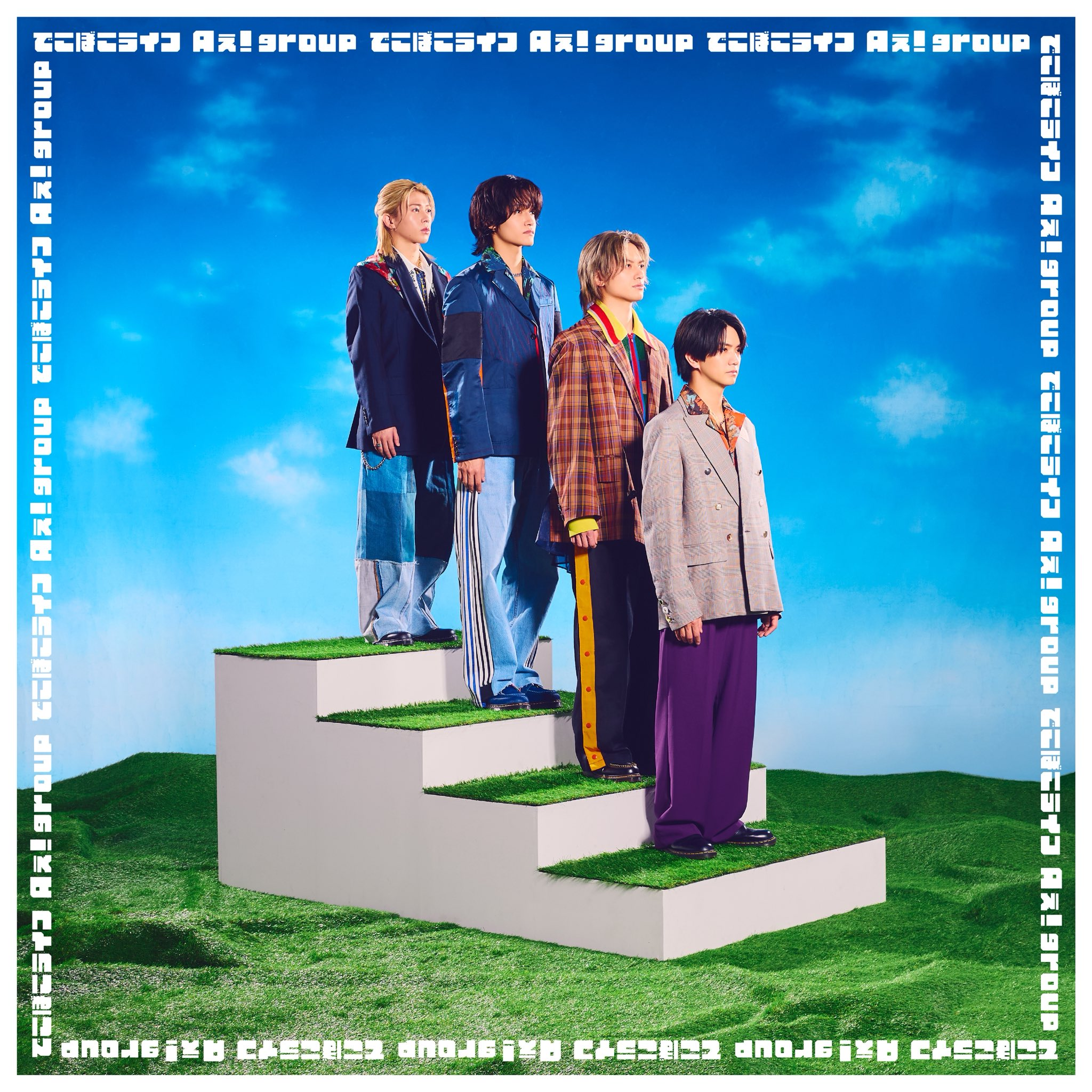
Ae! group has officially released what many fans had almost stopped daring to hope for: “PRIDE,” long treasured as one of the group’s defining band tracks, has finally entered their official discography as the common B-side to their fourth single, “DEKOBOKO LIFE.”
For any other song, that might have been simple release news. For “PRIDE,” it carries far more weight.
For years, the song existed in a space between legend and longing. It was a song everyone knew, a song many considered essential to understanding Ae! group, and yet one that remained outside their recorded catalog. It was a song many thought would be a song the group would release early on after debuting. It’s been carried through live memories, YouTube views, concert reports, and repeated discussions of what it meant—not only musically, but emotionally.
Now, “PRIDE” returns not as a memory, not as a relic from a past era, and not as something sealed away in the group’s history. It returns as part of Ae! group’s present.
An audio-only release would already have felt significant. But the announcement of a full music video and making-of footage gave the moment another layer, especially when the teaser centered not on spectacle alone, but on carefully delivered messages from each member. It was a striking choice for a song that has never been “just another track” in Ae! group’s catalog.
“PRIDE” is one of those rare songs many have carried almost as proof: proof of the group’s band identity, proof of their ability to surprise people, proof of their hunger, and proof that their ambition was never casual.
For many, it had started to feel like a legendary song that might remain in the past. Something untouchable. Something loved, shaped by everything the group had been through, but perhaps too heavy with memory to be officially brought forward.
Instead, Ae! group chose this moment to bring it back.
Not quietly, either, but with intent.
“DEKOBOKO LIFE” is already positioned as an important single, serving as the theme song for the group’s first film starring all current members, Keita Richard Kusama, and Takuya Nishimura, Osomatsu-san 2. Releasing “PRIDE” alongside it does not feel accidental. It feels strategic, emotional, and deeply self-aware. If Ae! group is going to show the wider public who they are right now, then they are doing so with one of the songs that best represents the conviction behind them.
To the members, “PRIDE” is exactly what the title suggests.. But it can also be understood as a powerful drug, a way of life, or resolve. Each interpretation feels fitting because the song has come to represent more than sound. It represents what Ae! group has endured, what they have kept alive, and what they are still choosing to stand for.
The track was created by six, carried on by five, and is now protected by four.
That sentiment has quietly echoed across the fandom because it explains everything without needing to over-explain anything. “PRIDE” was never just a song. It was continuity. It was inheritance. It was something that changed form with the group, yet never lost its meaning.
That is why the official release feels so emotional. It does not erase the previous versions. It does not replace the six-member performance that first carved the song into fan memory, nor the five-member performances that allowed it to keep breathing through another era. Instead, this release carries those versions forward.
Ae! group is not rewriting the past. They are choosing what to bring with them, while carrying the past as proof of their current versions.
What makes the 2026 release of “PRIDE” so powerful is that the song no longer lands exactly the way it once did. The Junior-era “PRIDE” felt like fire. It was urgent, almost desperate in its refusal to be ignored: a battle cry from a group still trying to make their future believable, not only to the industry, but perhaps even to themselves. It carried the heat of uncertainty, the hunger of a group with everything to prove, and the raw emotional force of performers still in the middle of becoming.
The current “PRIDE” carries a different weight.
It is not weaker. If anything, it is heavier. But the heaviness has changed shape. The song now feels less like a plea to be seen and more like a declaration from people who have survived enough to know exactly what they are choosing to carry forward. The fire is still there, but it has matured into something steadier: resolve, identity, and the quiet refusal to let the past become only a memory.
What has changed is not the song’s intensity, but the direction of that intensity. The six- and five-member versions burned like survival instinct: rough-edged, urgent, sung as if the members were throwing their whole bodies into proving their existence. The four-member “PRIDE” burns differently. It is steadier, heavier, and more deliberate—the sound of Ae! group carrying everything they have lived through and still choosing to move forward.
That is why “PRIDE” being released now feels less like a simple long-awaited recording and more like reclamation. Proof they won’t let themselves be beaten by any wind or bumps in life coming their way.
Ae! group is not reaching back because they are trapped in the past. They are reaching back because this song still belongs to them. It belonged to the six who created its original mythology. It belonged to the five who continued to perform it through change. And now, it belongs to the four who have chosen to protect it as part of their present.
Lyrically, “PRIDE” is not a simple anthem of confidence. It is more complicated than that. The song does not pretend that strength comes naturally, nor does it describe pride as something clean, effortless, or heroic.
Lines frame pride as something forged in disadvantage. This is not the pride of someone who has never been shaken. It is the pride of someone who laughs precisely because the situation is difficult; someone who uses a tough heart as a shield because softness alone may not be enough to survive.
That is why the bridge feels so central to the song’s emotional core. “Even if reborn, I want to stay myself.” It is not a dramatic rejection of weakness, nor a fantasy of becoming someone flawless. It is quieter and more painful than that: the decision to remain yourself, even after loss, comparison, uncertainty, and change.
So, “PRIDE” does not celebrate perfection. It celebrates the will to remain.
That message has always been inseparable from the band sound itself. “PRIDE” does not ease the listener in or decorate itself with softness. The arrangement is sharp, heavy, and urgent, built around a rock sound that gives the performance the physical intensity we usually associate Ae! group’s band arrangement with. The drums do not simply keep time; they drive the track forward like a pulse under pressure. The guitar gives the song its edge, cutting through the arrangement with danger and control. The bass grounds the sound while adding movement, and the keyboard widens the emotional space without softening the impact.
Ae! group’s band identity has always been one of the most compelling parts of their appeal, and the new “PRIDE” strengthens that argument by staying faithful to the song’s original force while making space for the current four-member formation. In the idol world, “band style” can sometimes be treated as a concept: a way to distinguish one group from another, a visual hook, or a performance category, and bringing a band on stage to perform.
“PRIDE” rejects that completely. This is not a song that uses instruments as decoration. It is a song that proves why those instruments need to be there. As much as Ae! group is an idol group, they are also a band down to their very core—no matter their formation.
In the MV, that sense of continuity is also visible through Yoshinori Masakado’s guitar. For “PRIDE,” he appears with his navy-blue SAITO guitar, an instrument many fans strongly associate with his earlier performances and with Ae! group’s band identity itself. In a song already so deeply tied to memory, inheritance, and change, the choice immediately stands out.
It is a small visual detail, but an emotionally loaded one. The four-member “PRIDE” is not trying to sever itself from the versions that came before it. It is carrying them. Seeing Masakado stand in the MV with a guitar so closely tied to the group’s past makes that continuity feel tangible: not nostalgia for its own sake, but another reminder that what came before has not been discarded.
Together, they made “PRIDE” into something larger than a song.
It’s proof that Ae! group’s band side was not a side note. Proof that their musicianship could command attention beyond idol fandom. Proof that their Kansai-born entertainment instincts, musical ambition, and raw performance heat could coexist in one explosive package.
“PRIDE” became, and still is, one of the clearest answers to anyone who still wondered what Ae! group was.
Not only funny. Not only loud. Not only chaotic. Not only skilled. Not only idols who could play instruments.
They were Ae! group. And that was the point.
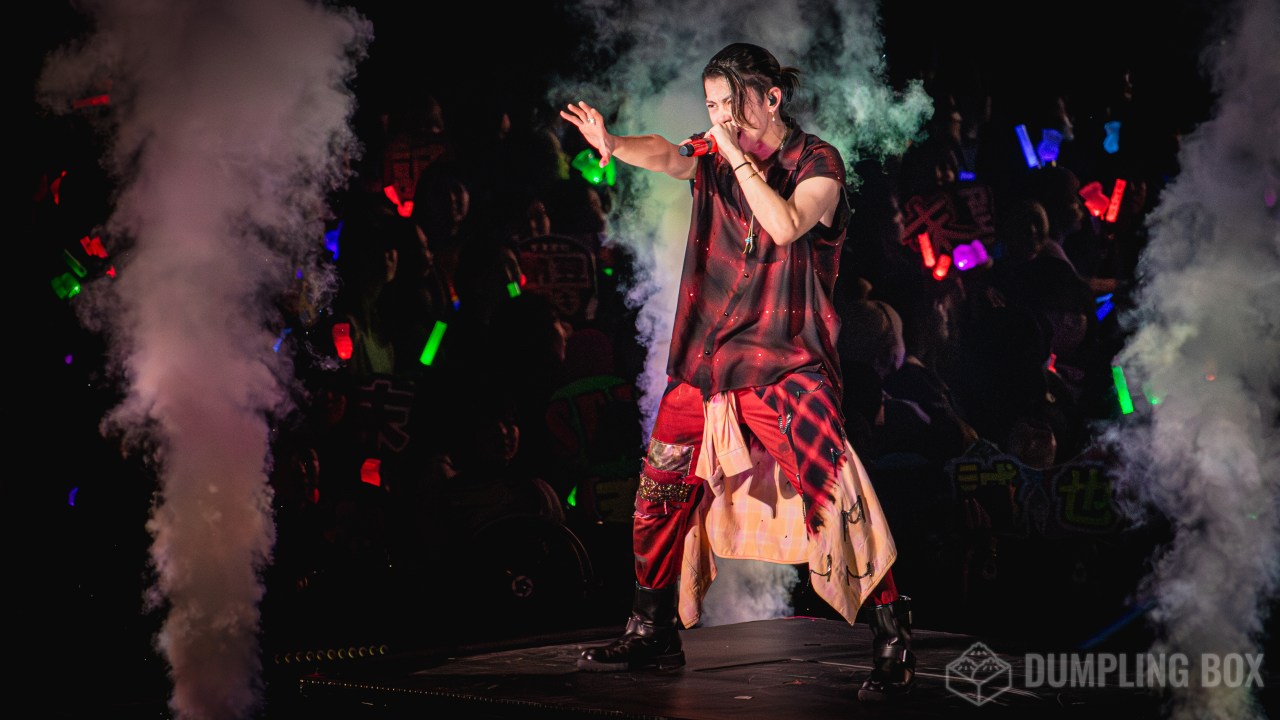
Then, of course, at the center of that impact has always been Seiya Suezawa’s voice. No discussion of “PRIDE” can avoid it, because his voice does not merely lead the track—it anchors it. His vocal line cuts through the arrangement with intensity, but what makes it memorable is not simply the height of the notes or the technical difficulty. It is the emotional pressure behind them.
His voice sounds like it is being pushed to the edge of itself.
“PRIDE” requires a vocal performance that feels almost exposed. Too clean, and it would lose its urgency. Too controlled, and it would lose its desperation. Seiya’s performance works because it carries both power and fragility at once. There is force, but there is also strain. There is confidence, but also the sense that confidence has been fought for rather than naturally given.
That is what makes the song feel human.
“This is Seiya.”
That phrase captures something fans instinctively understand. “PRIDE” allows Seiya’s innate talent to cut through without restraint, but it also reveals the work behind that talent. His voice does not sound impressive in an empty way. It sounds… human. It sounds like someone who has decided that if he is going to stand at the center of this song, he has to give everything.
And yet, “PRIDE” never belongs to him alone.
Seiya may be the vocal anchor, but the song becomes powerful because the entire group stands behind him. The band does not simply support his voice; it moves with it. The instruments give the vocal its ground, its impact, and its sense of scale. When the song rises, it feels like the whole group is rising with him. When it drops, it hits with a force that belongs to all of them.
That is why “PRIDE” is not just “Seiya’s song,” even though it is one of the songs most closely associated with his vocal identity.
It is the group’s pride.
The title itself could easily suggest ego, but Ae! group’s “PRIDE” is not about arrogance. It is closer to dignity. It is the pride of continuing after being overlooked. The pride of choosing your own form even when that form does not fit neatly into expectation. The pride of refusing to abandon yourself, even when you have every reason to doubt whether your efforts will be rewarded.
That is why the song resonates so deeply with fans, as it is not a simple anthem of victory. It is not a song sung from the finish line. It is a song sung while still fighting. It carries the heat of people who have not yet been guaranteed anything, but who have already decided that they will not disappear.
During their Junior years, their future was never something fans could take for granted, which makes “PRIDE” resonate more as it represents a part of the path they’ve taken to get where they are today. They had talent, popularity, variety sense, musical ability, and a strong group identity, but none of that automatically guaranteed debut. There was always uncertainty. There was always waiting. There was always the fear that effort, no matter how sincere, might still not be enough.
“PRIDE” did not promise fans an easy answer. It did something more powerful: it gave them a reason to believe.
For many fans, the song became a turning point. It was the moment admiration sharpened into conviction. The moment “I like this group” became “I need to see this group reach the top,” that difference matters. “PRIDE” did not only make fans proud of Ae! group. It made fans feel like believing in them was an act of resolve.
It belongs to Ae! group, but it also belongs to the people who kept watching, kept recommending, kept replaying, kept writing, and kept saying: “You need to see this.
The first official upload of “PRIDE” on YouTube came on May 24, 2022, through the Kansai Johnny’s Jr. LIVE 2021-2022 THE BEGINNING~狼煙~ performance. That video became the version many fans returned to again and again, hitting 20 million views earlier. It was raw, heated, and unpolished in the best way—not because the performance lacked skill, but because it carried the unmistakable energy of a group in the middle of becoming.
There was hunger in it that seemed endless, and a determination in their eyes that saw the wall in front of them but refused to give up.
The red costumes, the flames, the instruments, the intensity of the vocals, the way the performance seemed to build pressure until it had nowhere left to go—it all created the sense that Ae! group was not simply performing a song.
More than a year later, the INAZUMA ROCK FES. performance brought “PRIDE” back into focus on a different kind of stage. There, the song felt louder, sharper, and more outward-facing. It no longer existed only as a beloved performance within the group’s own world; it became something that could stand in front of a broader music audience and still make sense.
That is one of the reasons “PRIDE” became so important to the group’s public image. It translated.
Even if someone did not know Ae! group’s history, they could understand the performance. They could feel the force of the band. They could hear Seiya’s voice and immediately grasp that something serious was happening. They could see that this was not a group relying only on idol charm, but one bringing musicianship, theatricality, and emotional heat together in a way that felt distinct.
Then came the five-member era, and the song continued. Its meaning shifted, but it did not disappear. And now, for the first time, “PRIDE” arrives as an official recording in its current form.
Not replacing those versions, but carrying them.
This may be why the new “PRIDE” feels so different from the Junior-era performance. The original was a challenge. It burned with the urgency of a group trying to prove what they could become. The current version is something quieter but heavier: a declaration of intent. It does not overwrite the six-member or five-member versions. It carries them, visibly and audibly, into the present.
“PRIDE” has always been about resolve. It has always been about standing in the pressure of expectation and choosing not to run from it. If there is any song in Ae! group’s catalog that can survive change and still remain itself, it is this one.
Because “PRIDE” was never about perfection.
It was about refusal.
Refusal to disappear. Refusal to be underestimated. Refusal to abandon the self. Refusal to let uncertainty decide the ending.
Which is why its release in 2026 feels less like a conclusion than a renewal.
The official release has reignited a familiar feeling in the fandom: determination. Across fan reactions, there is a shared sense that if Ae! group is bringing out one of their strongest cards here, fans want to meet that intensity with equal force. There are calls to push the MV to massive numbers, to get “PRIDE” onto major television music programs, and to make sure the wider public finally sees what longtime fans have known for years.
Ae! group’s band side is not a side note. It is one of their greatest strengths.
That urgency feels familiar because it is the same kind of energy that surrounded “PRIDE” when it first began spreading. Back then, fans wanted people to watch because the performance felt like undeniable proof. Now, years later, that feeling has returned with the added weight of history. Fans are not simply introducing the song anymore. They are protecting its legacy while helping it enter a new phase.
That is why “PRIDE” becoming an official B-side feels so satisfying.
It feels earned.
Not only by the group, but by everyone who kept believing in the song before it had a CD track number, before it had an MV, before it was formally placed inside the discography. Fans treated “PRIDE” like a representative song long before it was officially released as one, some had hoped for it to be their debut song. Now, the official release finally recognizes what the fandom already knew.
This song matters.
Some songs become representative because they are promoted that way. “PRIDE” became representative because it explained Ae! group better than almost anything else could.
It explained their ambition. Their stubbornness. Their band identity. The reason fans speak about them with such urgency. The reason their performances often feel like they are carrying more than entertainment alone.
They are idols, but not only idols. They are musicians, but not only a band. They are entertainers, comedians, actors, performers, and Kansai-born chaos in human form—but they are also something more difficult to summarize. That difficulty is part of their charm. Ae! group has never fit neatly into one clean category, and “PRIDE” turns that refusal into power.
“PRIDE” does not say, “We were always fine.” It says, “We were not always fine, but we are still here.” It says that weakness does not disqualify you from singing loudly. It says that uncertainty does not erase conviction. It says that even when the shape of a group changes, there are songs that can carry the original fire forward.
And for fans, perhaps that is why it continues to hurt and heal at the same time. Because “PRIDE” remembers everything: the hunger, the fear, the waiting, the belief, the change, and the choice to continue anyway.
This is not closure. It is another chapter in a song that has always moved with them.
From Junior-era uncertainty to debuted reality, from six to five to four, “PRIDE” proves that the most important songs are not frozen in the moment they were born. They change because the people carrying them change. They gather scars, memories, losses, and new meanings. And still, if the core remains intact, they continue to burn.
For Ae! group, “PRIDE” is proof of who they have been, who they still are, and who they have chosen to remain.
Not as a memory. Not as nostalgia. But as something they continue to carry forward.
So wherever they go next, they go with PRIDE.
Ae! group on social media
Don’t forget to follow Ae! group on all their official accounts to keep yourself updated with the recent news!


More Ae! group on Dumpling Box

![[GIVEAWAY!] Ae! group LIVE TOUR 2026 Runway Goods](https://dumplingbox.org/wp-content/uploads/2026/07/Featured-Image-Template_20260712-1200x675.jpg)







Something went wrong. Please refresh the page and/or try again.