
KEY TO LIT’s original song “KITERETSU FIRE” was uploaded to YouTube on October 12, 2025, as their first live performance to be shared since their formation. The track obtained 2 million views within a week of its release and is currently the group’s most-played video on the platform.
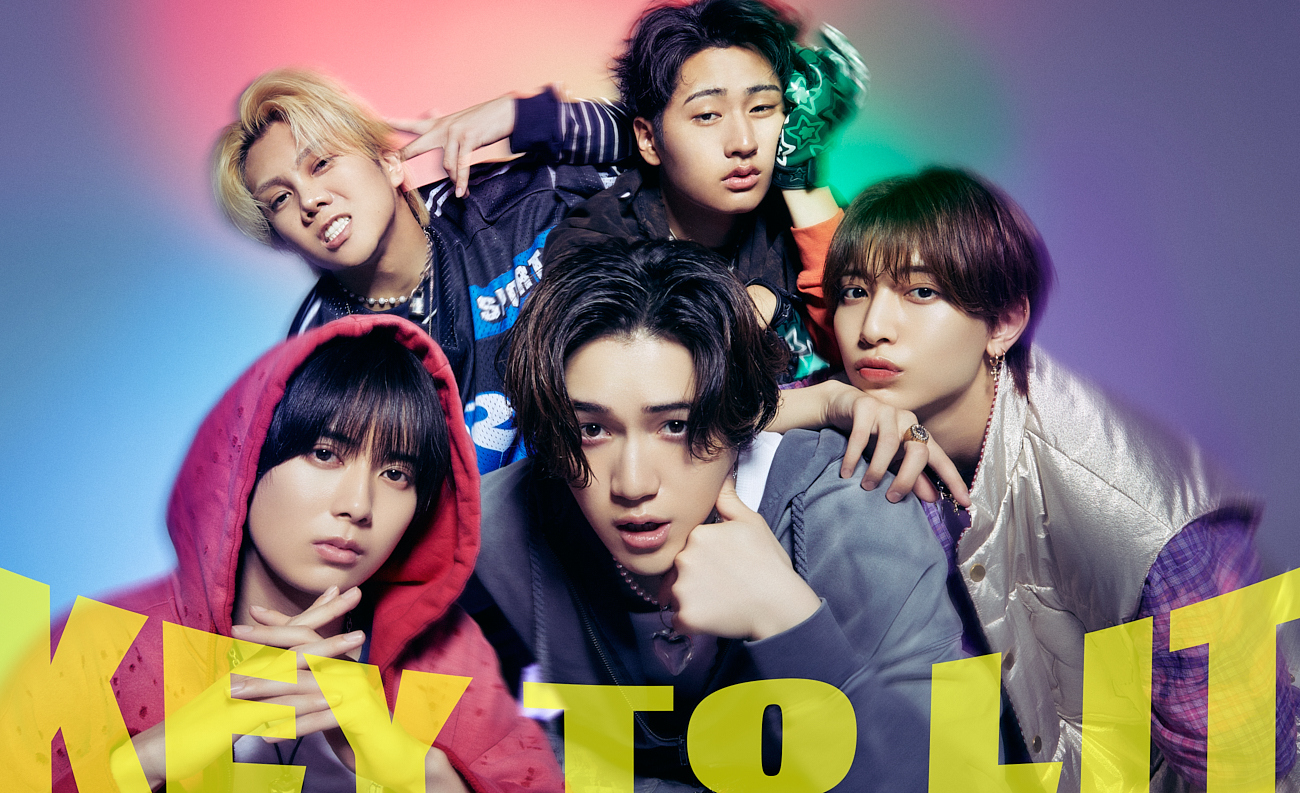
KEY TO LIT (“Kiteretsu“) is a five-member Junior(pre-debut) group under STARTO Entertainment formed on February 16, 2025. Its members are Mizuki Inoue, Taisho Iwasaki, Reia Nakamura, Soya Igari, and Taiko Sasaki. They are currently running their first-ever arena tour titled “WAKE UP THE FOOL,” which started on September 30th and will conclude on October 31st.
KEY TO LIT isn’t just another up-and-coming idol unit—they’re a chaotic, outlandish, and unapologetically eccentric unit that dares to redefine what it means to be a “cool” idol. In their first original song, “KITERETSU FIRE,” they turn the spotlight inward, delivering high-energy self-introductions that are bursting with charm, quirks, and clever wordplay.
If there’s one thing KEY TO LIT wants you to know from the very beginning of this track, it’s they are not your average idol group. Bursting through the speakers with a chant that fuses energy, eccentrism, and unapologetic swagger, this track doesn’t just introduce the five members —it sets the whole stage ablaze. From the opening of “1-2-3-4-5ire wo tsukeyou ze / Ichi-ni-san-shi-go nin to anata de” (“let’s light a flame for 1‑2‑3‑4‑5 / One-two-three-four-five of us with you”) the group makes it clear that they’re playing with fire, and they want you to feel the heat too. There’s clever wordplay here as well: “5ire” (a mash-up of ‘five’ and ‘fire’) references both their group size and the intensity they’re about to unleash.
The next lines, “OK ore-tachi to koko de asobou ze / Joushiki toka I don’t care” (“OK, have fun here with us / Common sense and such, I don’t care”), signal a rebellious or non‑conforming attitude: rules, norms, and “common sense” are being set aside. And they embrace that chaos, especially if they gain from it: “Douse hen nara bikkuri gyouten / saseraretara marumouke” (“We might as well be weird, if we can shock people / it’s a win”). At the same time, they make it clear their emphasis isn’t on perfect form or conventional sense, but on vibe and presence, fully embracing eccentricity: “Ore-ra wa choppiri freaky / Daiji na no wa nori to fun’iki” (“We are a little bit freaky / What’s important is the groove and atmosphere”). Lastly, “Desu kara mizukara jakka / Tenka ni tenka shichao ze shokun mo” (“So we ourselves ignite / Let’s ignite across the world, you guys too”) functions as a rally cry, not just to themselves but to the audience: Join us, break the rules, and set the world ablaze.
The chorus “Ki‑Ki‑Ki‑Ki‑KITERETSU FIRE” (repeated multiple times) becomes the thematic hook. The word ‘Kiteretsu’ (奇天烈) roughly means “eccentric,” “bizarre,” or “offbeat.” Combine that with ‘Fire,’ and you get a title that can be translated to “Outrageous Fire” or “Freaky Flames” —the perfect metaphor for what this song is. With that in mind, each member gets their own showcase verse introduced with the phrase: “Tatoeru naraba, Key to ___” (“If I were to compare, he’d be the Key to ___”), which can be read as a “key” to how they unlock or interpret the “Key to lit.” It’s a clever concept: not only does it tie into the group’s name, but it also gives fans a clear, stylized glimpse into each member’s idol persona, all wrapped in punchy lyricism.
Let’s meet them one by one.
MIZUKI INOUE – “KEY TO SING”

Reia: “Tatoeru naraba Key to Sing / Nao dansu mo engi mo ikkyuuhin / Chicchai koro kara yuutousei” (“If I were to compare, he’d be the Key to Sing / He’s got top-grade dancing and acting skills / He’s been an honor student since childhood”).
Mizuki is introduced as the textbook “perfect” idol —talented in every way, a true all-rounder. This first part highlights not only his vocal prowess but also his excellence in dance and acting. He’s been the “yuutousei” type since childhood, which paints the picture of someone who’s always ahead of the curve.
But right when you think he’s too perfect, he flips the script: “Demo suki araba nemuru suubyou de” (“But he’ll fall asleep in seconds if given the chance”). This small quirk is hilariously endearing. It humanizes him, keeps him grounded, and makes him easily relatable. It’s a reminder that even the ideal idol needs a rest sometimes.
Then, there’s some hint to anxiety in the lines “Miuchi de waiwai hitori ja shaishai / Wi-Fi nakya derenai gaikai” (“I’m lively with friends but shy alone / I can’t go out without Wi-Fi”), but wrapped in a comedic, self-aware tone. It suggests Mizuki is someone who needs connectivity —both emotional and literal— to function. It reflects an introverted core inside a public-facing artist, echoing a common experience for idols in the digital era.
The final part, “Sutaa to akachan no 50-50 / “Yume wo miseru tame yume miru Mizuki” (“Star and baby 50-50 / Mizuki dreams in order to show dreams”), is a beautiful “meta” comment: he performs not just for himself, but for the sake of the audience’s dreams. He creates the dream that others can experience. It elevates his role beyond performer to inspirer. So for Mizuki, the “Key” is about singing (and performing), but also about inspiring dreams —fitting for a “Sing” key and giving the track an aspirational layer.

In short, Mizuki embodies the heart of the idol ideal: working hard not just for himself, but for the dreams of those watching. He’s polished, dependable, and talented, but not without charm and quirk.
TAISHO IWASAKI – “KEY TO BREAK”

Igari: “Tatoeru naraba Key to Break / Yosoku fukanou buttobunda scale de / 15-fun areba kikou shichau kedo” (“If I were to compare, he’d be the Key to Break / Unpredictable, on a wild scale / Give him 15 minutes and he’ll do something weird”).
Taisho lives up to his title as the “Key to Break” with a verse that’s bold, sharp-edged, and wildly unpredictable. While Mizuki leans into more traditional idol traits, Taisho is the group’s wildcard, described as someone who thrives on surprising everyone and destroying expectations. He’s impossible to pin down, unpredictable, and operating on a completely different wavelength. But there’s an elegance to it, especially when Igari refers to him as a “kikoushi”: “Chuuou-ku de wa kikoushi sa” (“In Chuuou-ku, he’s a nobleman”). It’s a hilarious contrast: on one hand, Taisho is committing bizarre acts on a whim, and on the other, he carries himself like high-class royalty. This duality gives him a refined-but-wacky vibe, like a manga or anime character.
“Hakuchuudoudou de ikiru jiyuujin / Mune-kyun NG eien no shishunki” (“A free spirit living in broad daylight / Heart-pounding eternal adolescence”). The idea of being stuck in eternal adolescence speaks to emotional volatility, boundary-pushing, and youthful rebellion.
Then it shifts to: “Gyakubari idol aratana icon” (“A contrarian idol, a brand-new icon”). Taisho is referred to as an “opposite” or “reverse” idol, rejecting traditional expectations. He doesn’t just go against the grain —he reinvents the mold. This line captures his rebellious, rule-breaking spirit while also crowning him as a visionary in the idol world. He might be rowdy, unpredictable, even confrontational, but that’s his power. He incites chaos, encourages rebellion, and becomes an “aratana icon.” Finally, “Suki ni abare ro yo anta ga Taisho” (“Go wild as you like, you’re the Taisho”), is a clever pun that turns his name, Taisho (which also means “general” or “leader”), into a command for both him and the listener: “Take control, be wild, be YOU.”

Essentially, Taisho is the disruptor, the member who refuses to conform and leads by breaking molds and shattering expectations. He brings volatility and fire. He is wild, unpredictable, and chaotic —just like the moniker “Key to Break” implies— and operates on a scale too large to predict.
REIA NAKAMURA – “KEY TO SENSE”

Taiko: “Tatoeru naraba Key to Sense / Ura roji sodachi shikakeru offense wa” (“If I were to compare, he’d be the Key to Sense / He grew up in the back alleys and sets up offenses”).
The opening lines describe Reia as growing up in back alleys, immediately grounding him as someone who is street-smart, maybe a little rough-around-the-edges. He’s built to go on the offensive, not just perform.
Then he turns the classic idol image on its head: “Ikken cute demo furetara kiken / Beauty na face de futsuu ni haku FAKE” (“He looks cute, but touch him and it’s dangerous / With a beautiful face, he casually calls out fakes”). Reia is pretty, but don’t be fooled, his lyrics are razor sharp. His warning to fakes is cold-blooded, and his polished idol façade barely hides his ferocity.
The next sentence sums him up perfectly: “Keredo mo sainou wa real ijiwaru na / Akuma no kiss de kokoro wa pink” (“But he’s talented and rare, and mean / With a devil’s kiss, but a pink heart”). This duality —soft on the inside, deadly on the outside—makes him dangerously charismatic. Reia is the kind of idol who doesn’t try to dominate the stage —he owns it by existing.
His introduction ends with: “Hyoushi kazareba shina kireru paper / Teikoku yori no princess Reia” (“If you decorate the cover, it will bend and break / Princess Reia from the Empire”). This has a double meaning: on one hand, it reinforces Reia‘s image as someone born to stand out: elegant, untouchable, but forged from somewhere rough. On the other, it’s a cool reference to his love for Star Wars, in which the Galactic Empire (the “big bad” of the story) rules the galaxy with an iron fist, while Princess Leia (written “Reia” in Japanese) leads a rebellion against it. This implies that Reia is one hell of a person… a “brother in hell” if you will.

In summary, Reia is the aesthetic edge, the one who mixes beauty with bite. He elevates the group’s visual power and emotional ambiguity —someone who’s both idol and iconoclast. His appearance may be soft and “cute,” but beneath it is a strategic player who knows how to manipulate and dominate. He’s handsome, but deadly precise.
SOYA IGARI – “KEY TO CRACK”
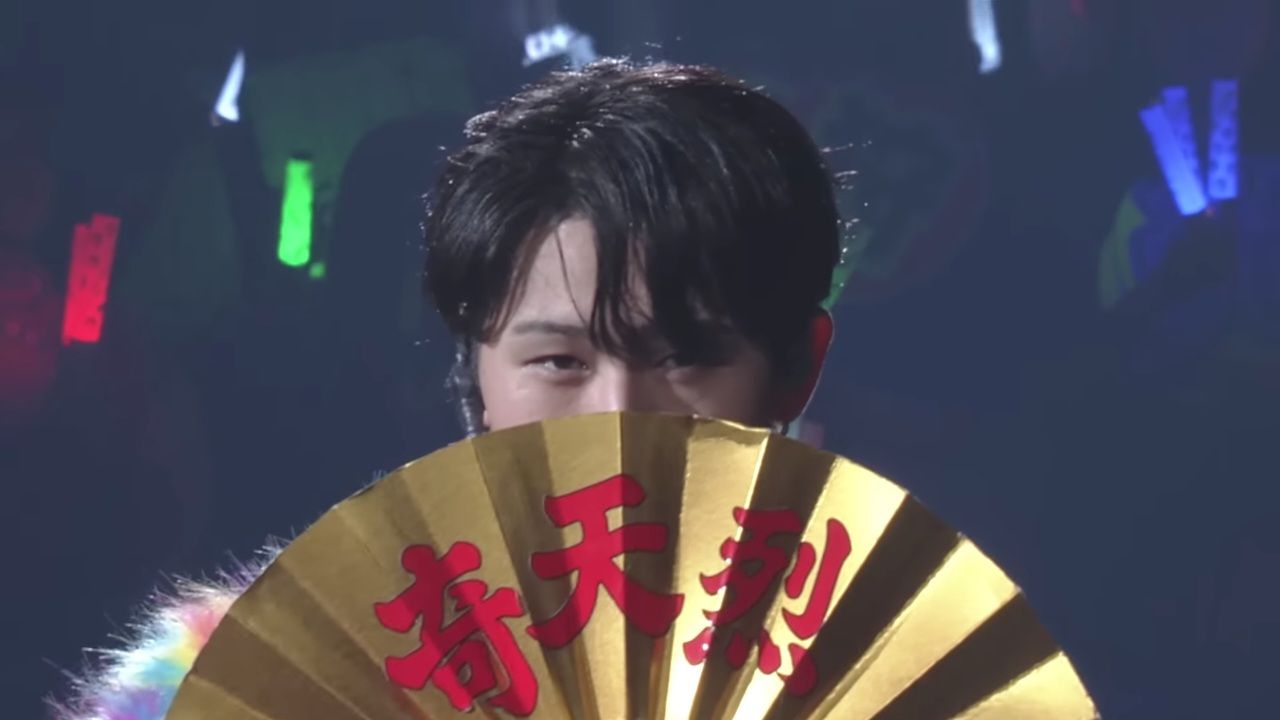
Taisho: “Tatoeru naraba Key to Crack / Have to ja iya dakara Want to wo brush” (“If I were to compare, he’d be the Key to Crack / He hates ‘have to,’ so he brushes his ‘want to'”).
Gari-san‘s segment is a standout. He’s the “Key to Crack” (the one who has the formula, who can break through…), fueled by desire, not obligation. He uses his musical flow as a form of attack, but he’s also not “random;” he uses method: “Up shite fukaku sasu rap to rhythm / Shinjiteru shouri e no algorithm” (“Going up, piercing deep with rap and rhythm / believing in the algorithm that leads to victory”). This juxtaposition of rap and rhythm —which are creative and spontaneous— with algorithm —structured and logical— reveals Gari-san is both artist and strategist.
“Ryokusa wa iranai niku toka wo fry shite / okome wo kudasai” (“Forget vegetables, fry up some meat and give him rice”) makes him the group’s comic-relief, but he’s not just there for laughs. He doesn’t want vegetables (“lighter stuff”), he wants the heavier, denser substance (“meat + rice”). Metaphorically, he rejects light or trivial things; he wants substance, energy, and fuel. His focus on ignoring logic —“All time riron busou shite / Shiyoku de ugoku boukun Gari-san” (“discarding theory all the time / Gari-san, the tyrant driven by desire”)— reveals he’s impulsive and indulgent when he needs to be. Gari‑san embodies appetite, both for food and for performance, for breaking structure, for raw energy. His introduction is comedic, but also includes a serious statement: that you don’t always have to follow proper theory or training —sometimes instincts, desire, and breaking open “the code” lead the way.

Simply put, Gari‑san is the chaotic strategist in the group, injecting humor, unpredictability, and appetite —both literal and metaphorical. He isn’t satisfied with lighter forms; he goes for the heavy, the substance, and the real “meat and rice” of victory.
TAIKO SASAKI – “KEY TO POP”

Mizuki: “Tatoeru naraba Key to POP / 3.2.1 de kimeru high pose / Dansu toka drum no reberu wa top” (“If I were to compare, he’d be the Key to POP / He hits his high pose on 3.2.1 / His level in dance and drums is top-tier”).
Taiko rounds out the member introductions with explosive flair. As the “Key to POP,” he brings both the most polished idol energy and the most unpredictable power. He’s theatrical, larger than life, and —as his name suggests— loud like a drum. He’s the one who nails the “high pose” on the count of “3, 2, 1.” His dance and drumming are top-level, but that doesn’t mean he isn’t without conflict: “Demo nisshin geppo cha shite wa onore to shoubu” (“But making daily progress is a battle with himself”). As the line suggests, Taiko is constantly fighting himself, improving step by step, challenging his own limits. It’s not just about being better than others —it’s also about being better than “yesterday’s Taiko.”
Taiko‘s verse includes the most idol-like sentence in the song yet: “Saa koi mainichi ga matsuri da wasshoi” (Let’s go! Every day’s a festival!), but then we immediately get a twist: “Doro darake demo hikaru turquoise” (“Even if he’s covered in mud, he still shines like turquoise”), which is a metaphor for persistence and perseverance through messy times.
Mizuki caps things off with: “Kiteretsu gun dai-hachitai taichou / Kurae! Ningen taihou Taiko” (“Captain of the Kiteretsu army, 8th squad / Take this! Human cannonball Taiko”). As the commander of the “eccentric” army, Taiko becomes the de facto leader of the weirdos, launching himself as a “human cannonball” towards the audience. It’s ridiculous, offbeat, and perfectly in line with the group’s over-the-top vibes. Taiko is pure momentum —the kind of idol that sweeps the audience up, whether they’re ready or not.
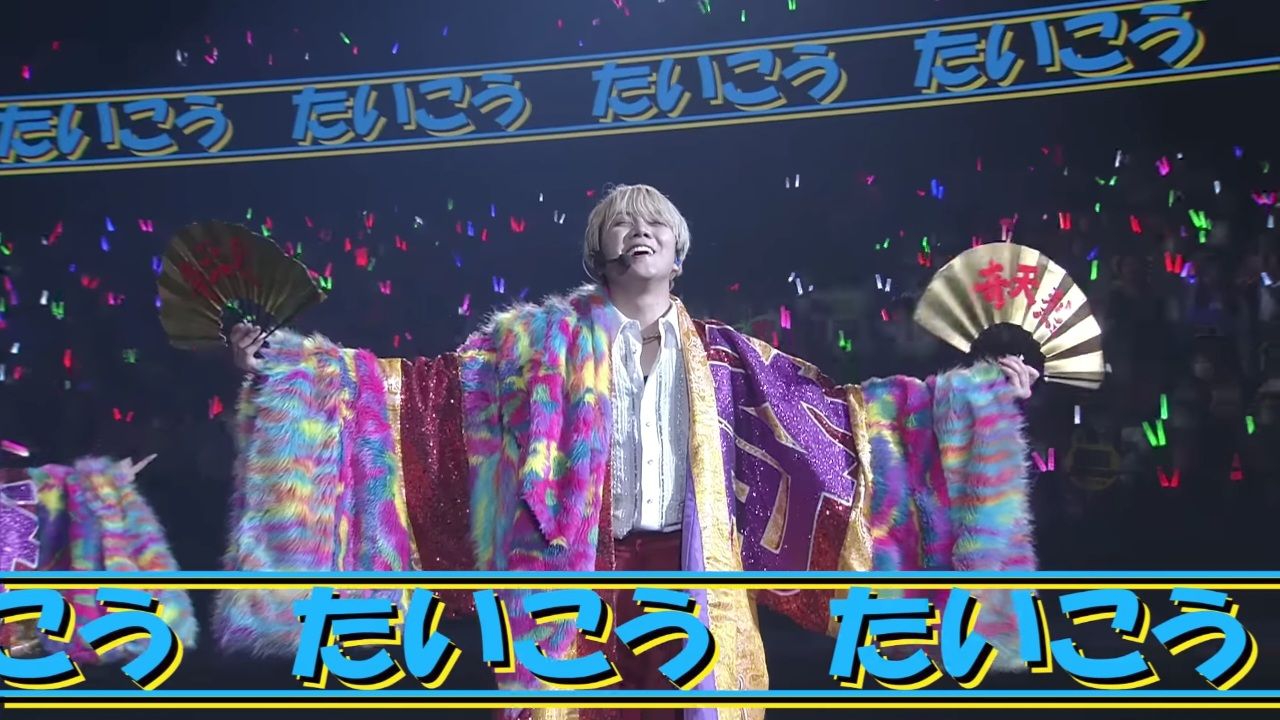
Taiko is the engine of the group. He’s the one who keeps everyone moving forward with intensity. He’s the hype-man, the morale booster, the spark plug. He brings energy, showmanship, and a go-getter attitude. Even when covered in metaphorical mud, he still shines like turquoise.
SUMMARY:
Mizuki: “Key to Sing” —the classic idol overachiever, incredibly gifted but human.
Taisho: “Key to Break” —the unpredictable rule-breaker, a “new kind of idol.”
Reia: “Key to Sense” —beauty and danger combined, a “princess” with a sharp edge.
Gari-san: “Key to Crack” —the strategic rebel always craving more (both metaphorically and literally).
Taiko: “Key to POP” —the wild showman, flashy and competitive.
These aren’t just descriptions, they are declarations that form a mythos, a kind of idol superhero team, with each member of KEY TO LIT embodying a different chaotic trait necessary to their collective success. These idols are playing characters, exaggerating their real or assigned personalities, drawing on some common idol archetypes, but flipping them. There’s also a deliberate rejection of perfection: they’re bratty, unpredictable, mischievous, and full of attitude —but that’s what makes them electric, exciting, and one-of-a-kind.
“Ki wo terau ki nado maru de nakute mo / Yaru koto nasu koto medacchau” (“Even if we have no intention of showing off at all / Everything we do ends up standing out”). Whether they perform or act, they can’t help but be noticeable —not because they try, but because it’s natural. It’s a statement of their organic star power.
“Tennen teka sententeki na are de / Ano ko mo sono ko mo ubacchau” (“With that natural ‘something’ / We steal the hearts of that girl and this one too”). They’re claiming magnetic, irresistible charm, almost to a dangerous level. It’s idol talk turned up to 11 —playful, but also powerful. That ‘are’ they mention is deliberately vague. It’s like saying “whatever that thing is” —a humorous way to describe an inexplicable aura or energy. It adds to the unpredictability, and a bit of self-aware irony.
In the next lines,“Rekka da ze kore wa / Meccha yabee yatsu” (“This is a blazing fire! / We’re seriously yabee guys!”), they compare themselves to fire, meaning they’re intense, passionate, and uncontrollable. ‘Yabee’ is a multi-purpose word that can mean awesome, crazy, wild, bad, etc.
In this context, it means they’re dangerous, but in a fun, chaotic way: “Detarame tte ka / Maji de dame na yatsu” (“Like nonsense / Maybe just straight-up no good”). They acknowledge they might seem nonsensical or even “bad news,” but they wear that as a badge of pride.
Then, they switch gears to: “Pop de cutie de pretty na ore-ra ni / Jidai ga kiteru ze retsu GO” (“To us, who are pop, cute, and pretty / Our time has come, line up, let’s GO!”). This is almost meta-idol commentary. Despite the chaos, they’re still idols: cute, poppy, pretty —but bringing in a new era with their weird style. They’re re-defining what idol culture can look like. Then, they jump into their main chant (“Ki-Ki-Ki-Ki-KITERETSU FIRE”) seven times in a row, which is used as a bridge to the final section of this song.
The closing verses begin with a tonal shift into something more real: “Mada mada mondai wa yamazumi dakedo mo / Tamaru kitaichi to sagasu mirai” (“There are still tons of problems piled up, but… / We have stored up energy and search for a future”). They acknowledge setbacks and imperfections, but they’re not weak enough to surrender: “Sude ni trouble tsudzuki no rakudai sei / Demo akirameru hodo amakunai ze” (“Already a failing student constantly in trouble / But we’re not naive enough to give up”).
This gritty and honest sentiment is echoed in the very next set of lines: “Yoko to shita mite mo hajimaranai kara / Mae to ue wo mite Run to the Top” (“Looking sideways or down won’t get us anywhere / Look ahead and above, and run to the top”). Rather than focusing on the past or self-pity, they encourage both themselves and the audience to look forward and upward.
Despite their struggles, the members of KEY TO LIT aren’t backing down —they’re doubling down— and they will do whatever it takes to win: “Naritai jibun ni shoujun wo awasetara / Ano te kono te de mezashiteku Goal” (“Once we align our sights with the self we want to be / We’ll use every trick to reach our goal”).
There is no holding back. Their mindset is one about aggression, momentum, and an unwillingness to hesitate: “GO & GO semero accel wa zenkai / Kenzai wa garakuta saredo mo tenkaichi” (“Go and go, attack, full-throttle acceleration! / Right now we may be junk, but we’re number one”).
Then, they switch to silly visual metaphors: “Kibatsu na form / Ibutsu na tamen-tai” (“Outlandish form / Foreign polyhedron”) implies these artists are multi-faceted misfits, weird and complex in shape and character (‘Ibutsu’ implies something that doesn’t belong), while “Chinmi no full course / Mada mada zensai” (“A full course of rare delicacies / We’re still just the appetizer”) recognizes they may not suit everyone’s tastes, but they’re exotic and worth savoring. At the same time, the best is yet to come.
As the song reaches its climax, the five members declare they are going “all in” on their dreams: “Iku ze! Kangaezu shinjikitte / Jinsei wo kaketeru saigo no itte” “Let’s go! Don”t think, just believe completely / Our final move, we’re betting our lives on it”).
If life is a battlefield, this is their last stand, and they’re risking it all for a collective mission: “Kiken de yakkai na ore-tachi gonin ga / Sekai wo osou issho ni hanatou ze” (“We five dangerous and troublesome ones / Let’s storm the world together”). This is more than just a cool line —it’s the core philosophy of KEY TO LIT.
They’re not just five sparkly idols; they’re five forces of nature. Together, they’re an unpredictable unit that doesn’t conform to traditional idol boxes. They’re not aspiring to fit in —they’re declaring war on normalcy.

At its core, “KITERETSU FIRE” is an anthem of controlled chaos —a loud, bold, and charismatic battle cry from each member of KEY TO LIT. Each member introduction offers a stylized vignette for a different idol, blending humor, surreal energy, and emotional nuance.
Musically, the accompanying beats are just as eclectic as the lyrics. The track bounces between high-octane pop, theatrical flourishes, and explosive needle drops, all while staying coherent and tight. The production supports the song’s theme of organized madness —polished enough to be catchy, but wild enough to feel distinct.
The use of onomatopoeic or counting elements (“YEAH YEAH, FIRE FIRE, Ki‑Ki‑Ki‑Ki‑KITERETSU FIRE”) is highly rhythmic and lends itself to audience participation, ideal for a live performance context.
When taken individually, each member of KEY TO LIT presents a wildly different character: the perfect dreamer, the rebellious icon, the dangerous beauty, the chaotic appetite, and the explosive showman. But “KITERETSU FIRE” doesn’t treat those differences as contradictions. Instead, it celebrates them, presenting the group not as five idols performing in sync, but five forces colliding in harmony.
The result is a group that feels alive, unexpected, and authentically swaggerish —a rare blend in the idol world. KEY TO LIT doesn’t just play their roles —they own them, twist them, and explode them in a burst of fire. This is a group that doesn’t shy away from being different —they sprint toward it, arms wide open, and glitter in their wake.
“KITERETSU FIRE” is equal parts absurd, heartfelt, stylish, and reckless. And that’s what makes it unique, unapologetic, and unforgettable. In an idol-filled entertainment landscape, KEY TO LIT isn’t just lighting a fire —they’re becoming the flame.
Check out the Juniors on their various social media platforms!
More on Dumpling Box!


![[GIVEAWAY!] ACEes Arena Tour 2026 “V” Goods](https://dumplingbox.org/wp-content/uploads/2026/08/acees-v-giveaway-1200x675.png)



![[GIVEAWAY!] B&ZAI LIVE 2026 Summer Beat Goods](https://dumplingbox.org/wp-content/uploads/2026/08/BZAI-giveaway-1200x675.png)
Something went wrong. Please refresh the page and/or try again.